My day starts off relaxed. As befits Good Friday—after all, that’s the day our Savior died. Or something like that. Along with the ban on fun and dancing, this means a long weekend. Even though nobody here in Morocco cares about that, of course, I’m grateful for it—believer or not. I’ve decided to make the most of the remaining holidays as best I can. It seems the only way to save the German economy is if we give up our days off in the future. At least if Fritze Merz and his black minions have their way.
10:00 a.m.
I took a shower and packed my things. I’m heading to the bus. Google Maps says it’s a 12-minute walk. Since my time in Cape Town, I think I can make it in 10 minutes. When I arrive at the ticket counter for Supratours, Morocco’s version of Flixbus, I realize:
There are no buses running here today. There weren't any yesterday, and there won't be any tomorrow either.
The bus station is about a half-hour walk in the opposite direction.
It's now 10:15 a.m.
The scheduled departure time is 10:30 a.m. I’m annoyed with myself. After all, I had researched and planned everything the night before with typical German thoroughness. In my desperation, I jump into the nearest taxi, hoping to arrive on time despite the heavy city traffic. The taxi driver, an elderly Moroccan gentleman, and I converse in French. Or rather: he converses with me in French. I keep interjecting “Oui, oui, oui” whenever I feel like I’ve understood something.
10:30 a.m. I've arrived at the bus station.
Two buses are waiting to depart. I quickly choose one and ask, “Essaouira?” “Ticket,” replies the man in the yellow safety vest, glancing briefly at my phone. “Yallah,” I say, and get on. Once inside the bus, the door closes behind me, and we set off. I don’t see any seat numbers, and the bus number doesn’t match the one on my ticket either. I take the last remaining seat, without being sure where this trip is actually headed. I consciously decide not to ask and turn off my phone. After all, my journey would likely take me to a place I haven’t been to yet anyway.
The bus is full of tourists. Without headphones, I can’t help but overhear the conversations around me. Sitting in front of me is a German mother and her teenage son, arguing about when they can go their separate ways again. To my right is a couple. He, judging by his accent, is Italian; she is German. They speak English mixed with the language of love. While this is generally frowned upon in public here, it doesn’t stand out on a tour bus full of tourists. Behind me sit two Eastern European women who get up every 10 minutes to take something out of the overhead compartment or put something away.
We're leaving the city limits.
The economic boom that Zaid told me about on the train—and that I’d noticed in Marrakesh—doesn’t seem to have reached this area yet, as is so often the case. I’m getting a slight Cambodia vibe. Between small villages, I keep coming across makeshift stalls alongside all the minarets. “Baristas” are selling coffee right out of their trunks. That reminds me of a business idea I once had. Because what’s one of the most annoying things about delivered food? Right—when the food isn’t hot anymore. So how about if the food were freshly prepared on its way to you? Unthinkable in Germany, of course, but if you ever implement this idea somewhere else, please mention me in your legal notice.
We drive past place names like Casablanca, Agadir, and others.
No sign of Essaouira.
In the background, the snow-capped Atlas Mountains rise up into the sky. We cross rivers that appear to have been dry for quite some time when suddenly, as if at a crossroads, a sign appears. It points to Essaouira on the right. Since our spirited bus driver shows no intention of heading down that road, I resign myself to spending the weekend somewhere else. Just as I come to this realization, she slams on the brakes, signals, and swerves across the road.
Everything is going according to plan.
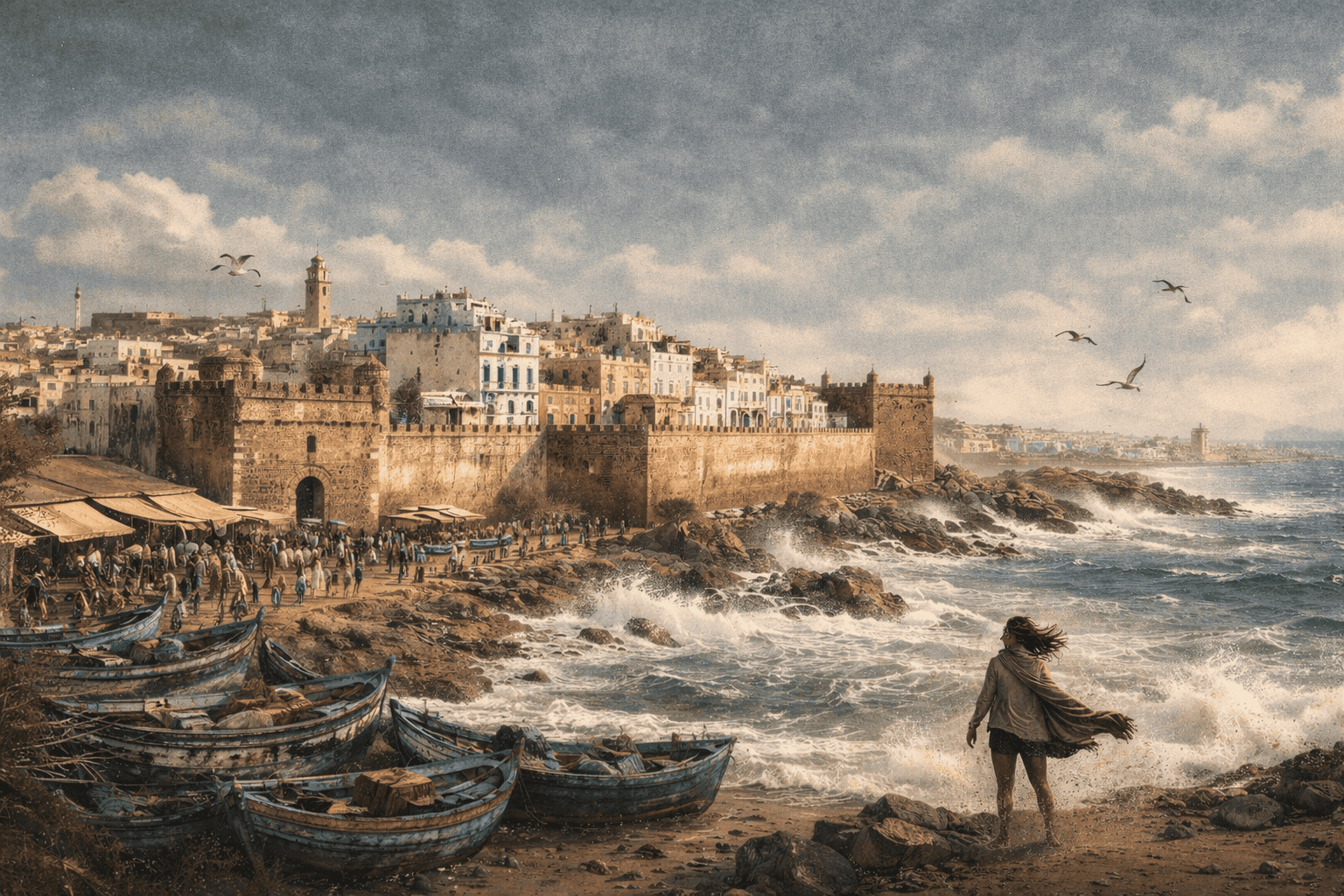
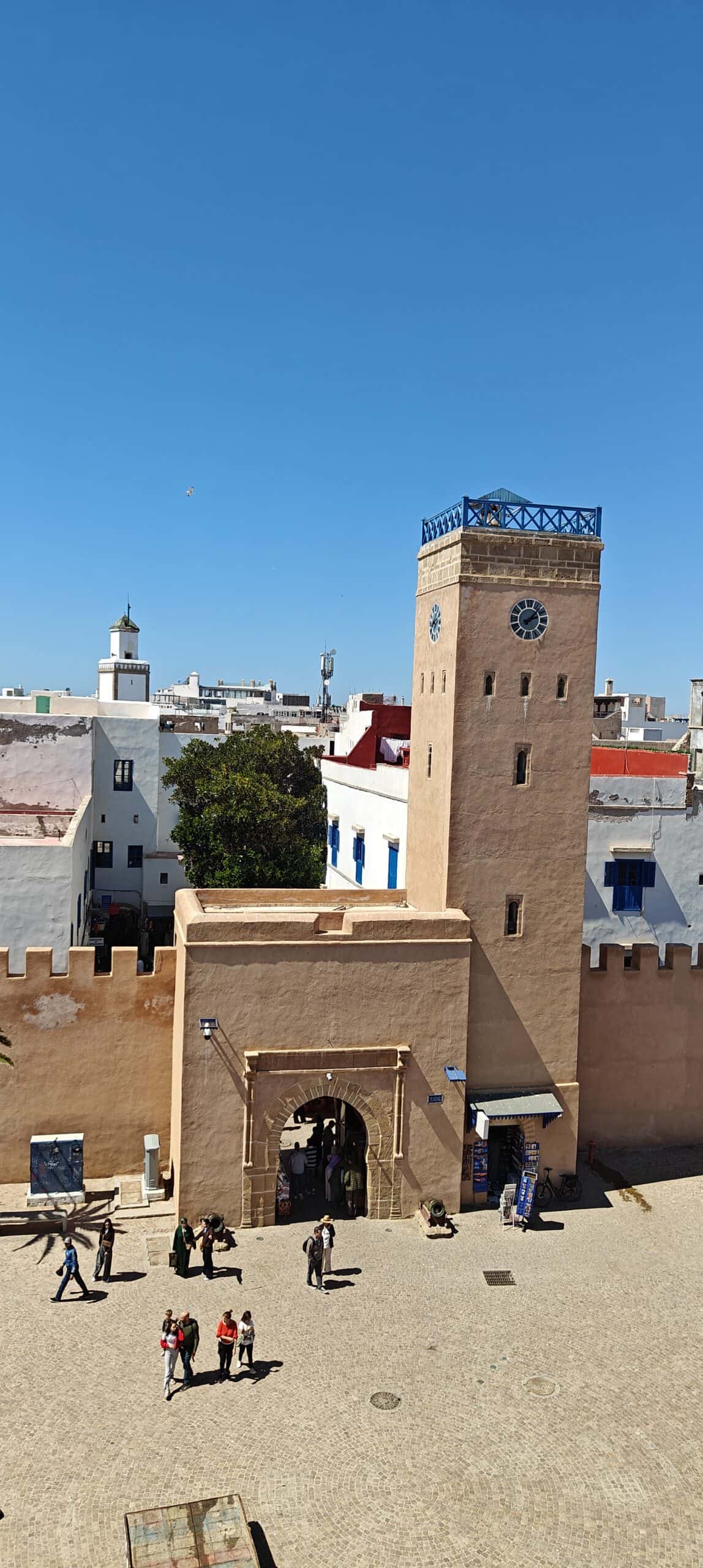
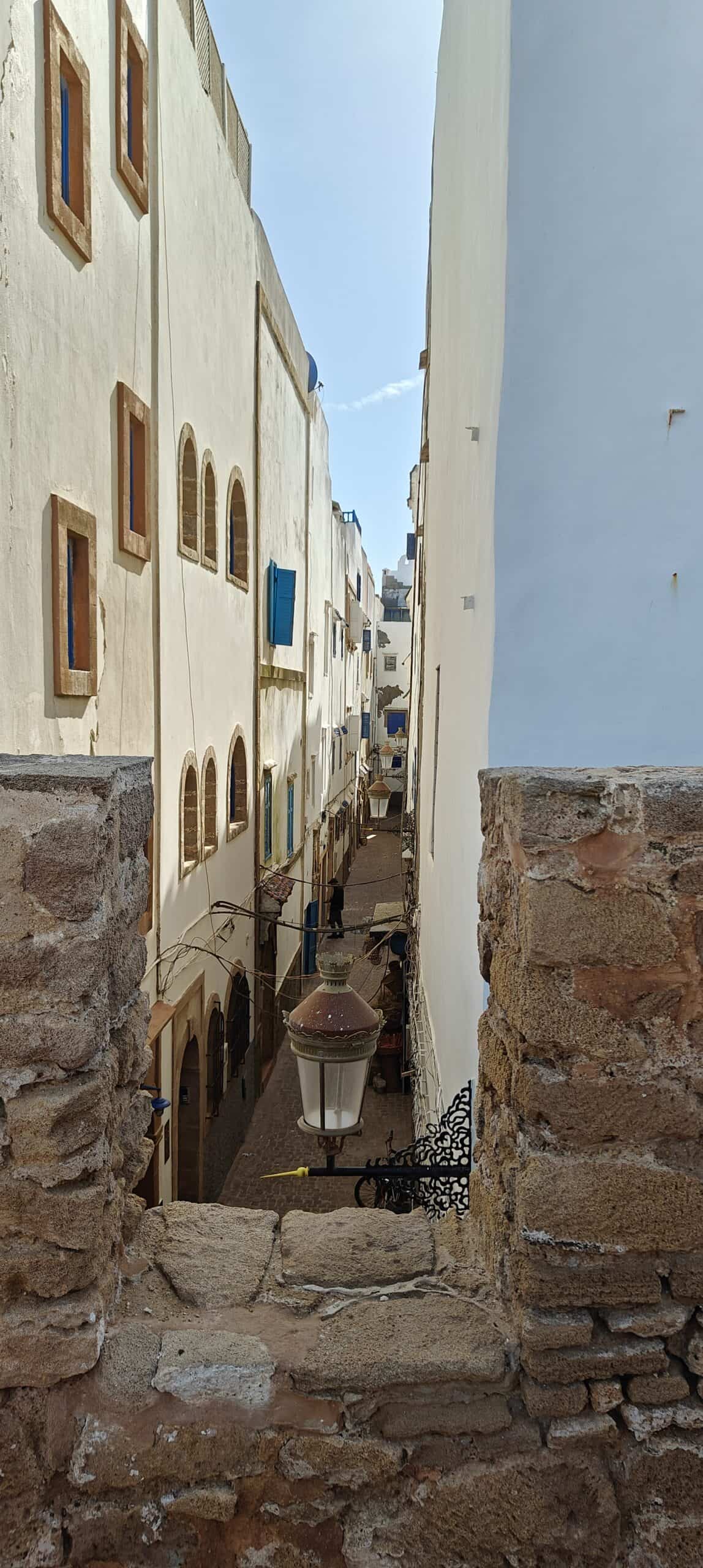
Upon arriving in Essaouira, I realize: there’s a different vibe here. It’s no coincidence that I’m now in the City of the Wind—a small coastal town whose medina has been designated a UNESCO World Heritage Site. Not only is the climate different, but the atmosphere is also quite distinct from that of Marrakech. The architecture stands in stark contrast to the otherwise predominantly ochre-colored streets. The houses here are mostly white, adorned with blue shutters. I’m looking forward to the change of scenery, since I realized pretty quickly in Marrakech that you could probably see everything important in a week.
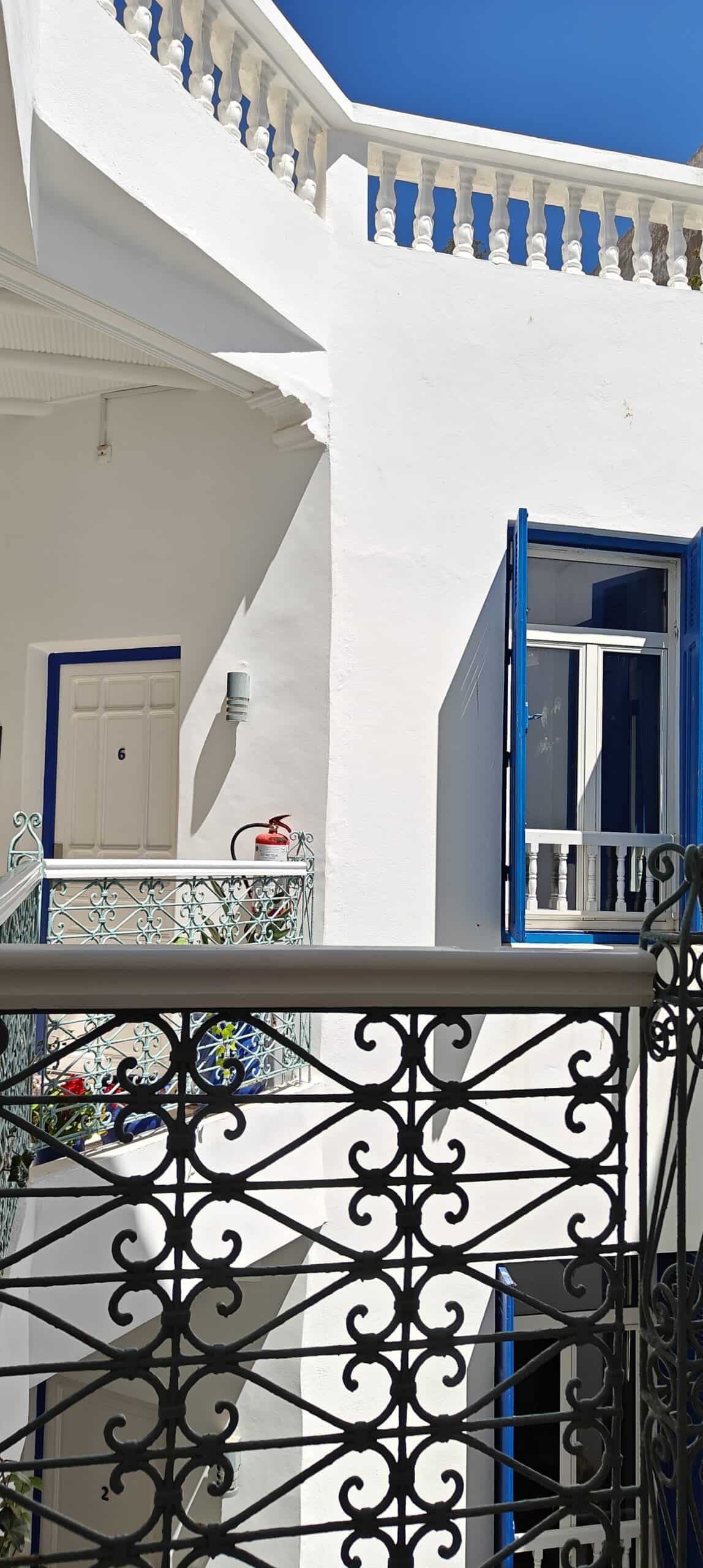
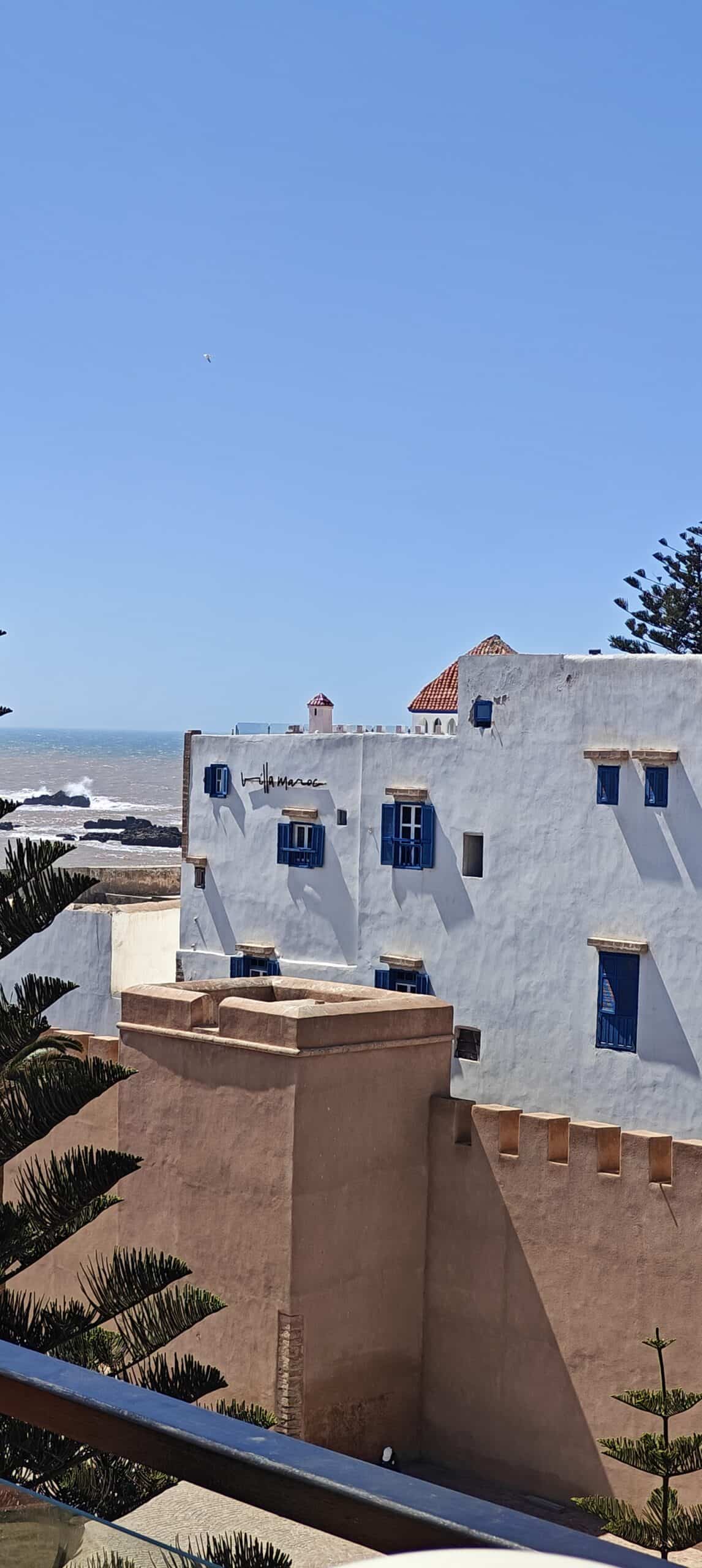
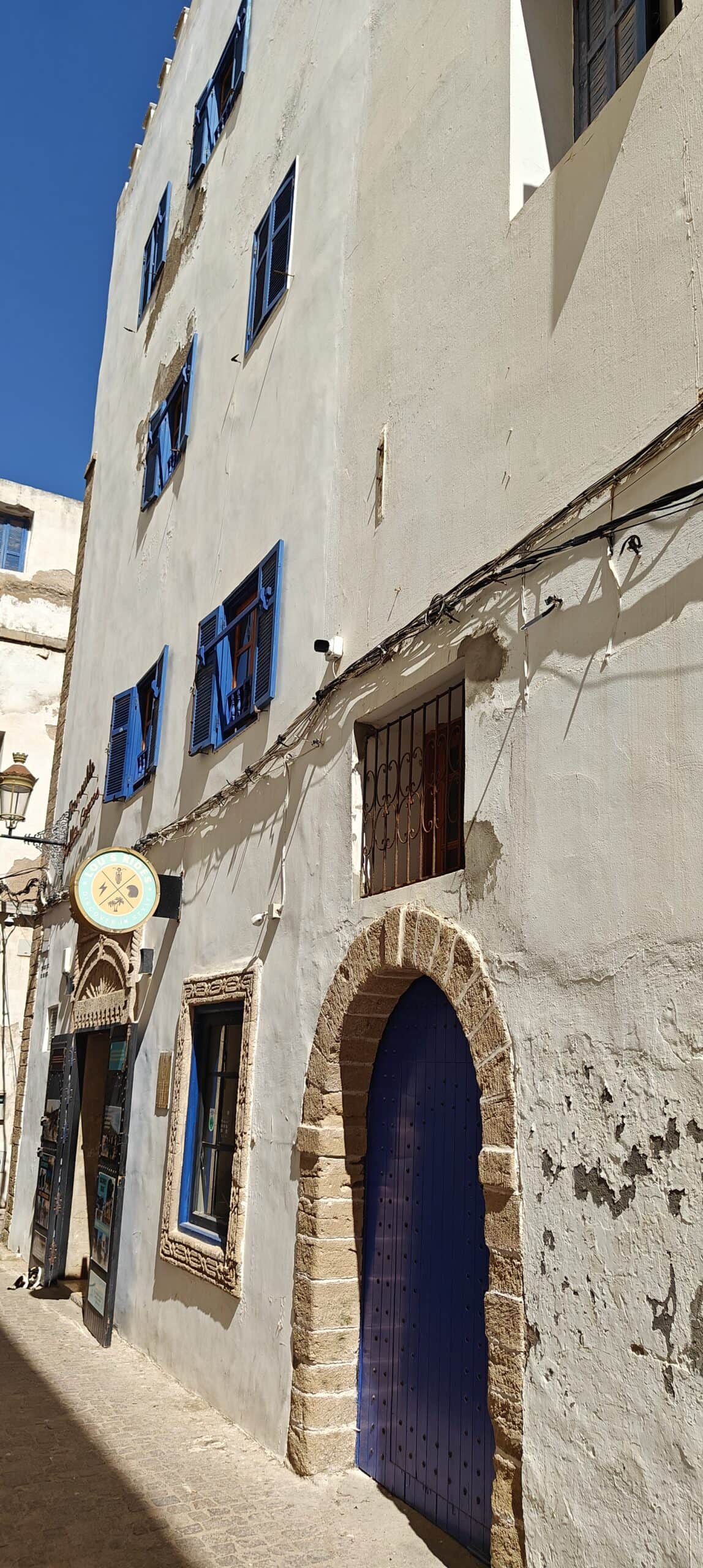
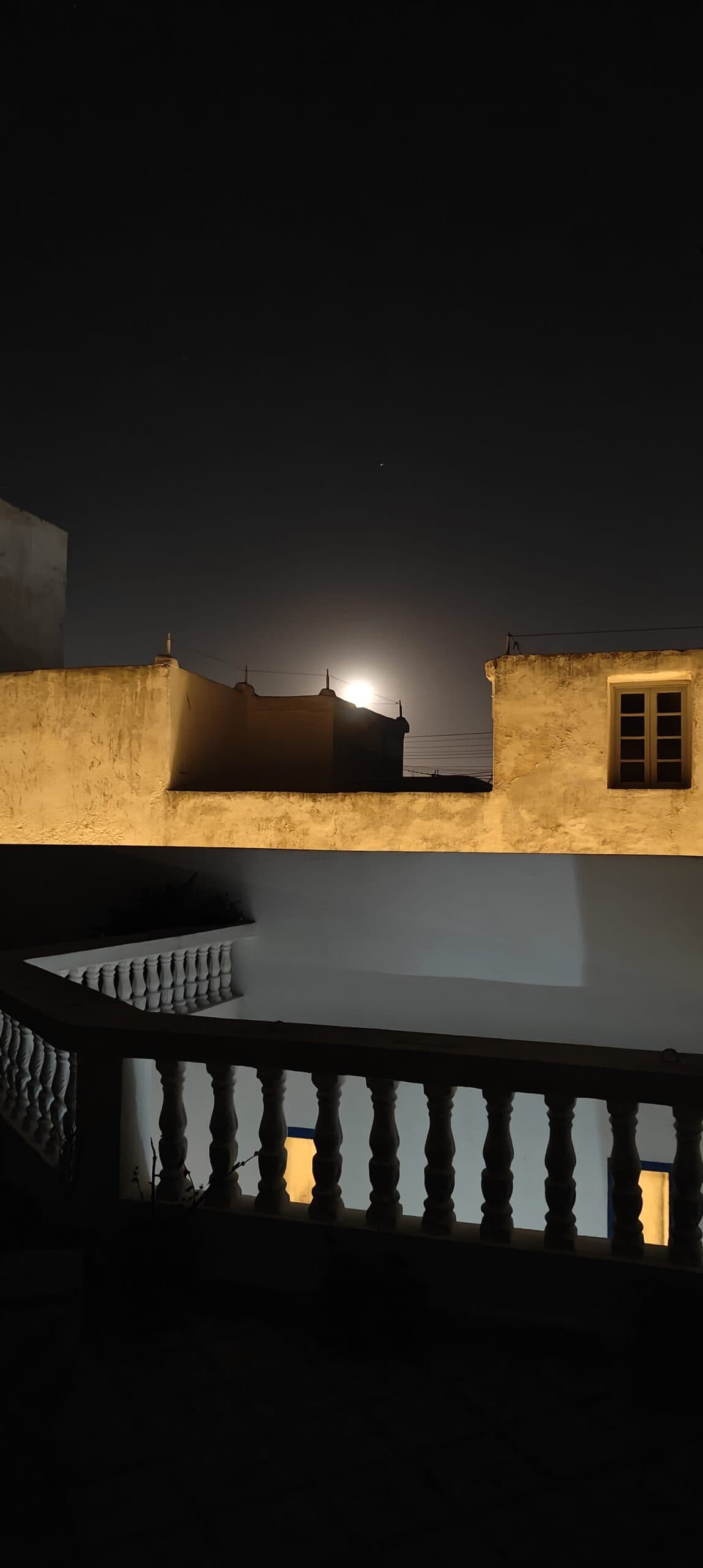
My accommodation for the weekend is a room with a sea view. Without a sea view. I’m staying in a riad—one of those traditional houses with a magnificent courtyard and fountain, but with no windows facing the outside. This ensured that the women inside could go without veils without being seen from the outside. My room isn’t like the pictures; on the contrary, it’s rather run-down. But it has everything I need for the weekend: a bed and a small bathroom.
After putting my things away, I set out to explore. The riad is within walking distance of most attractions—as is probably the case with almost every place here, since Essaouira is a fairly compact city. I start at the harbor, where numerous blue fishing boats are waiting for their next day’s outing. I’ll find out the next day what goes on here once the fishermen have finished their hard work. Every conceivable kind of fish and seafood lies freshly caught on the chipboard display tables. Instead of refrigeration, they seem to rely here on the power of the sun to keep their goods fresh. I briefly lose my appetite for the much-praised jewels of the sea, which you can order at every restaurant here. The fact that most of the negative reviews of the top-rated restaurants report cases of food poisoning doesn’t exactly whet my appetite any further.
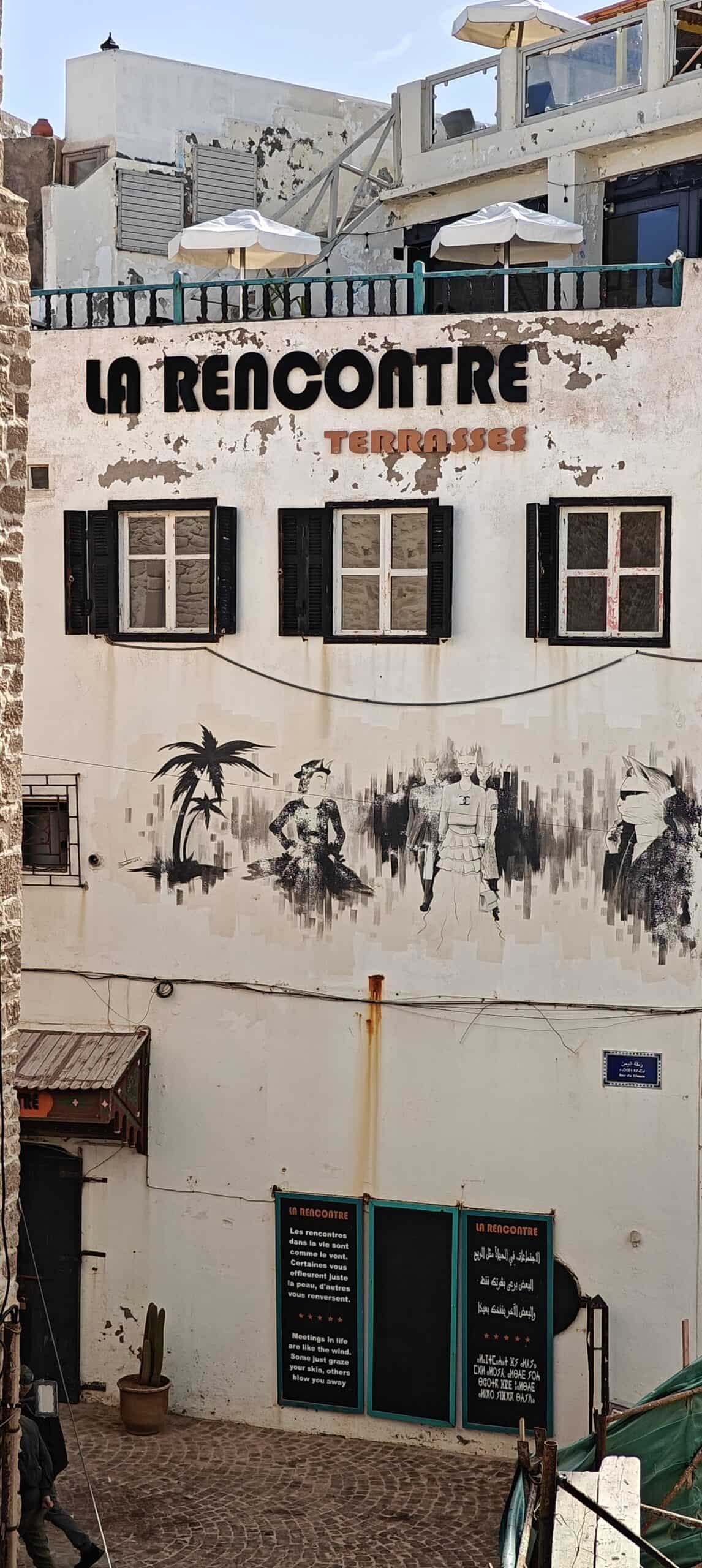
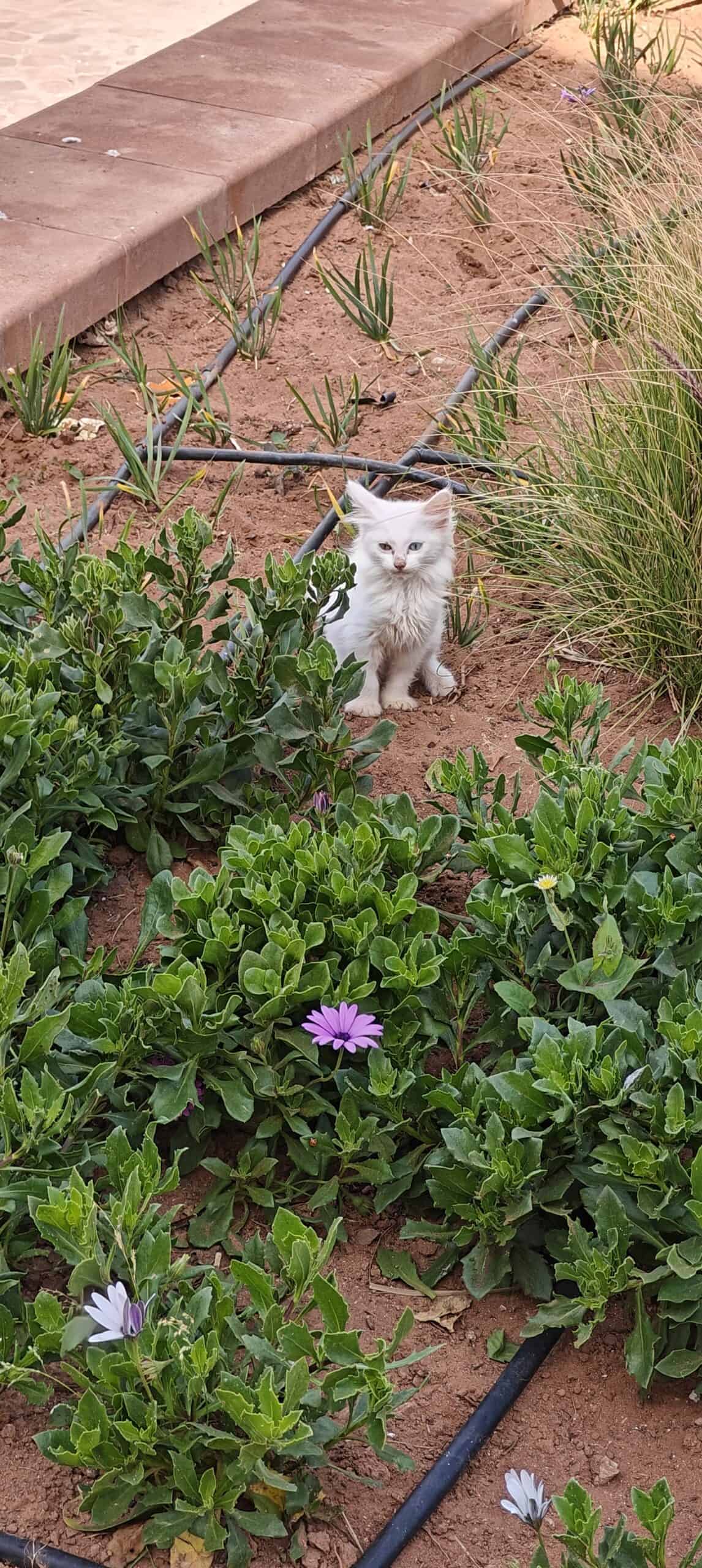
I continue on toward the medina, passing street musicians and a whole bunch of cats. They’re really everywhere here.
In all sizes, shapes, and colors.
They live in peaceful coexistence with the locals, who feed them regularly. The medina is much less hectic than in Marrakesh. However, the goods on offer seem identical to me.
If you've seen one, you've seen them all.
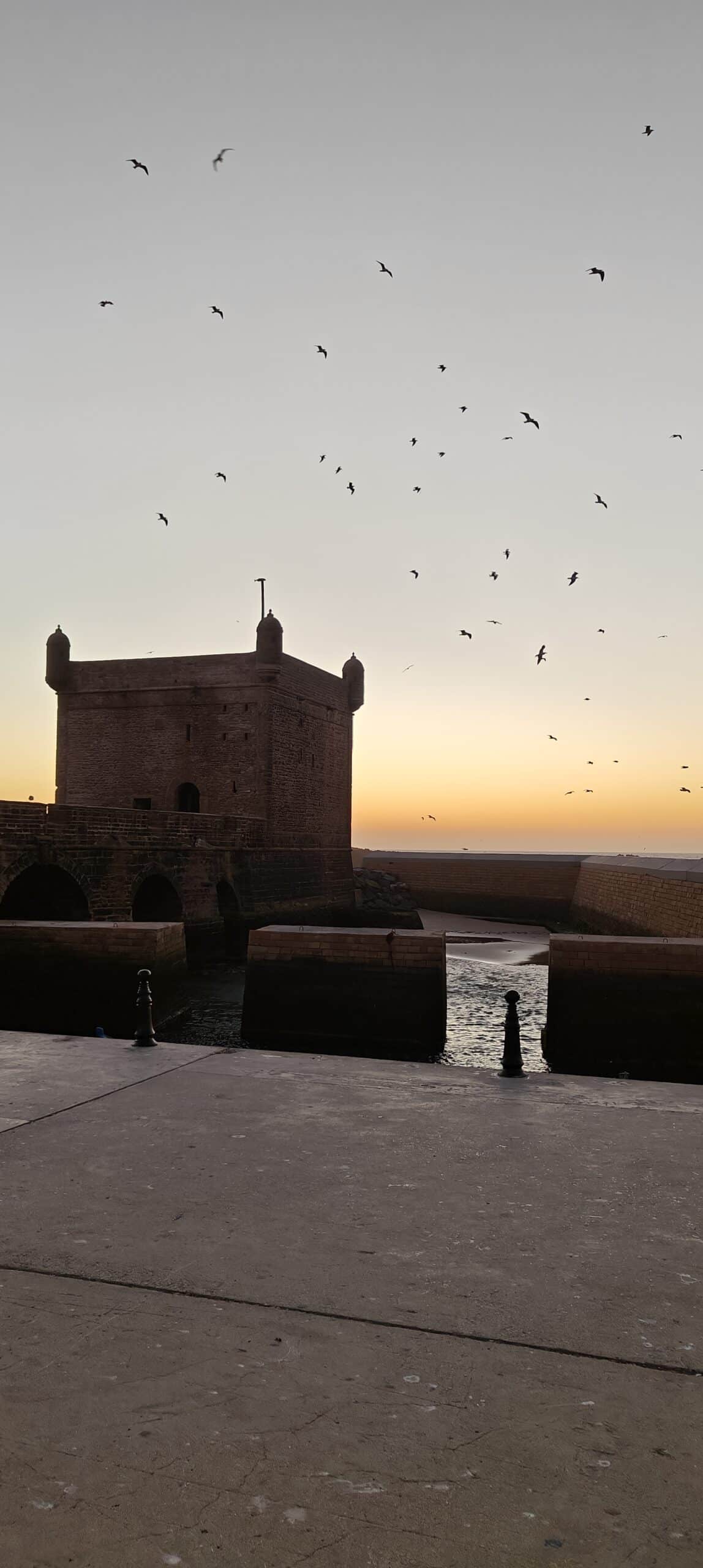
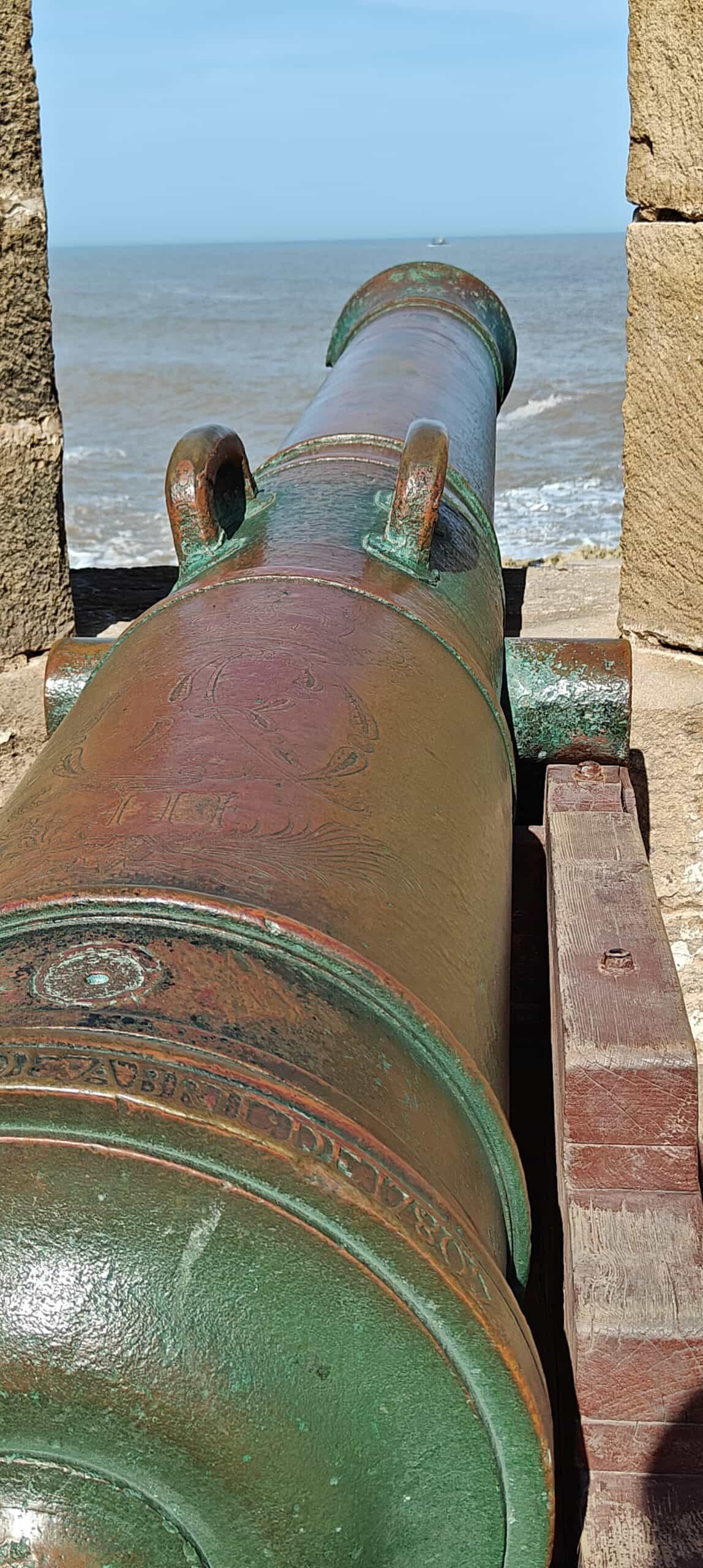
That’s probably unfair, but I really do wonder who’s supposed to buy all this stuff. In the end, the market will sort it all out, Chrischi Lindner would probably say. And it’s true—if no one bought the supposedly hand-made lace lampshades, wood carvings, jewelry, and clothing, the shops probably wouldn’t exist. I’ve arrived at the city’s second highlight: the Sqala Kasbah. An 18th-century fortification built to ward off attacks from the sea. Even today, numerous cannons line the city walls, as if an imminent attack were still expected. Like many places in Morocco, it also appears to be a filming location for Game of Thrones.
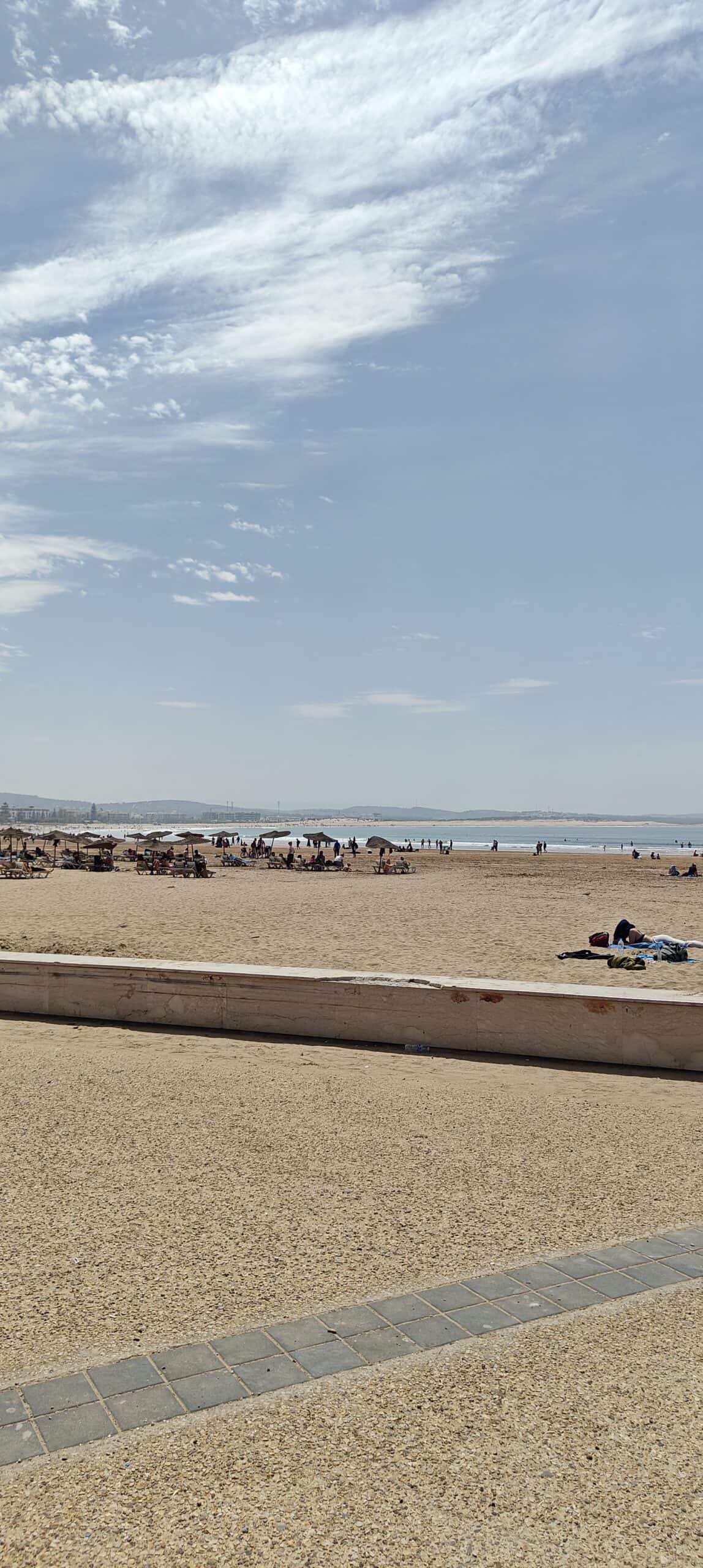
After a stop in the hippie village of Diabat—which, apart from a few stoned hippies, an overhyped Jimi Hendrix legend, and plenty of sand, has little else to offer—I wrap up my visit with a stop at a beach bar featuring cool live music and a DJ.
As I finish writing this blog post on my last day, I’m sitting in a small local café called “Unique Vibes.” I’m listening to a hippie (probably from this very Diabat) who’s strumming every well-known song on his guitar. The music is interrupted now and then by Moroccan “boy bands” who line up in front of the table like in a Mexican restaurant and play a song for a few dirhams before moving on.
My bus arrives in an hour. This time, I’m sure I’ve done enough research on the starting point. There’s only one. After this weekend outside of Marrakesh, I’m glad I did. But one thing remains clear:
For some reason, I just haven't really warmed up to Morocco yet.
I remain optimistic, since I still have plenty of time to continue exploring the country…