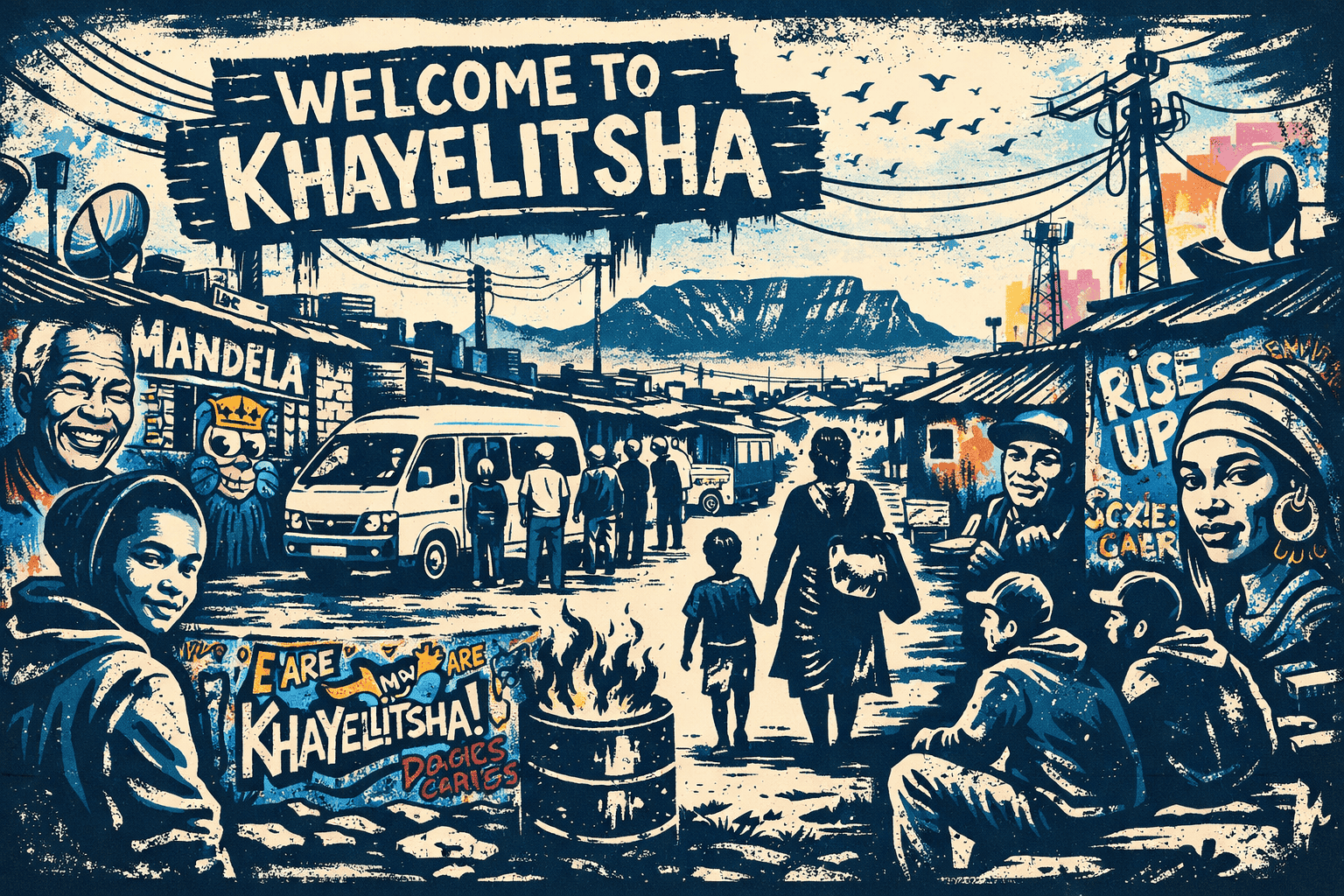
While I’m recovering from my lumbago, I’m missing out on a long-planned street art tour. Starting in Woodstock, Cape Town’s oldest neighborhood, the tour is supposed to take me to Khayelitsha. You shouldn’t visit either place alone. While the main street in Woodstock still seems safe to walk down, after taking two wrong turns you suddenly find yourself in a super dodgy area.
Khayelitsha takes the cake, at least if the stories are to be believed. It is one of South Africa’s largest townships. According to estimates, over 2 million people live there. By comparison, about 200,000 live in downtown Cape Town.
Given these prospects, I’m starting to wonder if it’s really a good idea to go there. The fact that all my Uber drivers also steer well clear of the area raises a logistical question: How do I get there—and, more importantly, how do I get back? In my mind’s eye, I can already see myself waiting forever for an Uber to take me back—surrounded by marauding gangs of robbers. But somehow, this has been on my mind for a while now. Anyone who has read my article about my arrival knows that I’ve had a strange feeling ever since I got here.
I want to see Africa.
I share my concerns with Juma, the tour organizer, via WhatsApp. He gives me Ishmael 2’s number—at least that’s how he’s listed in Juma’s contacts. So I agree, strike a deal with that driver, and am glad there’s no turning back now. The next morning, I have to get up early. I have a hangover.
The night before, I’d gone “for a beer” with two strangers at Van Hunks—my go-to bar right in the neighborhood, which feels like a second living room. A few beers and brandy and Cokes later, I’d managed to get out of there just in time.
Once we arrive in Woodstock, our tour guide greets us at the Woodstock Exchange—a former factory that has now become a home for artists from all over the world. So it’s no surprise that half the factory grounds are already covered in street art. But can you even call art “street art” if it’s not actually on a street? Let’s not be so picky, I think, and before we know it, we’re already in the middle of one of these dodgy alleys. It’s a bit like a wild mix of Bo-Kaap and Gardens. Colorful houses meet old buildings from the colonial era. It’s dirty and smells like a mix of weed and urine. Children play in the street, surrounded by shady-looking figures on every street corner who look as if they’re on the lookout for something or waiting for someone.
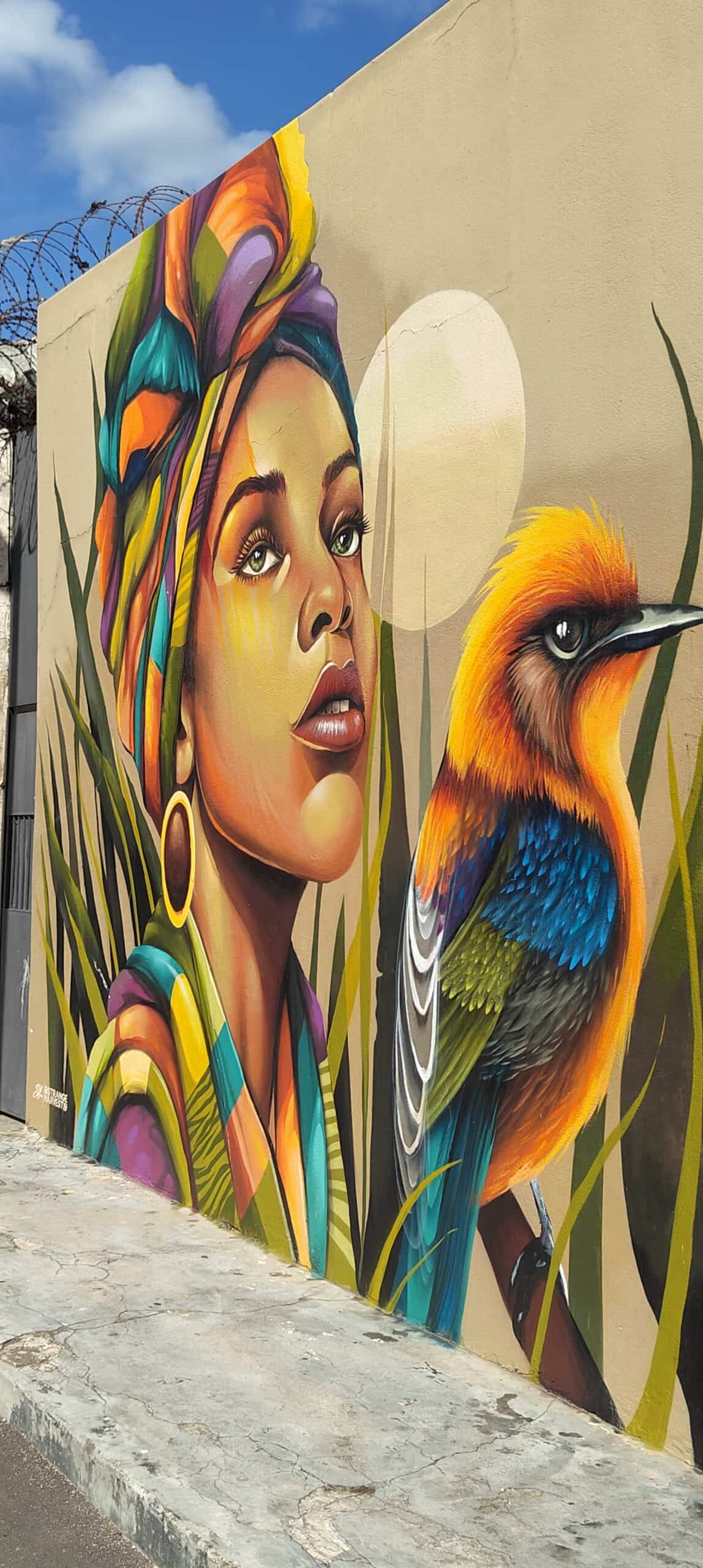
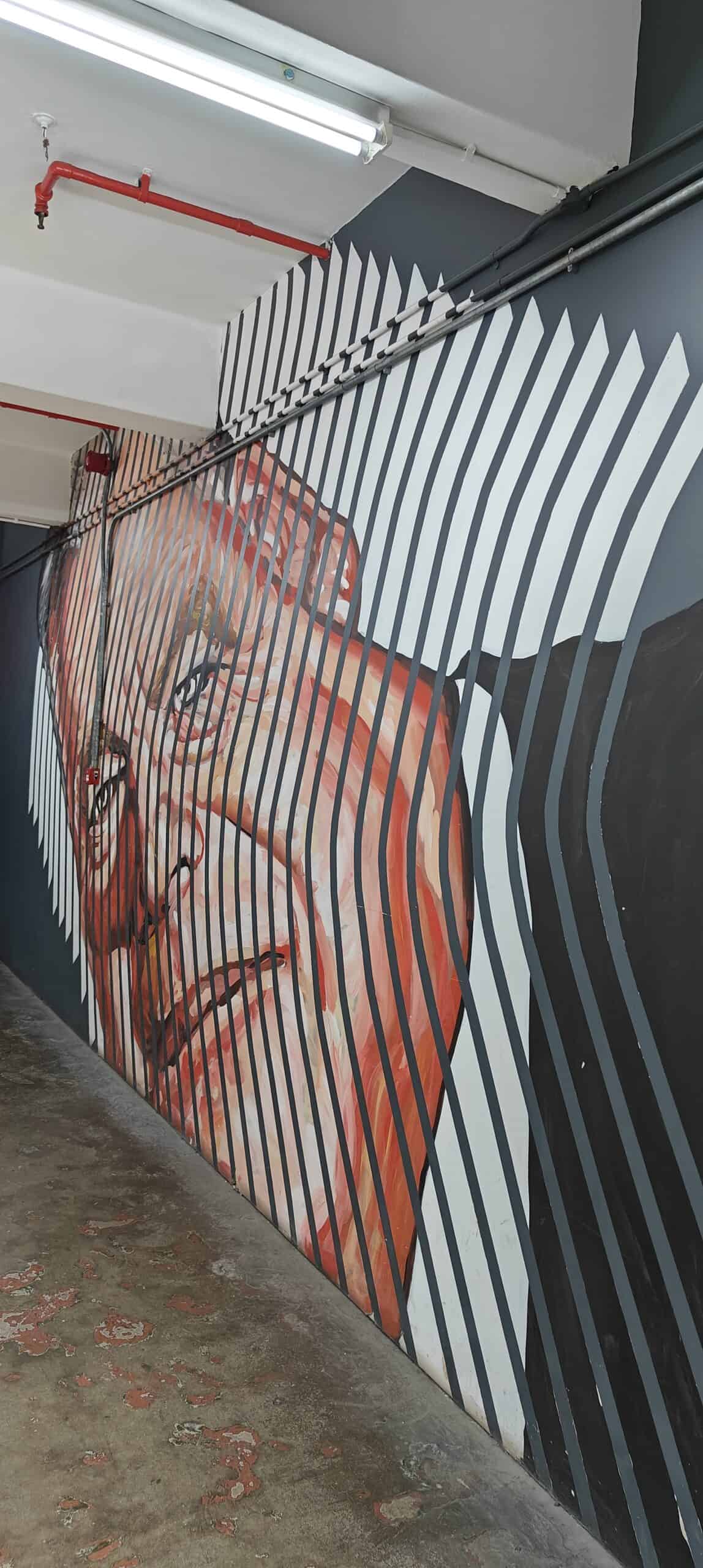
We go from one mural to the next. Each painting tells its own story. As is often the case with art, I sometimes grasp the artist’s vision more clearly than others. But the works by South African artists, in particular, speak a clear language. They deal with coming to terms with the legacy of apartheid, poverty, and hopes for the future.
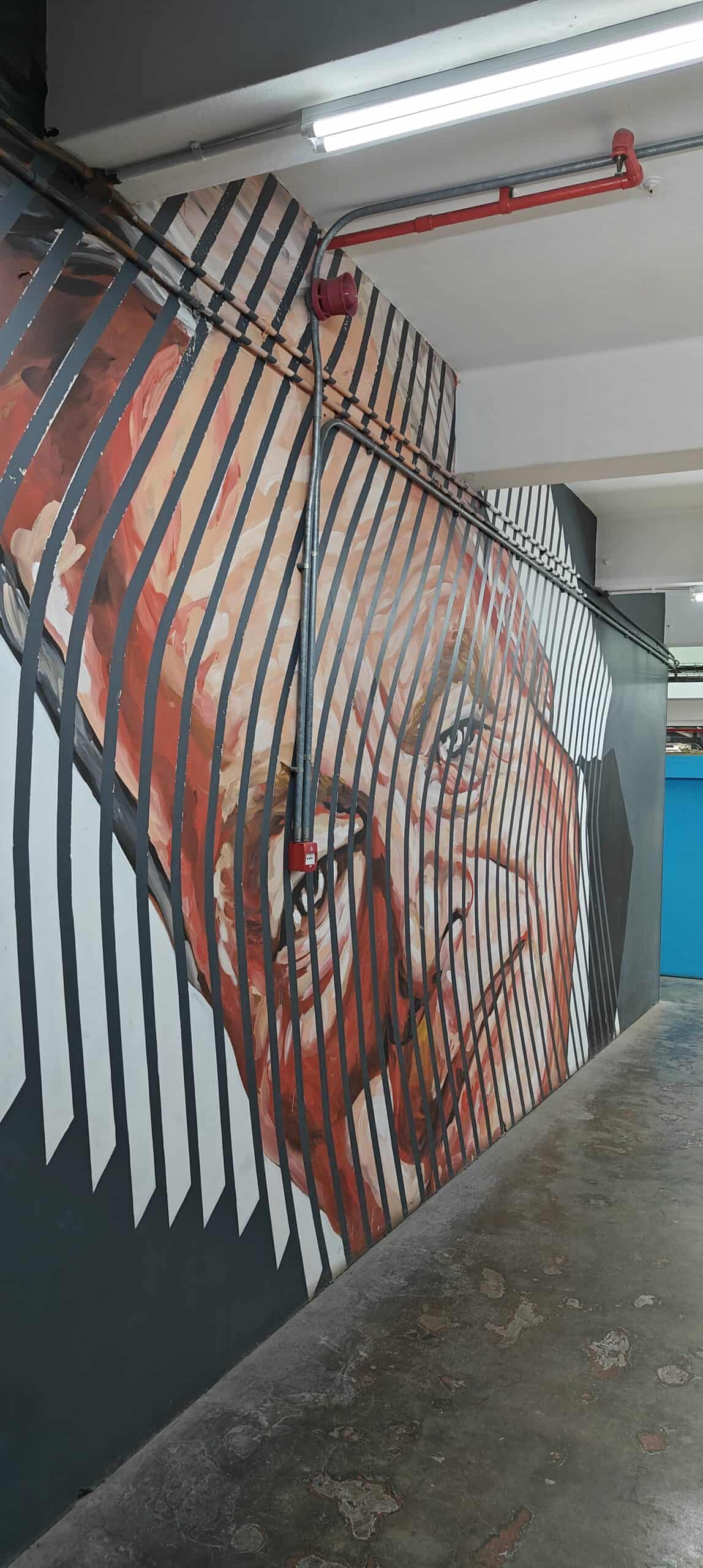
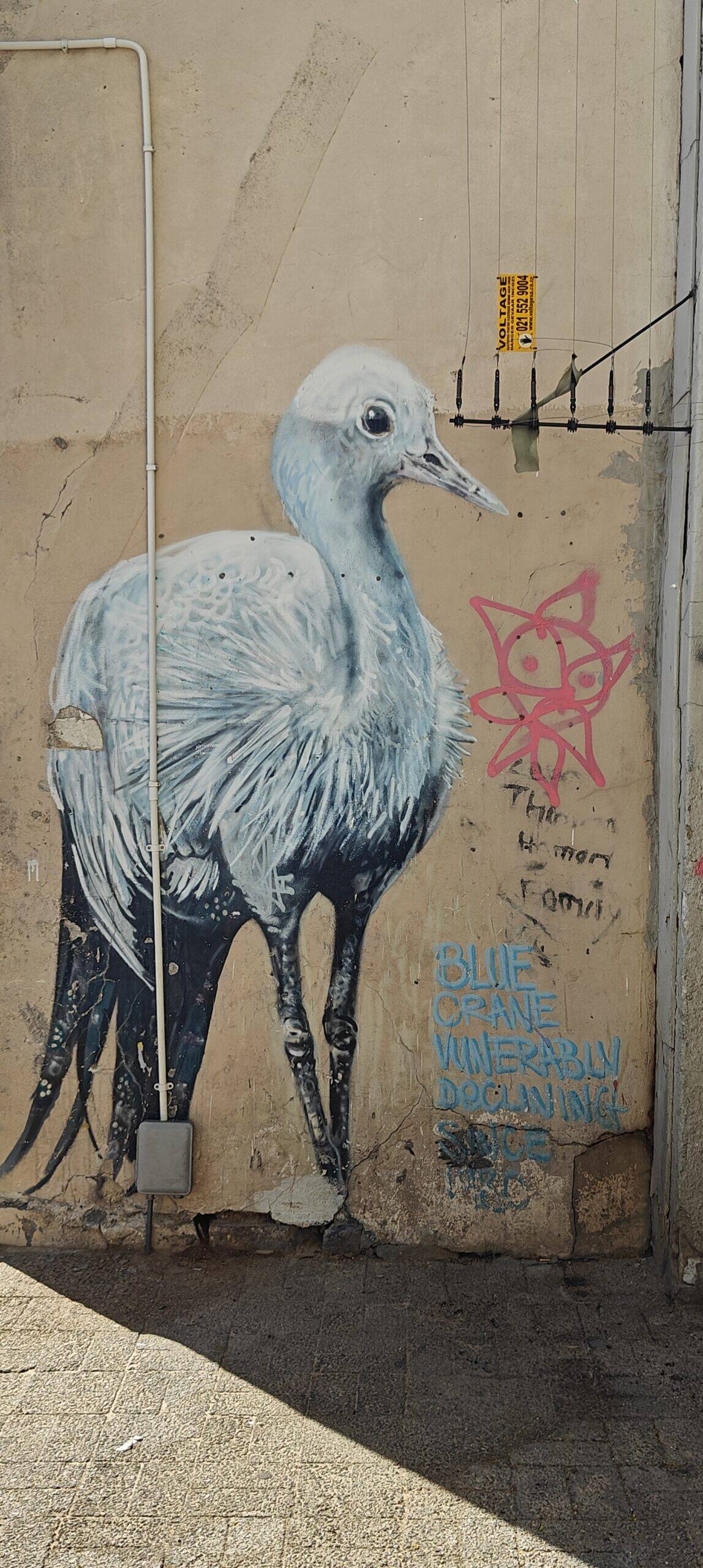
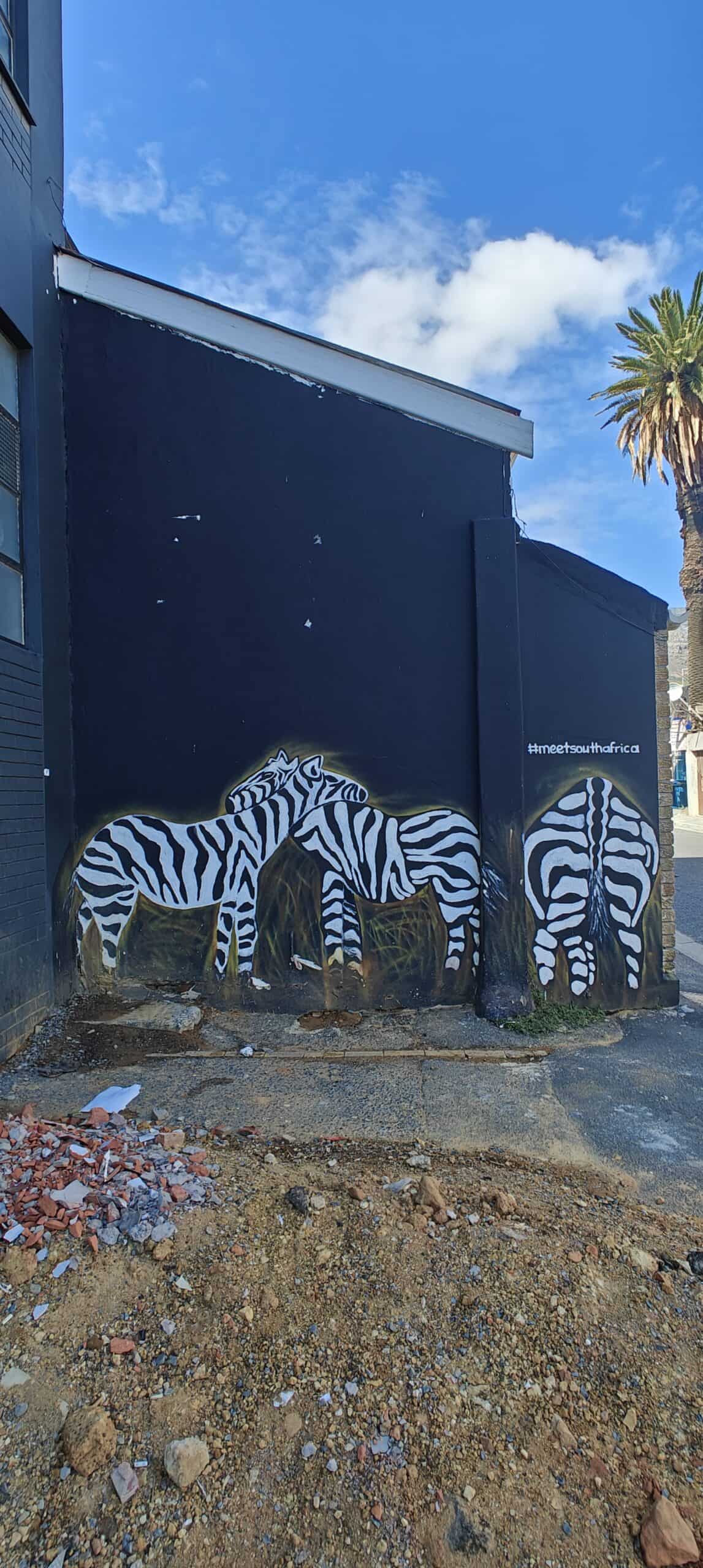
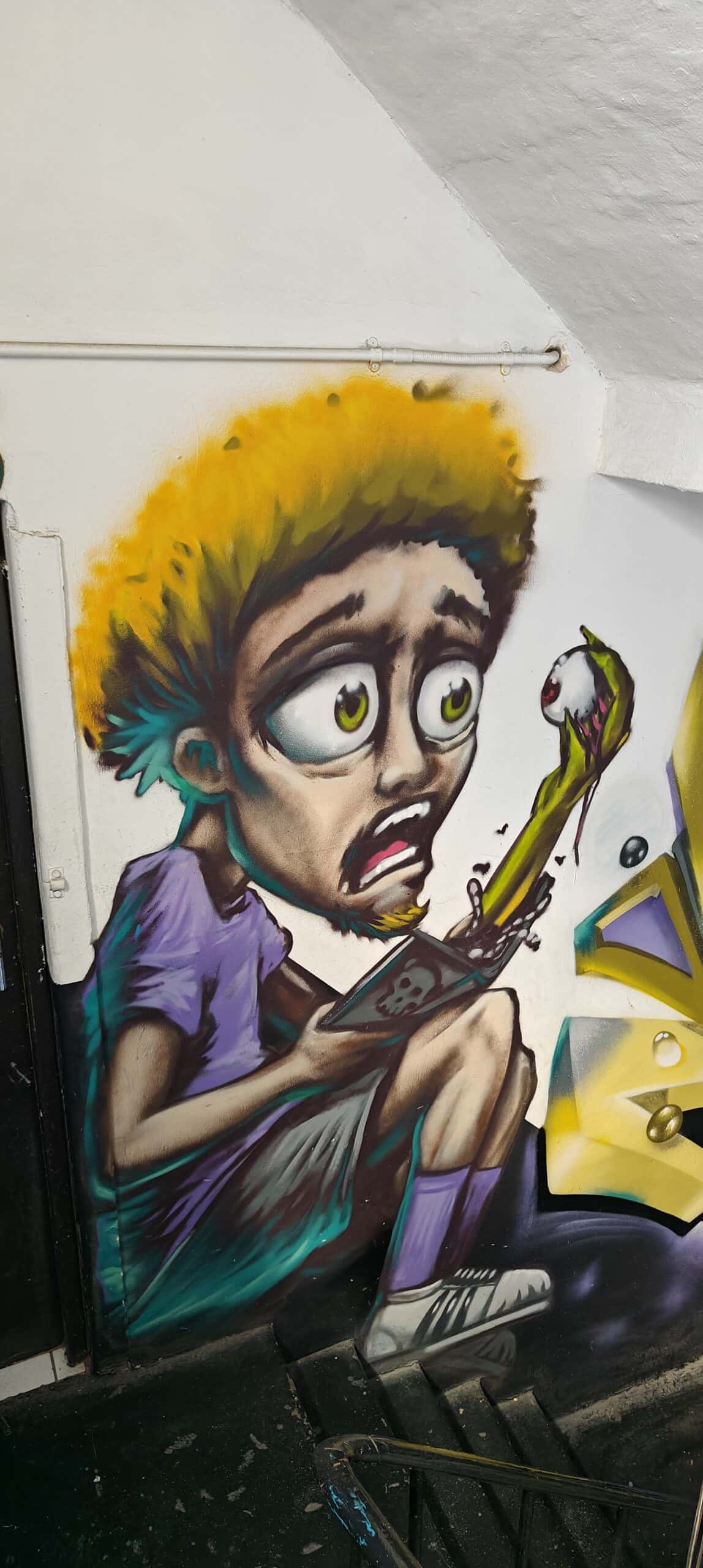
We’ve reached the end of the tour. But my actual tour is just about to begin. While the ten people from Woodstock stay behind, I seem to be the only one heading further into the township. Ishmael 2 is already waiting for me. Once I’m in his car, there’s no turning back. During the ride, we talk openly about how I’m feeling. He, himself a resident of Khayelitsha, tries to allay my concerns.
But the closer we get to the township, the more surreal it all seems to me. Suddenly, every patch of land seems to become a potential building site with a corrugated-iron shack standing on it. You have 48 hours. If it isn’t torn down by then, you can keep that little piece of land—and everything on it. I would later learn what it means to live in a shack like that.
We’ve arrived in Khayelitsha. I’m amazed by the mix of small stone houses, functional shipping containers, and corrugated-iron shacks as far as the eye can see. Ishmael 2 points to a street and says, “You must never turn left here.” Okay, I think. And I wonder if I’ll ever have to face that decision.
A few minutes later, we arrive at the meeting point. Siki’s Koffee Kafe. A small coffee shop in a residential neighborhood with real houses—perhaps even the only one in all of Khayelitsha. Before we get out, I discreetly point out to Ishmael 2 the cash I’d placed in his center console, worried it would be stolen the moment the car was left unattended. He laughs loudly and gets out.
Sikelela, the café’s founder, is one of those success stories. Starting out as a dishwasher at a coffee chain, he moved to London and then returned to Khayelitsha, where he now runs his own roastery and café out of his mother’s garage. As I later learn, it’s still a garage. Every evening, everything is cleared out and the car is parked inside. I don’t know why, but my first thought is:
Unthinkable in Germany!
Probably because I’m just so German in so many ways—guilty as charged, Your Honor. How do I know all this? From Nomonde. She’s my tour guide. A local artist in her mid-20s with long, wavy curls. We’re sitting together in the backyard having coffee, and she’s trying to prepare me for what lies ahead in the next few hours. To sum it up, it’s going to be:
Loud.
Chaotic.
And I won't understand a word of it.
In Khayelitsha, people don’t speak English—they speak Xhosa. It’s a language unlike any I know—full of click sounds. After a brief introduction, we leave the Safespace Garage, and suddenly I’m right in the thick of it. The only white person there, with bright blue-gray eyes and snow-white hair that matches the color of my skin. As if that weren’t conspicuous enough, a petite Rastafarian woman walks beside me, whom everyone here seems to know. “Be sure to greet everyone nicely,” she drilled into me, and that’s exactly what I do. People stare at me, but no one greets me back. I fulfill my mission anyway.
It quickly becomes clear to me that this is less about street art and more about the art of surviving on the streets.
We reach the “downtown” area. In addition to informal shops—as the illegal stores are called here—there’s a train station and a proper shopping mall. It stinks to high heaven, and there’s trash literally everywhere. In a way, Khayelitsha is a strange mix of creative improvisation and solid infrastructure. There’s no trace of all the horror stories I’d heard beforehand. Nomande tells me, however, that the residents handle their own affairs here despite the seven police stations. People here are let down by the police too often. Strangely enough, the reality of vigilante justice seems to have a rather cleansing effect on the atmosphere here. The shame or fear of getting caught seems too great—after all, everyone knows each other here. “You shouldn’t go there,” says Nomande, pointing in the same direction as Ishmael 2. In that direction lies Khayelitsha, the place everyone had warned me about. Marauding gangs, kidnappings, muggings, murders. So I see no reason to go there, and we move on.
On the way to the highlight of the tour, Nomande shows me all kinds of street art. One piece in particular has stuck with me: it’s a self-portrait of a man of great talent who lost the battle against his own demons. Today, he lives in his own world, clouded by crack. He serves as a cautionary tale for the children in the neighborhood. By now, we’ve ventured deep into the township. Here, there are almost nothing but corrugated-iron shacks. Without Nomande, I’d be lost on these narrow sandy paths. I notice that everyone seems to have electricity, but no one has running water. Ten shacks share a single water source and an outhouse. Yuck.
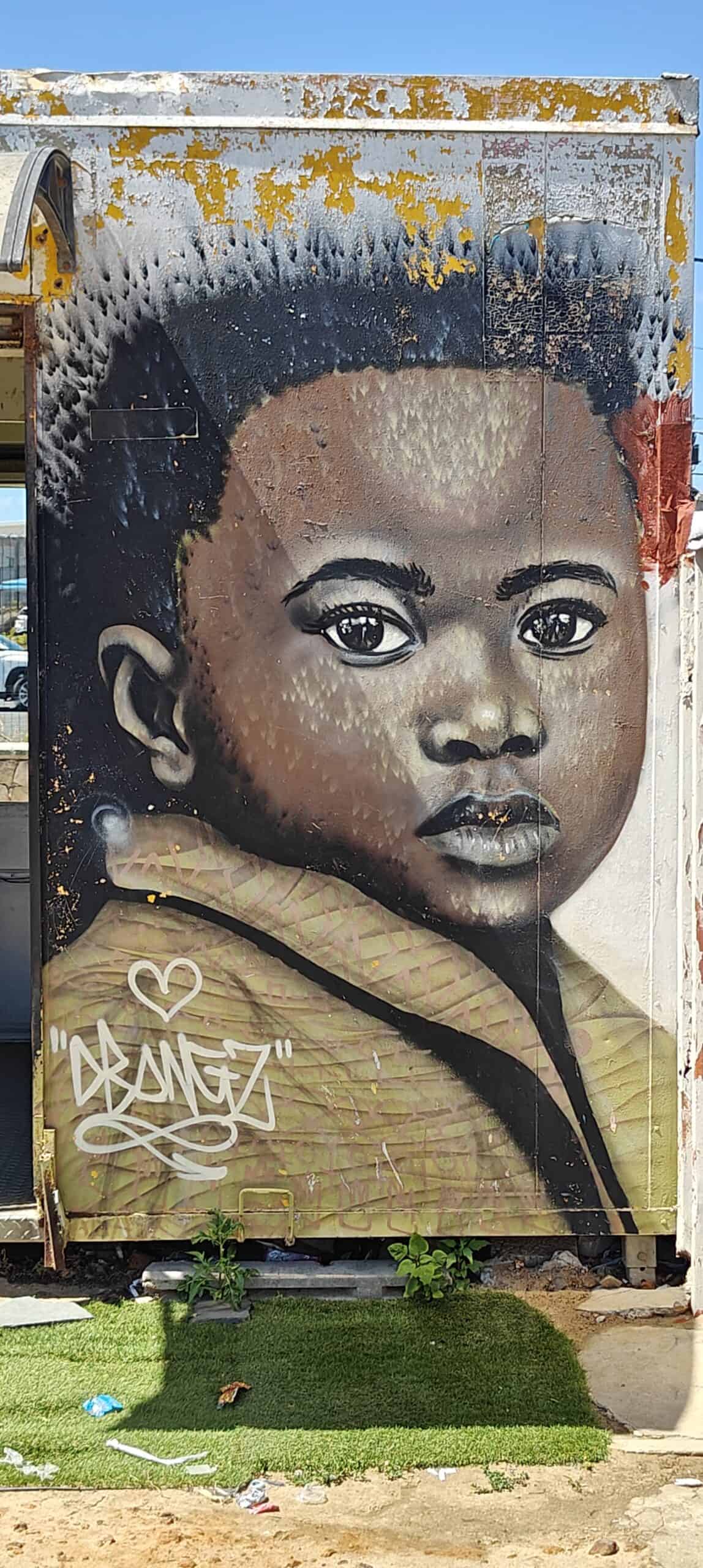
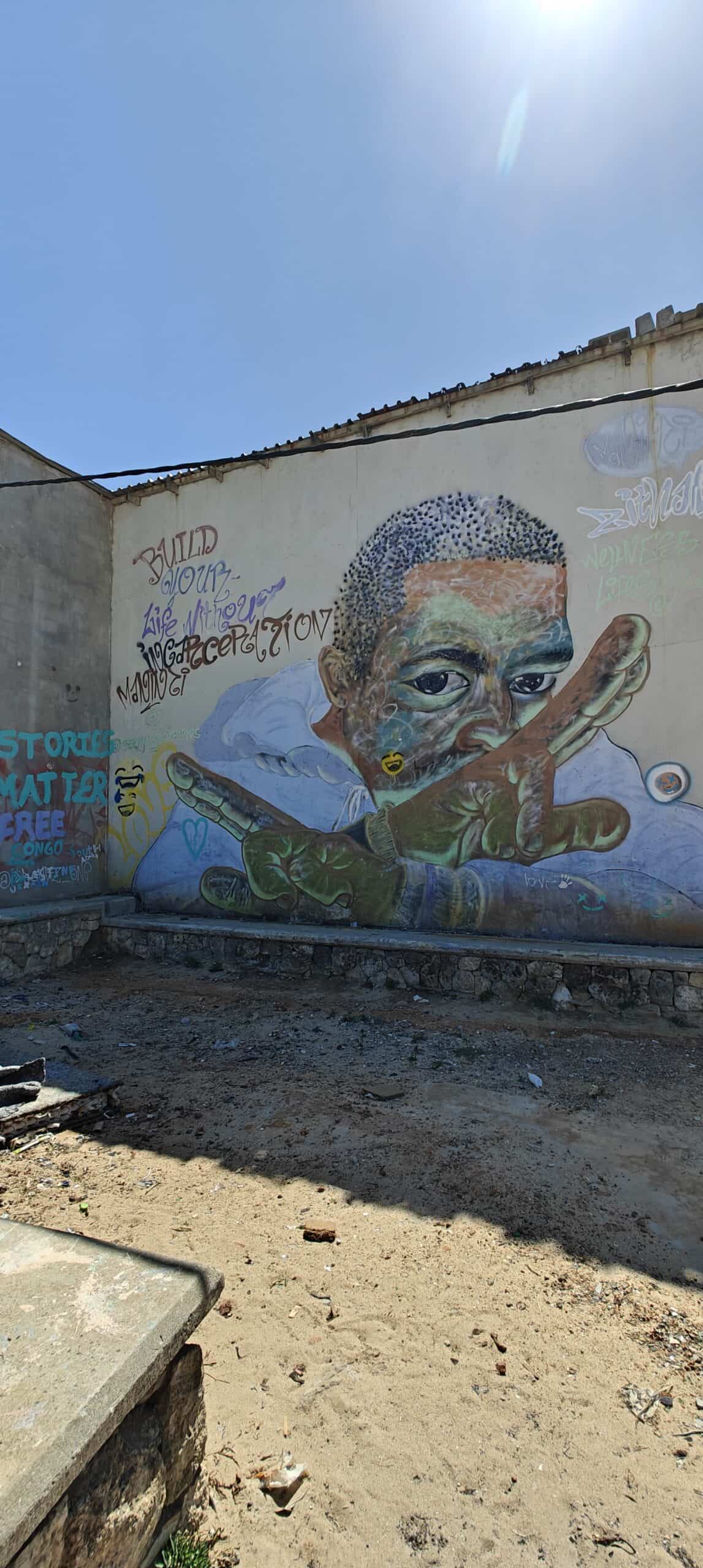
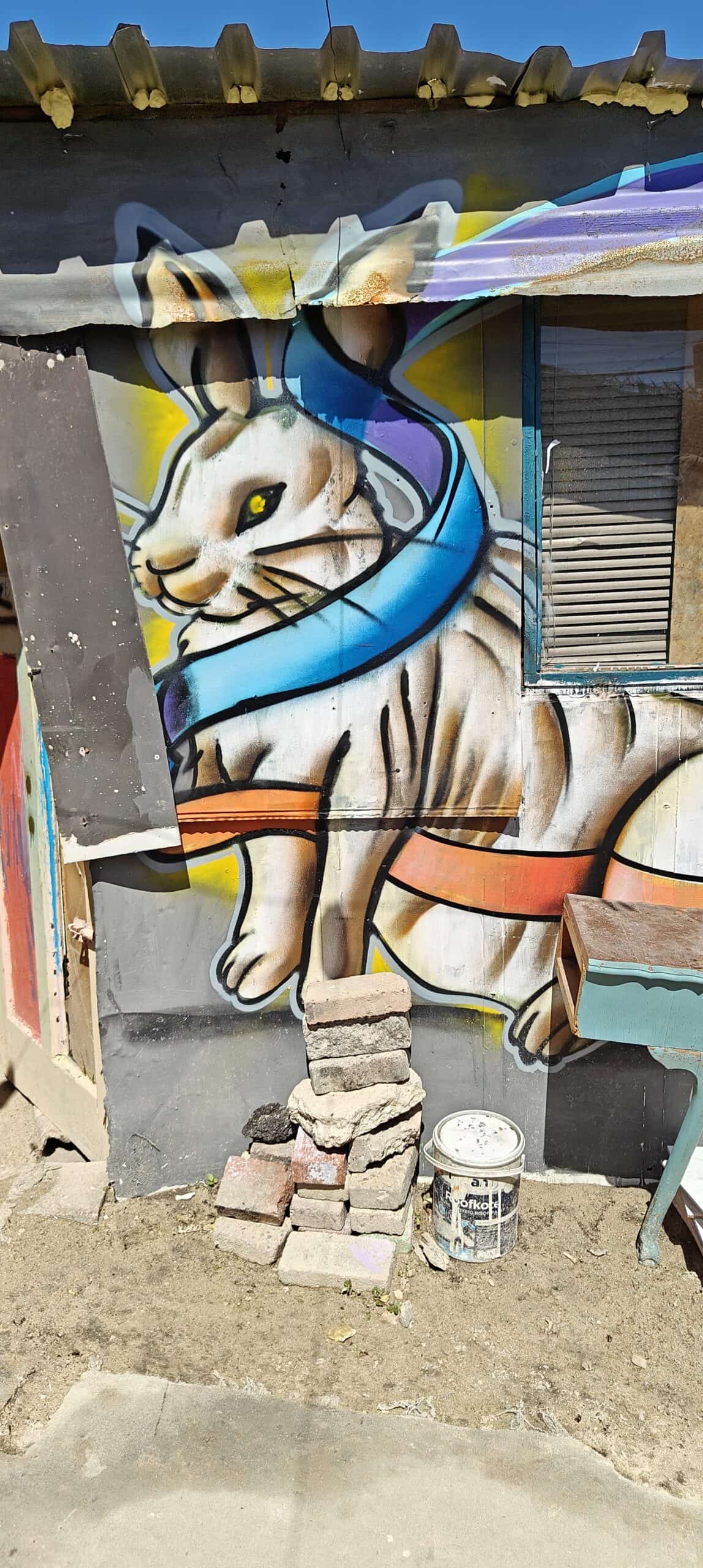
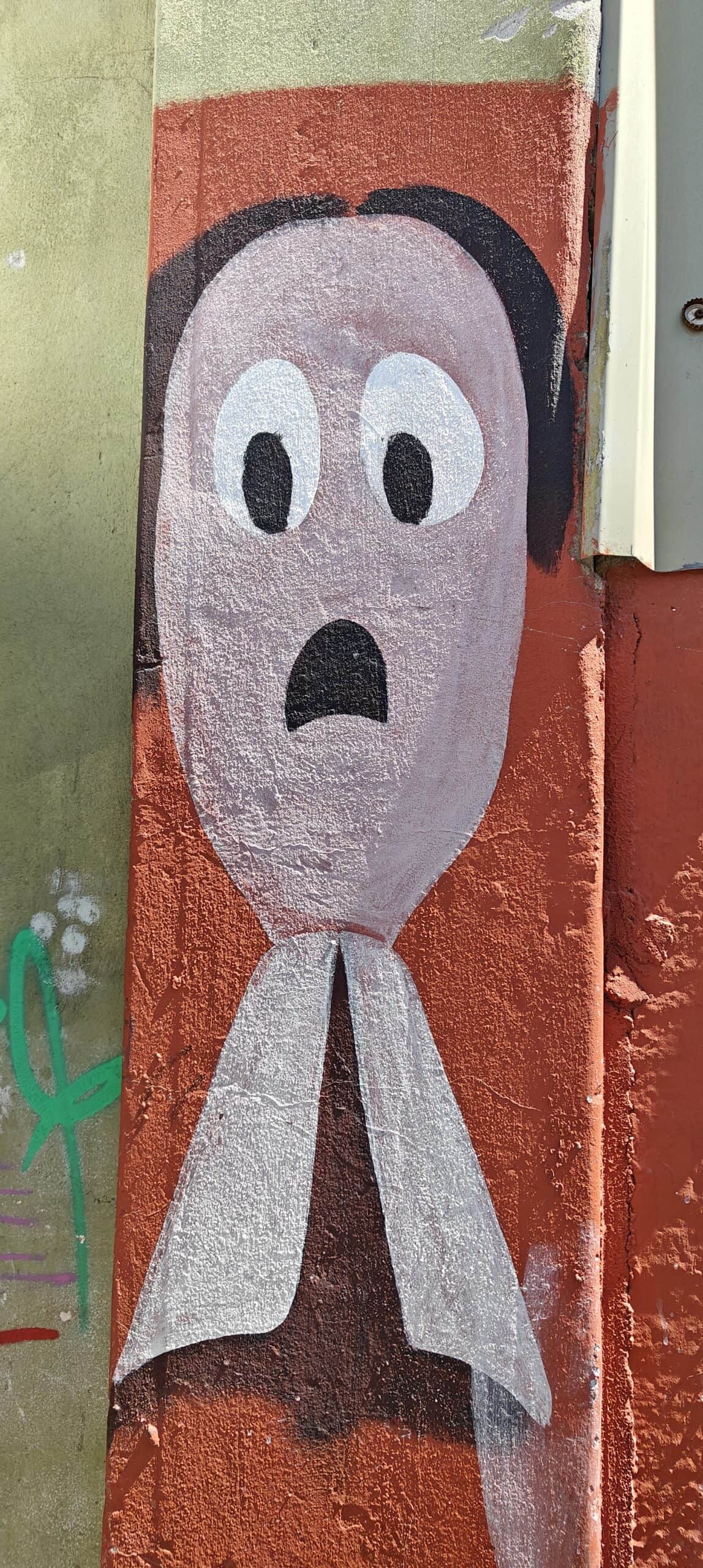
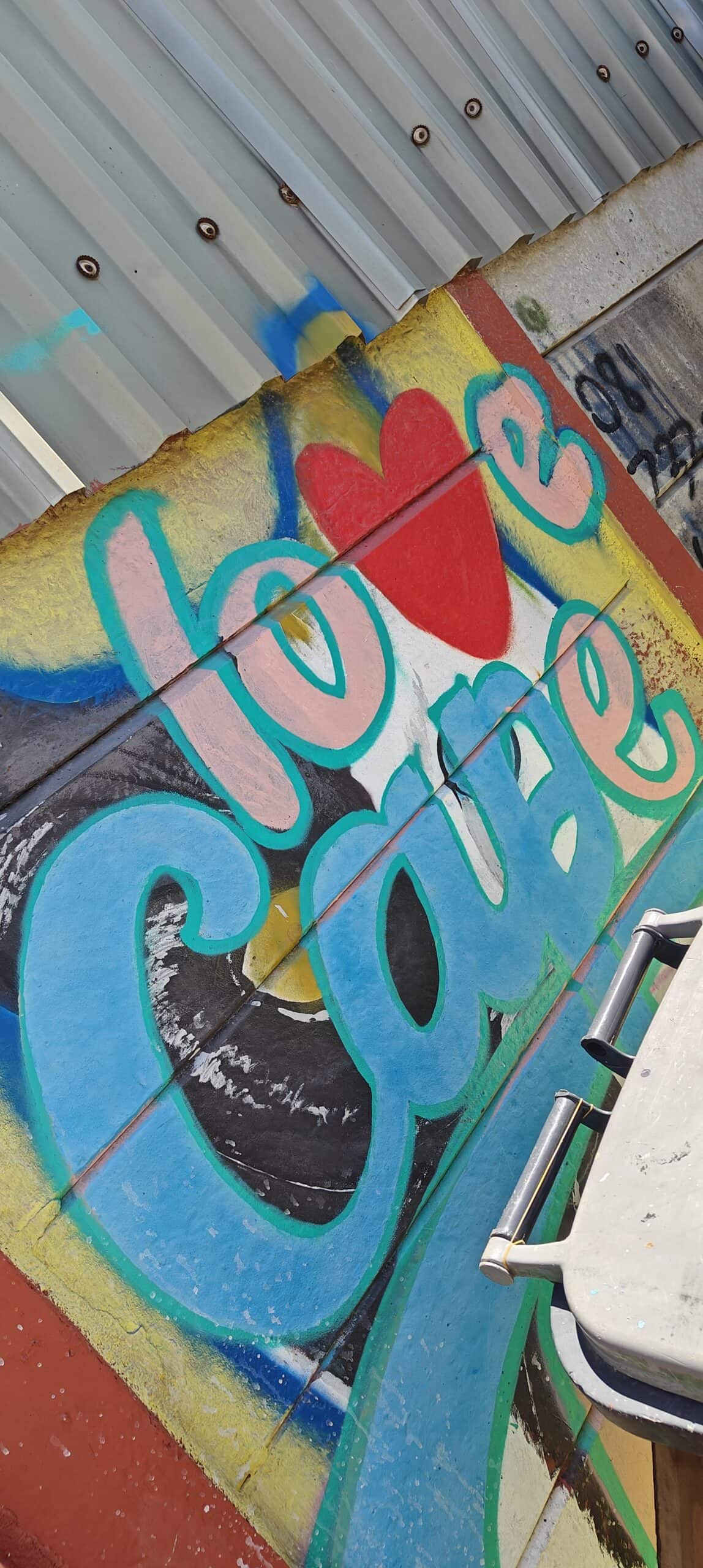
We’ve reached the end: the Story Room. A creative hub that supports the work of local artists. What sounds so grand is actually just three corrugated-metal shacks with a small community garden.
I meet Nomande’s brother. He’s a little younger than me and, like her, an artist. As he introduces himself, he apologizes for his state. He’s high and drunk. It’s 1:00 p.m. He tells me about his art and the themes he explores in it. Suddenly, he stops. He looks deep into my eyes and says that gray-blue eyes are rare around here. He says he can see into my soul because of that. What he sees remains a mystery. He asks me if I could spray a word on one of the walls—a word that captures how I feel about Khayelitsha. Based on what I’ve seen here, I choose “Creativity.” I’m deeply impressed by how people here in the neighborhood can make so much out of so little.
While I wait for Ishmael 2 to pick me up, I’m standing with Nomande’s brother in his “studio.” To our left, baby food is being cooked; to my right, YouTube is playing on an outdated flat-screen TV. Separated by a curtain, I can see a row of mattresses. In this cramped space, I count at least eight sleeping spots.
Just before I get into the car, Nomande tells me that her father was the leader of a gang and was shot while doing so. Her brother, she says, decided against following in his footsteps and chose instead to lead this life, which is probably less privileged. Phew, I think.
I say goodbye, get into the car, and have to take a deep breath first. Ishmael 2 tells me that he lived in the CBD for a while, but couldn’t stand it for long before returning to Khayelitsha. In a way, I understand him when I imagine growing up like that. But in another way, I don’t. After a month and a half, though, I’ve definitely gained a new insight:
Today I saw Africa…