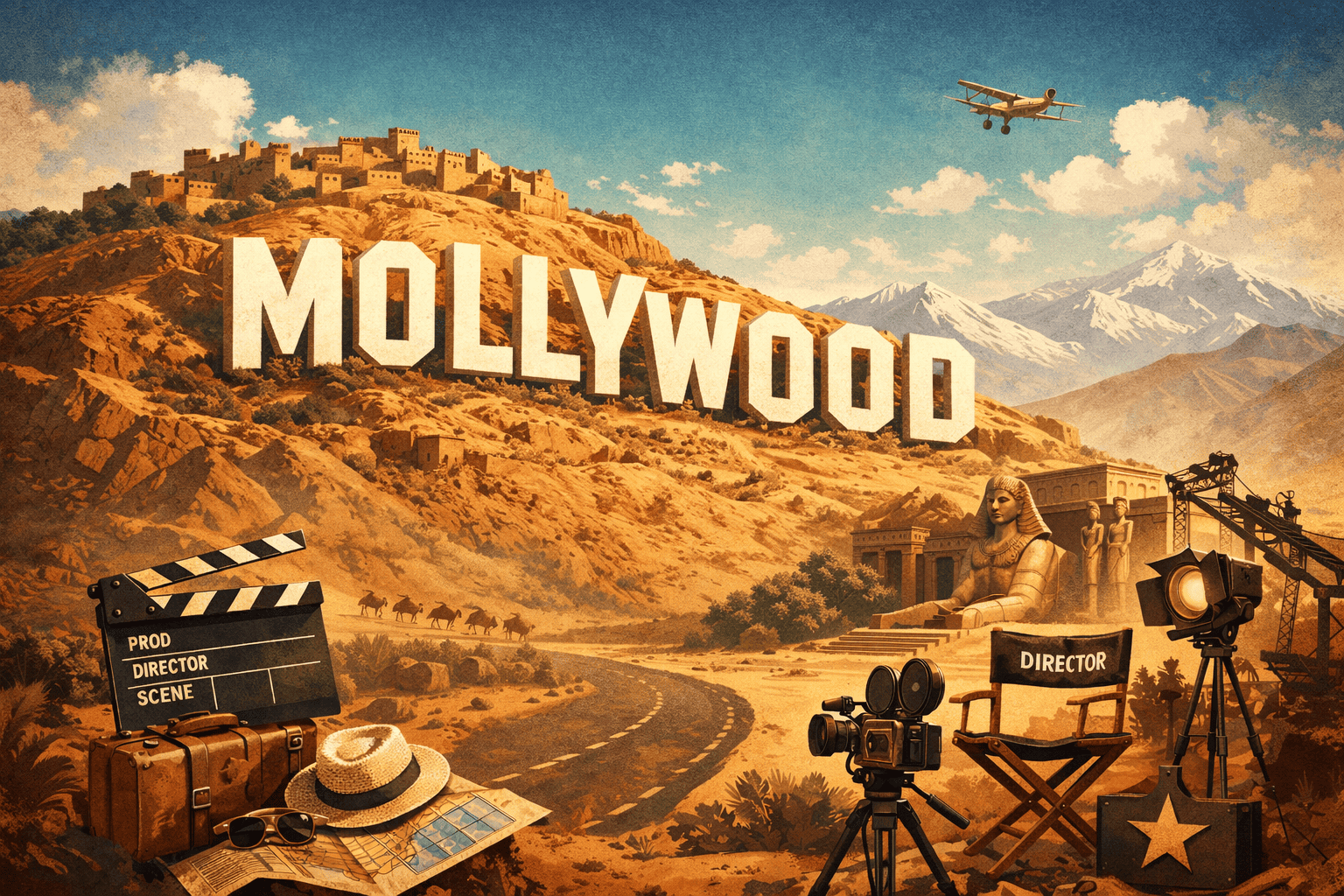
My day starts early. At 8:00 a.m., my bus leaves for Ouarzazate, which connoisseurs pronounce “Wua-sa-satt.” It’s known as the Hollywood of Morocco and serves as the gateway to the desert. I’ll find out exactly what that means a little later. My bus is once again operated by Supratours, which seems to take you to every corner of the globe for 100 dirhams. This time, I head straight to the bus station without passing through the prison. As I’ve come to expect in Morocco, the bus is already waiting 20 minutes before departure. At least on long-distance routes, they do everything here to be on time. A virtue from which our Deutsche Bahn could take a leaf out of their book. After I’ve boarded and taken my seat, I turn off my phone. If there’s one thing I’ve come to appreciate about traveling alone, it’s the feeling of being fully in the moment—without Instagram, Spotify, and the like. The downside is that you’re mostly left alone with your impressions, but that’s one of the reasons I write this blog.
Once we’ve been away from Marrakesh for a while, the view changes abruptly. The orange and red hues, which had seemed almost monotonous, suddenly give way to endless green rolling hills. It seems as though nature is now using only orange splashes as accents, like in a painting you stand in front of and wonder, “What was the artist thinking?” The streams, which were still dry on my way to Essaouira, suddenly carry water down from the mountains into the valley. Again and again, you see small waterfalls in the distance. To get from Marrakech to the desert, you have to cross the so-called “High Atlas.” The route leads over the famous “Tizi n’Tichka” mountain pass and, at times, reminds me of the east of my adopted home, Tenerife. In that moment, I realize once again just how beautiful Morocco actually is—at least as long as you don’t stay in the cities for more than a few days. Even though I hadn’t really warmed up to the country until now, I think I could definitely see myself taking a road trip across the country.
The further we wind our way up the narrow, twisting road toward the highest point of the pass, the more the colors change. Whereas everything was green just a moment ago, sandy hues now alternate with shades of charcoal gray. In the background, the ever-present snow-capped Atlas Mountains rise up. The numerous landslides and boulders the size of small cars that repeatedly block the roads reveal the harsh reality of life for the people up here. It shows that as long as we fail to live in harmony with nature, it will eventually reclaim everything. Be it roads we blast through mountain slopes for our own benefit, houses we build too close to riverbeds, or the “man-eating monster bears” whose forests we venture too far into.
We are now in Berber territory. We’re essentially visiting Morocco’s indigenous people. For thousands of years, they have lived in harmony with nature, whether in the mountains or the desert. That said, it’s surprising how long they had to fight before their language, Tamazight, was recognized as an official national language in 2011. Tamazight is one of the oldest languages in the world. In addition to the words themselves, they also have their own alphabet, which looks a bit like hieroglyphs and is found primarily on all kinds of signs. The Berbers’ connection to nature is reflected in their flag. It consists of three colored stripes:
Blue for the oceans.
Green for the fertile mountains.
Yellow for the sand of the Sahara.
All three regions are linked by the Yaz symbol (ⵣ). It stands for the word Amazigh (the name the Berbers use to refer to themselves) and means something like “free person.” The Berbers are proud to be Berbers. Zaid had already told me about it on the train, his eyes shining, that he comes from this region. And in Ouarzazate, too, the people I meet later don’t miss a chance to tell me about their origins.
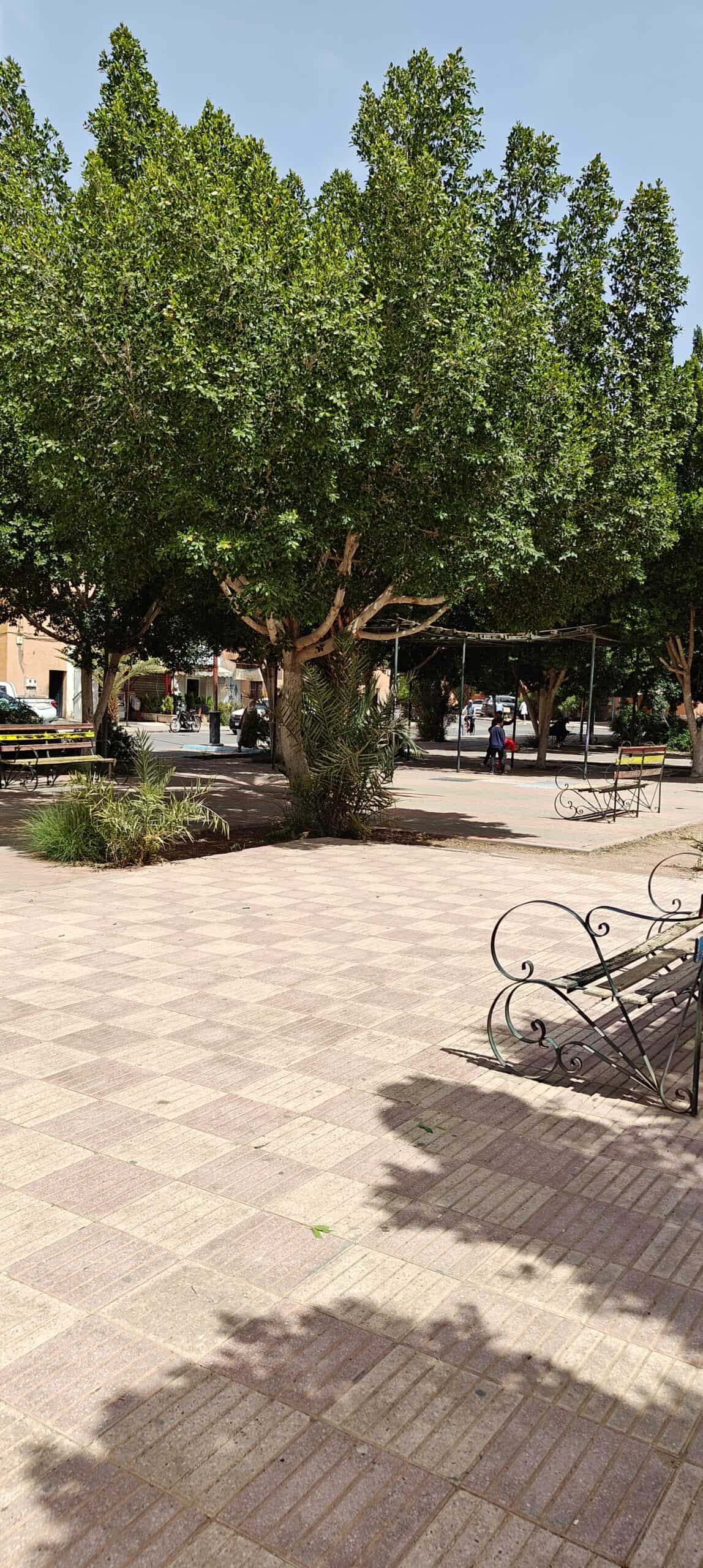
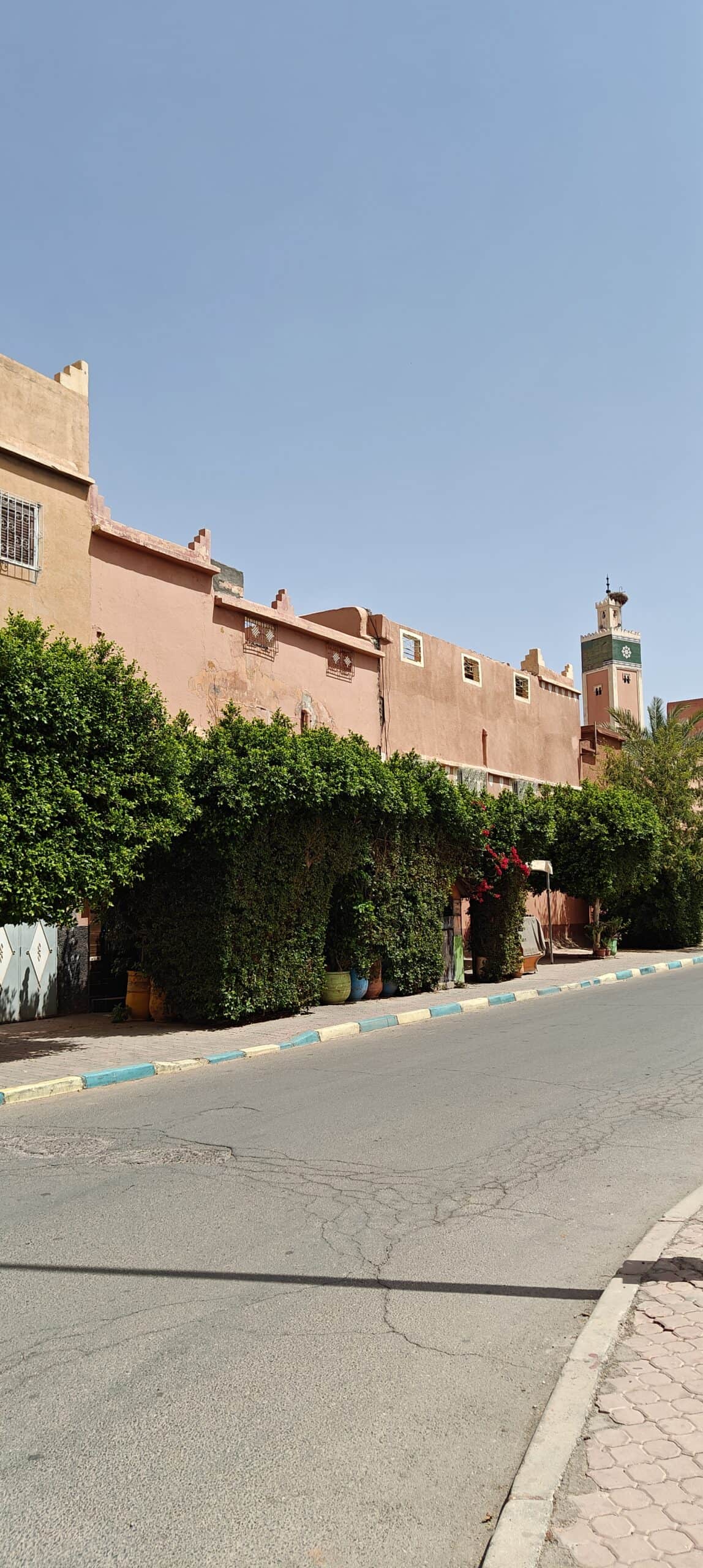
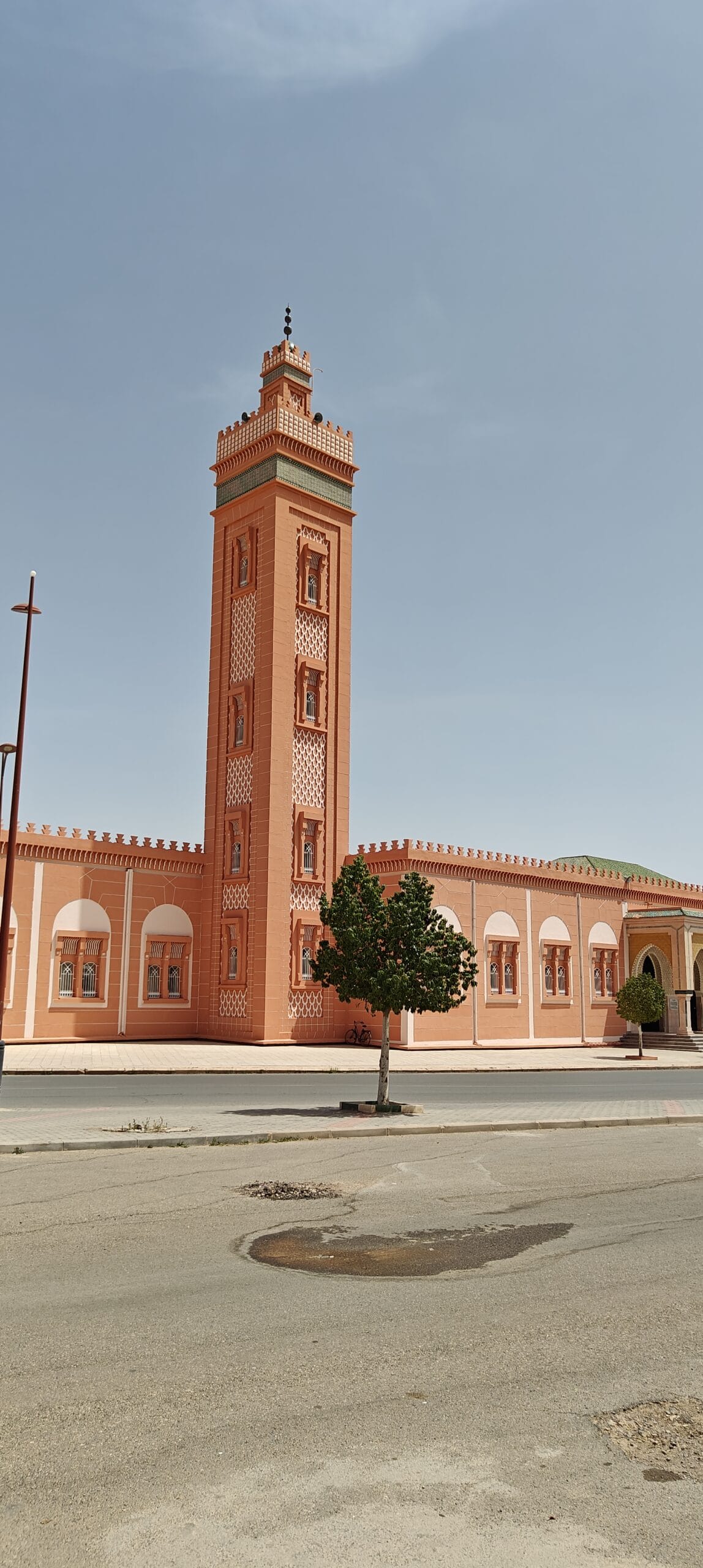
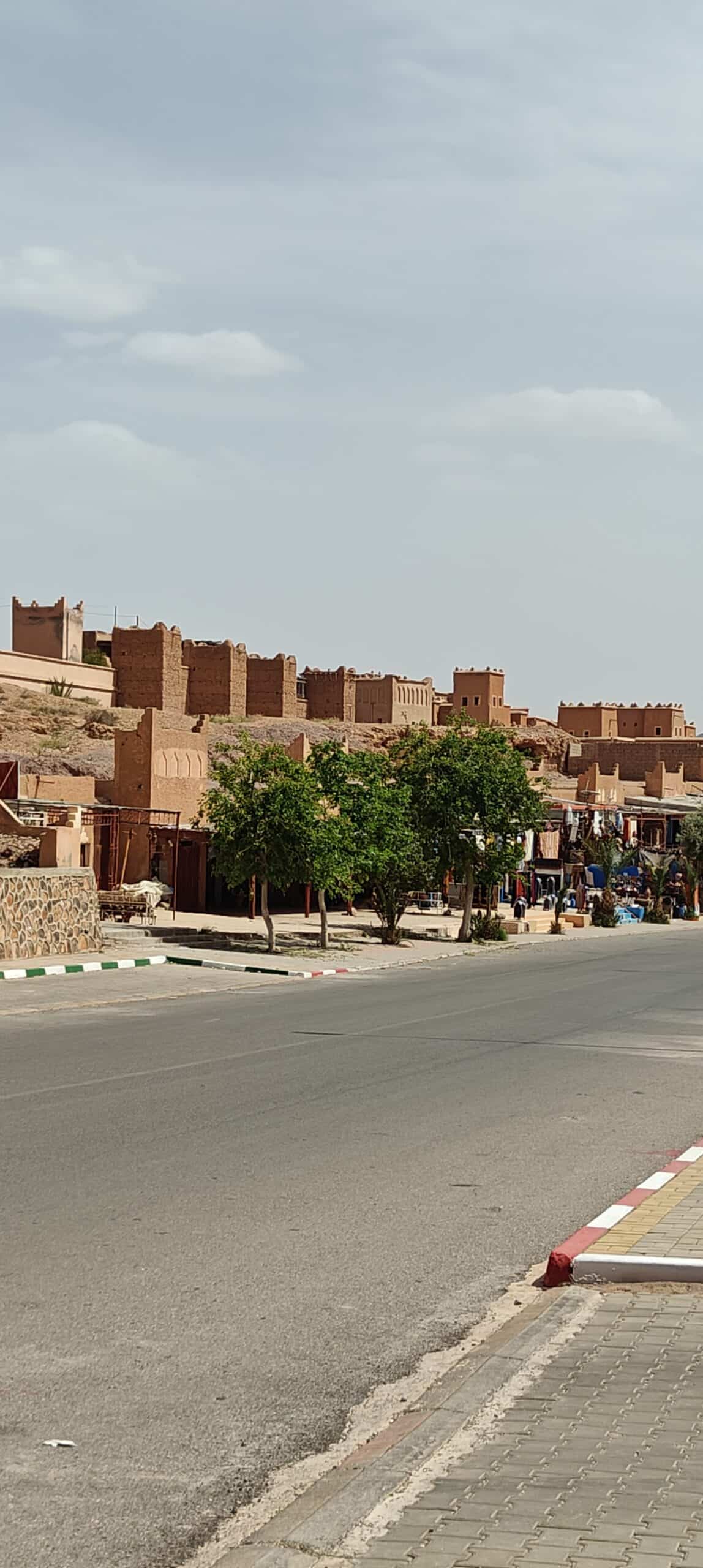
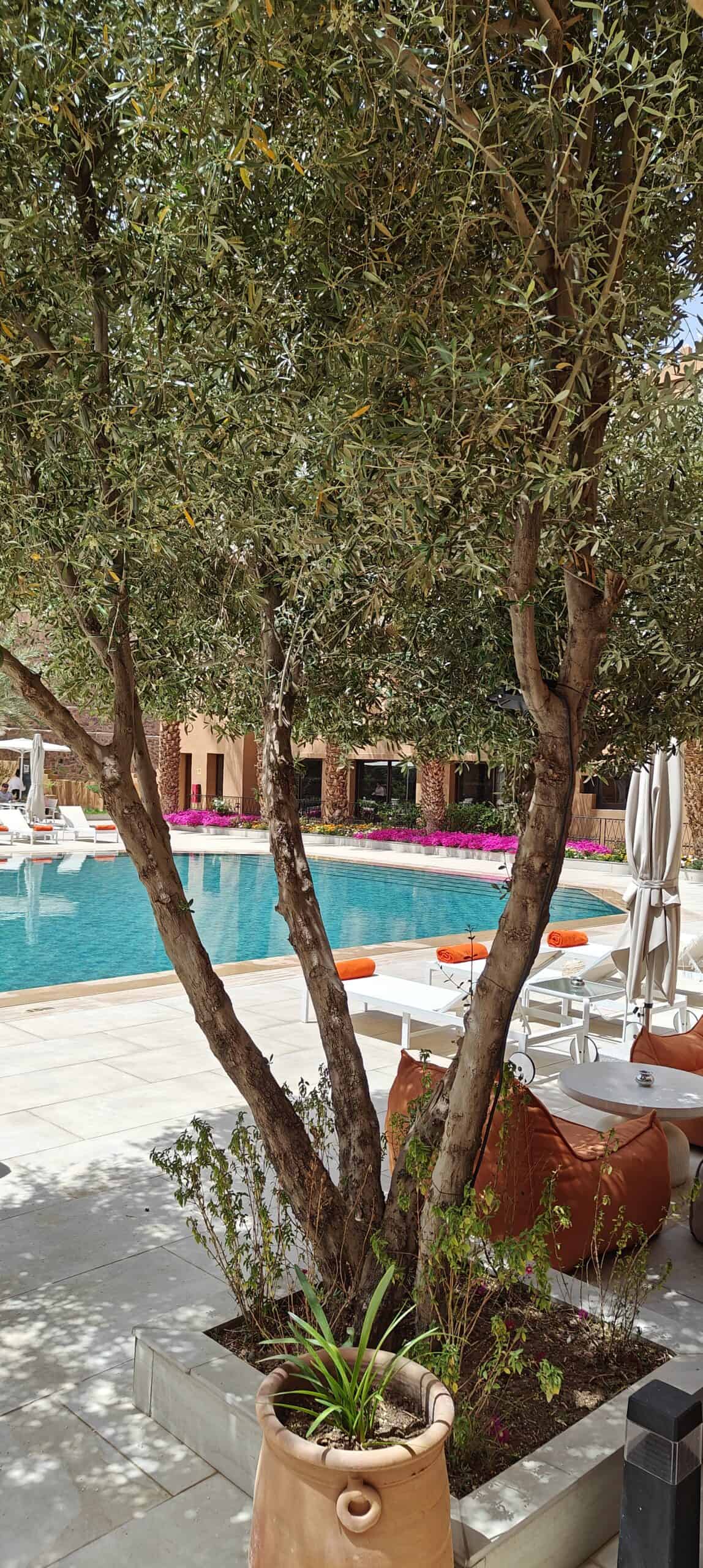
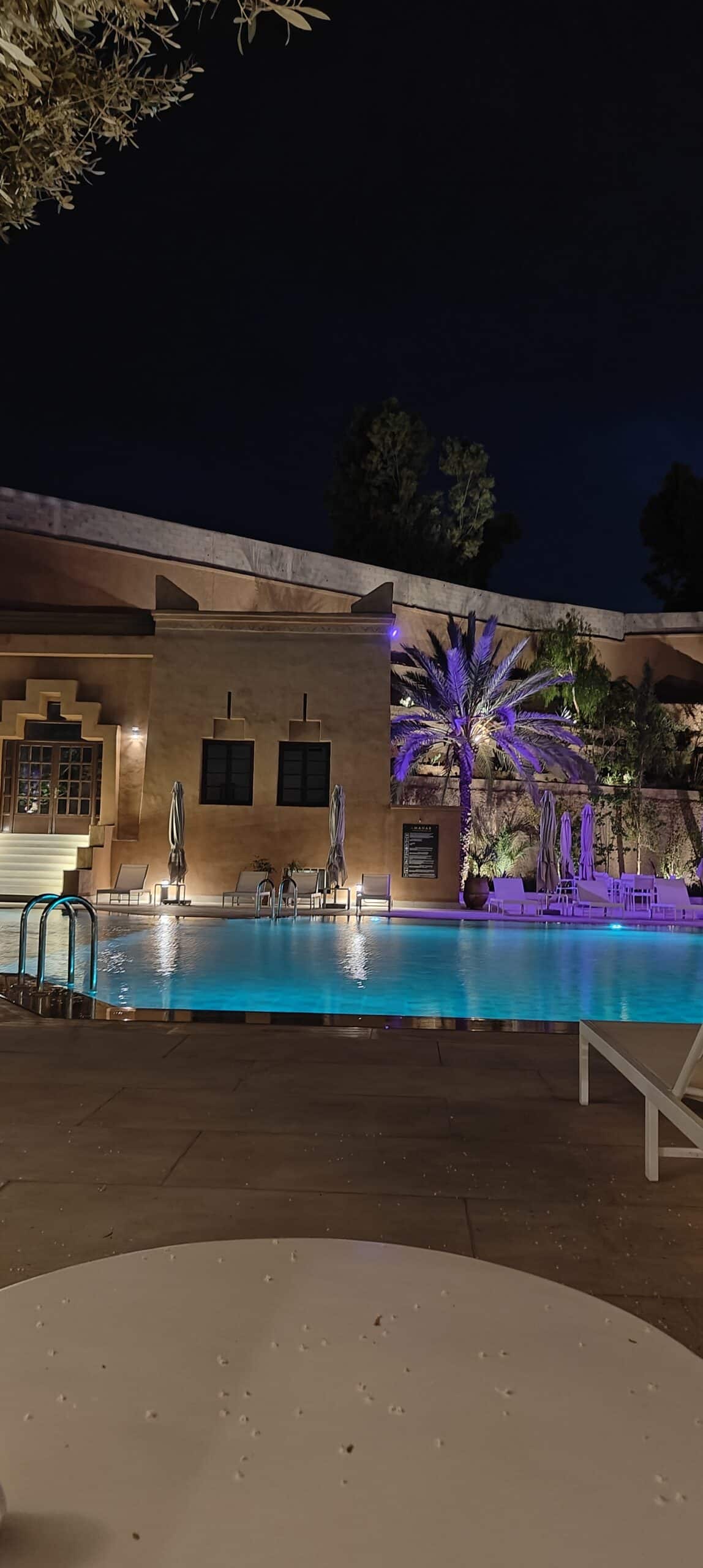
Four hours and numerous dilapidated tourist minibuses later, we reach the “Gateway to the Desert.” From the bus stop on the outskirts of town, it takes me about half an hour to walk to the 5-star hotel I’ve treated myself to for this trip. Deep down, I’d listened to the voice of one of my best friends, who always says, “Treat yourself for once—you earned good money last month!” It doesn’t seem to matter that I’ve been earning the same amount every month for the past four years. On my way to the hotel, I notice that the cityscape looks rather barren—just as a proper desert town should. I’m surprised to see small patches of greenery popping up in random places. Like little oases you unexpectedly stumble upon in the desert. According to Google Maps, I’m almost there. Aside from a brand-new supermarket, the area looks like one big construction site. My hotel awaits at the end of a road that hasn’t been paved yet. Once inside, there’s no trace of the outside world. In the courtyard, a small waterfall splashes into the immaculately maintained pool, which is lined with palm trees and colorful flowers. A friendly receptionist smiles at me as if she’s been expecting me, even though I’m two hours early. I think to myself, “This is a nice place to stay,” and begin making plans for my desert tour the next day. My plans come to an abrupt halt. To my disappointment, I quickly realize that the gateway to the desert is still a good 4.5 hours away from the first glimpse of the sandy desert.
Once again, I’m annoyed with myself. I had actually considered planning everything in advance from Marrakech, but then decided to arrange everything once I got there. I probably would have quickly realized that Ouarzazate is just in the middle of a rocky desert. “Ce sera comme ça” or something like that says the Frenchman in me, and on impulse I start researching how I could head out toward the desert the next day. But had I really treated myself to this beautiful hotel just to end up not being there at all? And what would actually become of my 90-minute massage at the hotel spa, which I so desperately needed? I stop. Instead, I decide to start the weekend without a plan and postpone the endless desert sand dunes until my Morocco road trip.
I’m increasingly taking matters into my own hands on this journey. This “plan-mania” I inherited from my father still makes me nervous from time to time—just like odd numbers, among other things—but I’m trying to let myself be guided by both of them less and less. Just how obsessed my father is with plans is well illustrated by an anecdote that my friends still love to recount at every opportunity: When my parents moved out of their 5-room apartment—which had become too big for them—my friends kindly helped with the move. Once we arrived at the new apartment, full of youthful energy, we wanted to install the TV shelf that my father calls the “multimedia wall.” When he saw us simply stopping every now and then to mark the wall by eye, he stepped in decisively and said, “Before we do anything here, let’s make a plan first!” and presented a sort of technical drawing on a scrap of paper. By the way, the multimedia wall is still up today—no one knows what would have become of it without a proper plan.
The next day, I get up early to visit Atlas Studios. That’s where movies like *Gladiator* and TV shows like *Game of Thrones* were filmed. To be precise, parts of them—if not just a few minutes. I ask at the front desk where and how I can get a taxi. Twenty minutes later, I meet Mouha. A local taxi driver and specialist in all kinds of experiences, as I later learn. Mouha speaks hardly any English, a little French, but very good Arabic. We tacitly agree to leave our conversation in the capable hands of the Google Translate app. It works surprisingly well, and so we quickly tell each other about our lives while he tries to upsell me. Tomorrow he wants to show me the remaining sights in and around Ouarzazate. After I let him know via Google Translate that I need to think it over, he drops the price by 100 dirhams. I take him up on it. Generally speaking, haggling is built into the price here. Anyone who agrees right away is just a bit of a fool.
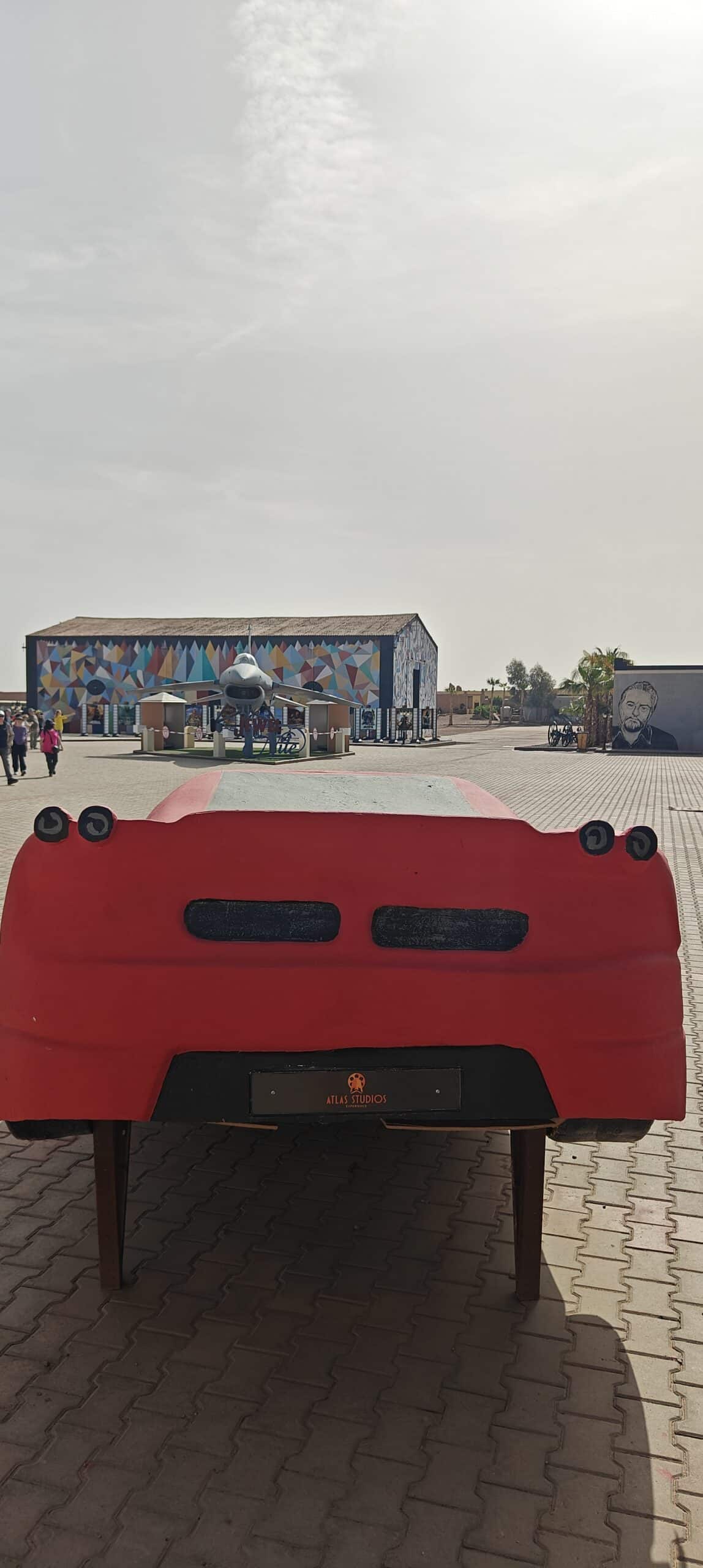
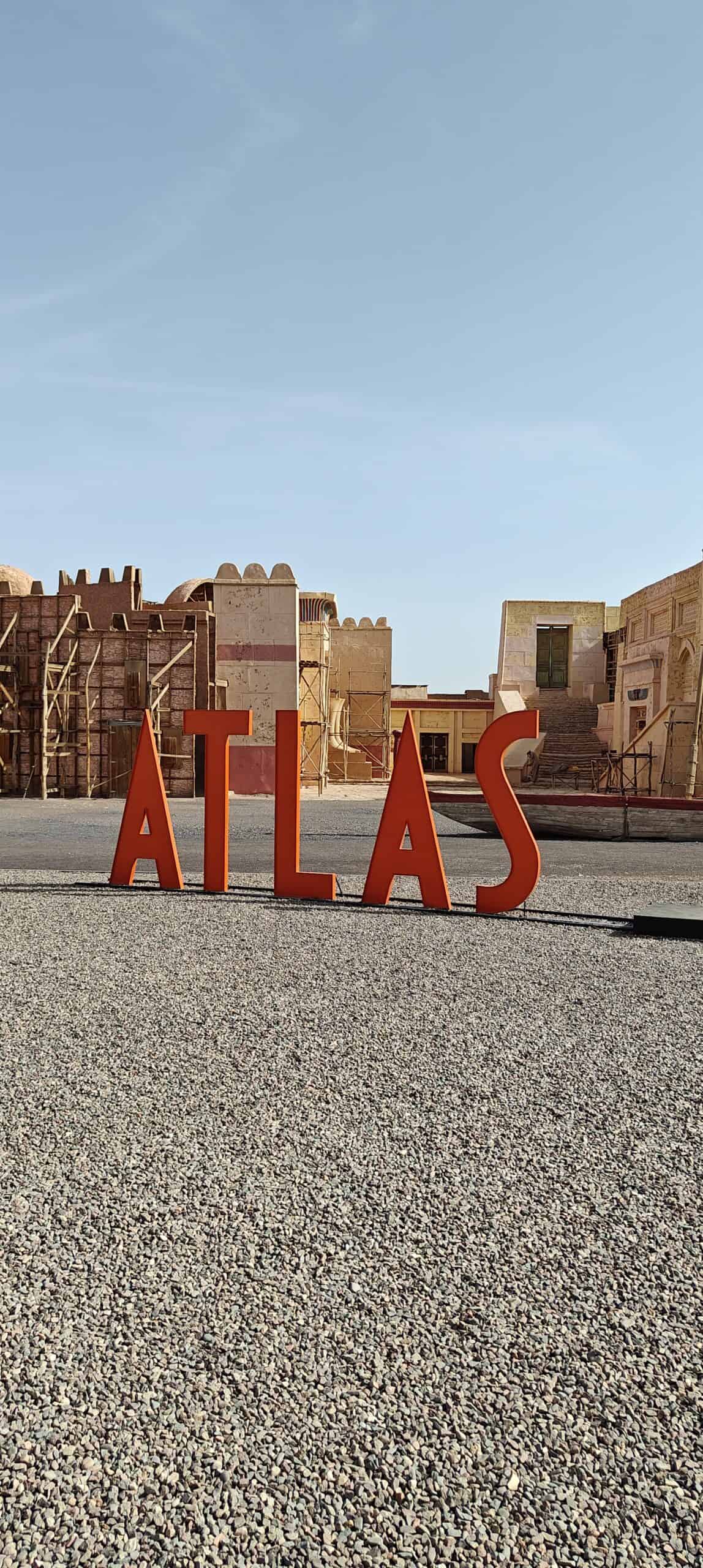
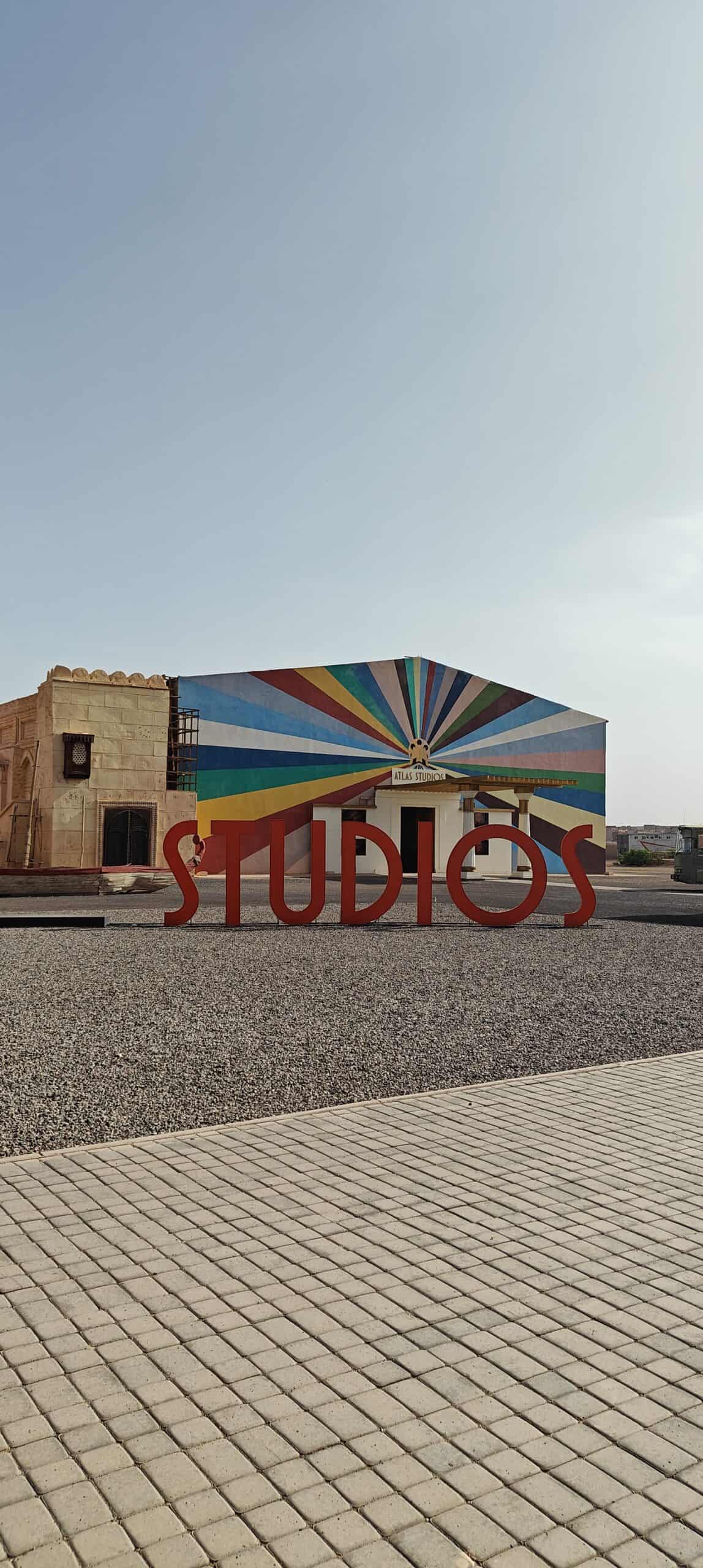
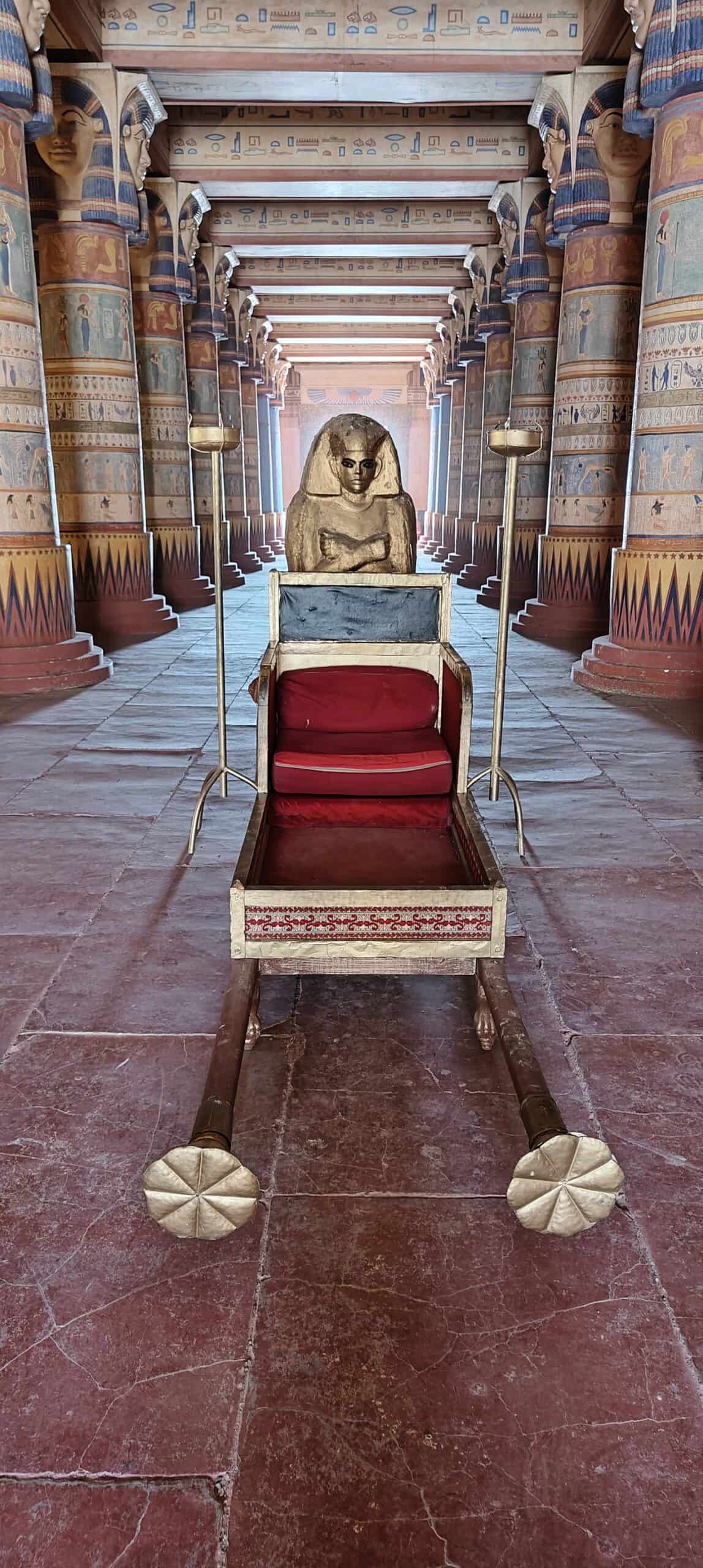
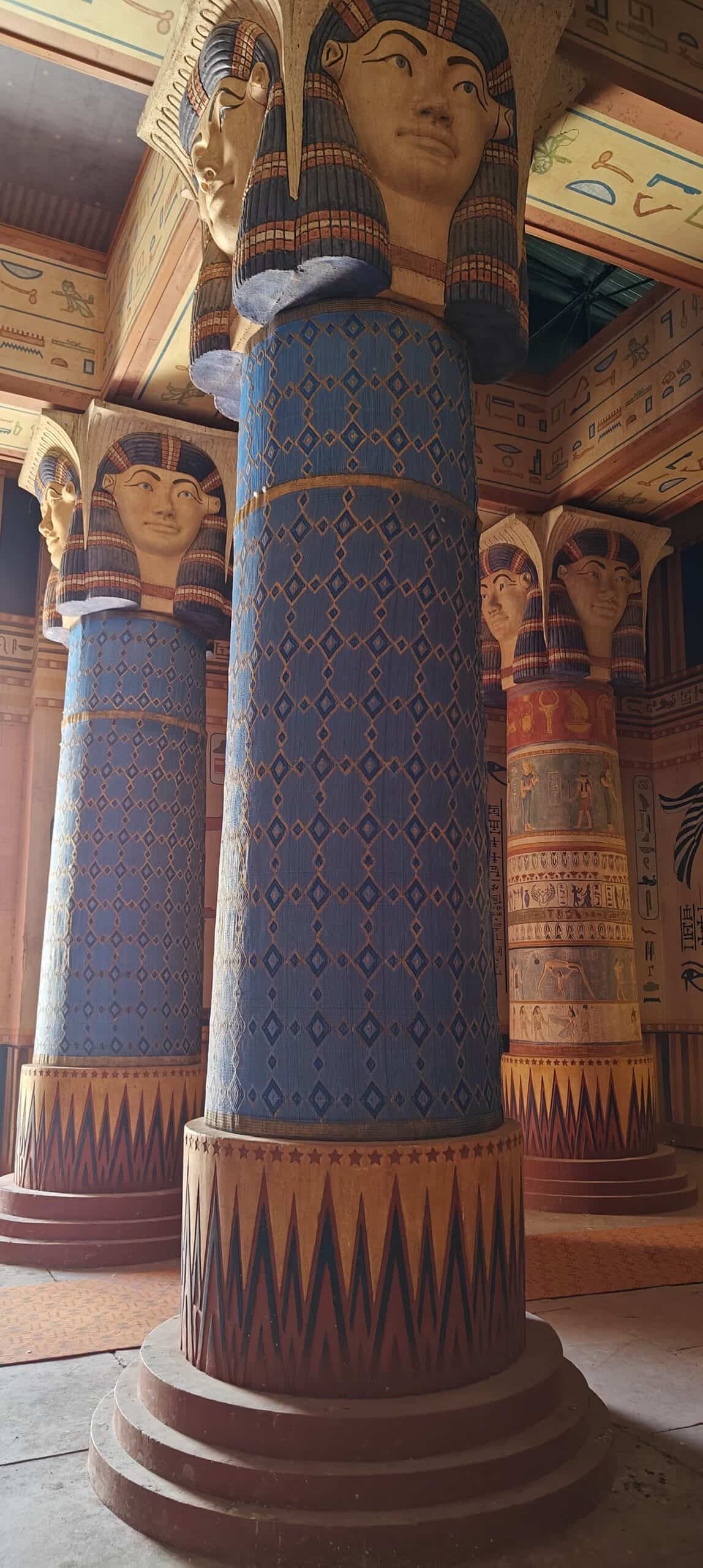
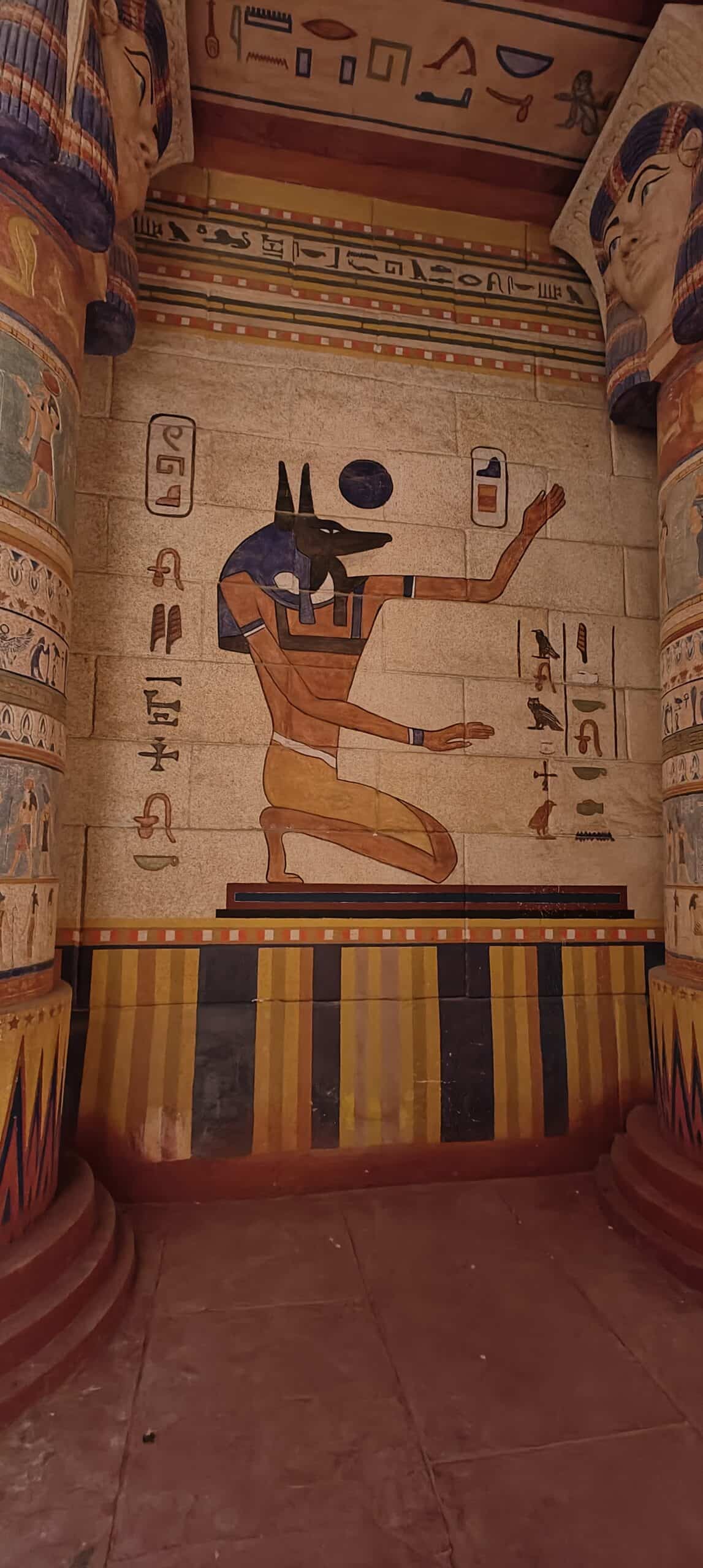
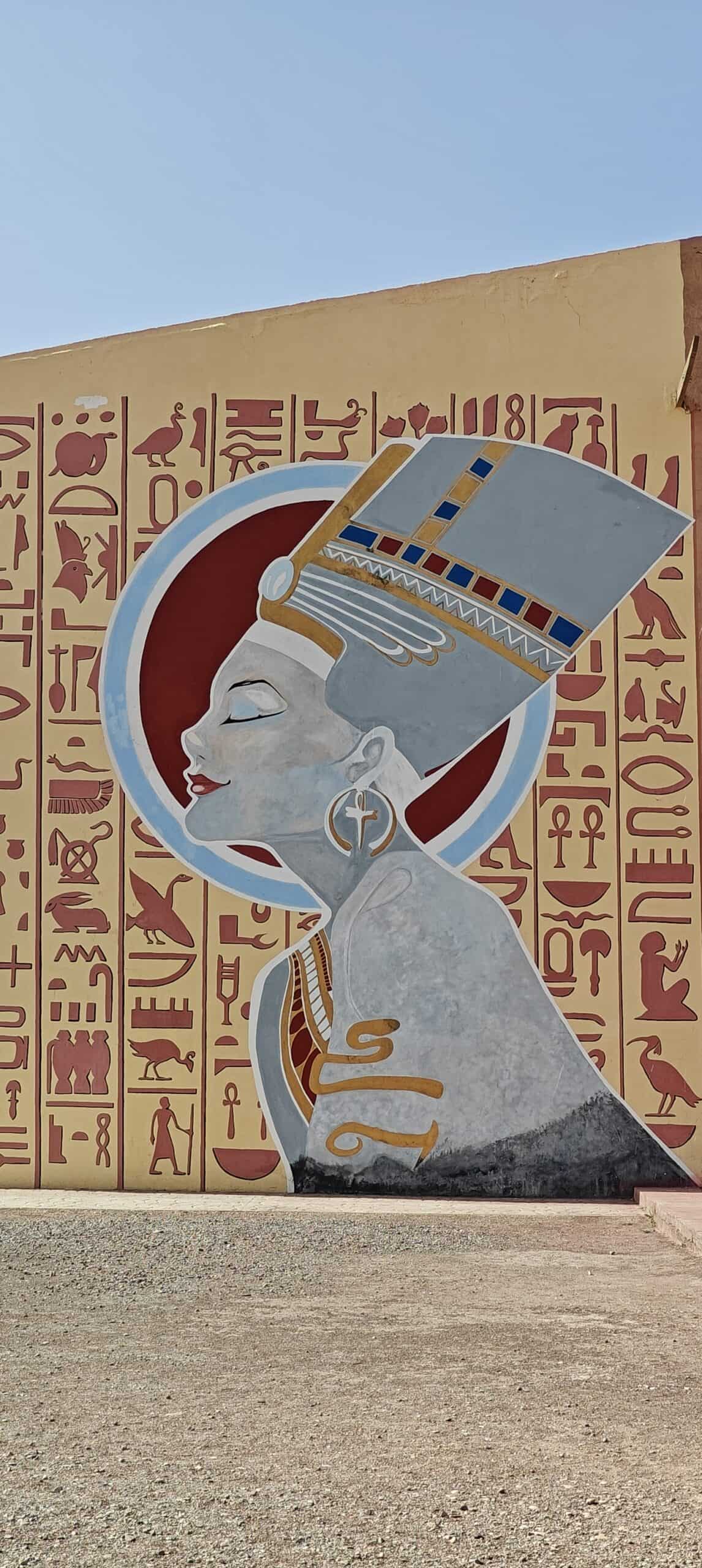
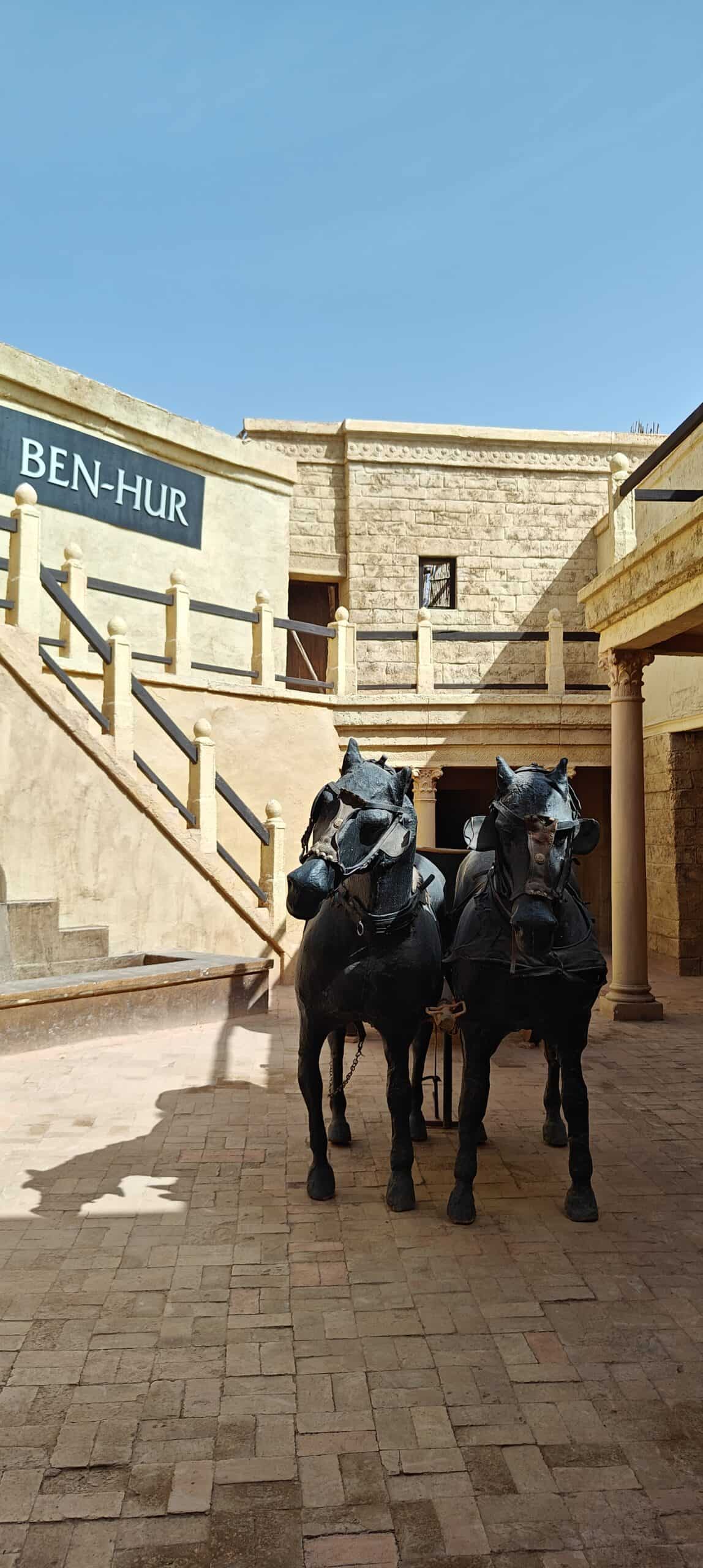
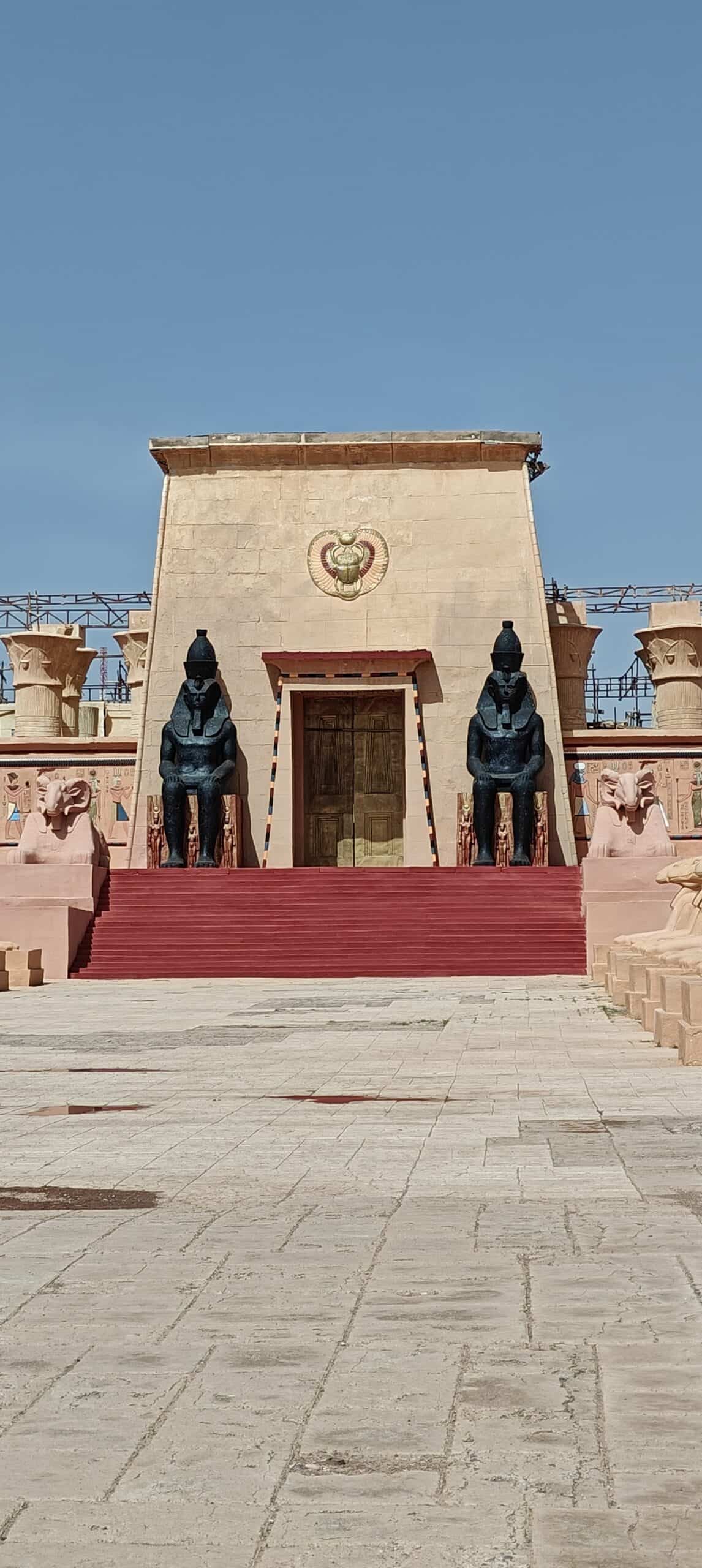
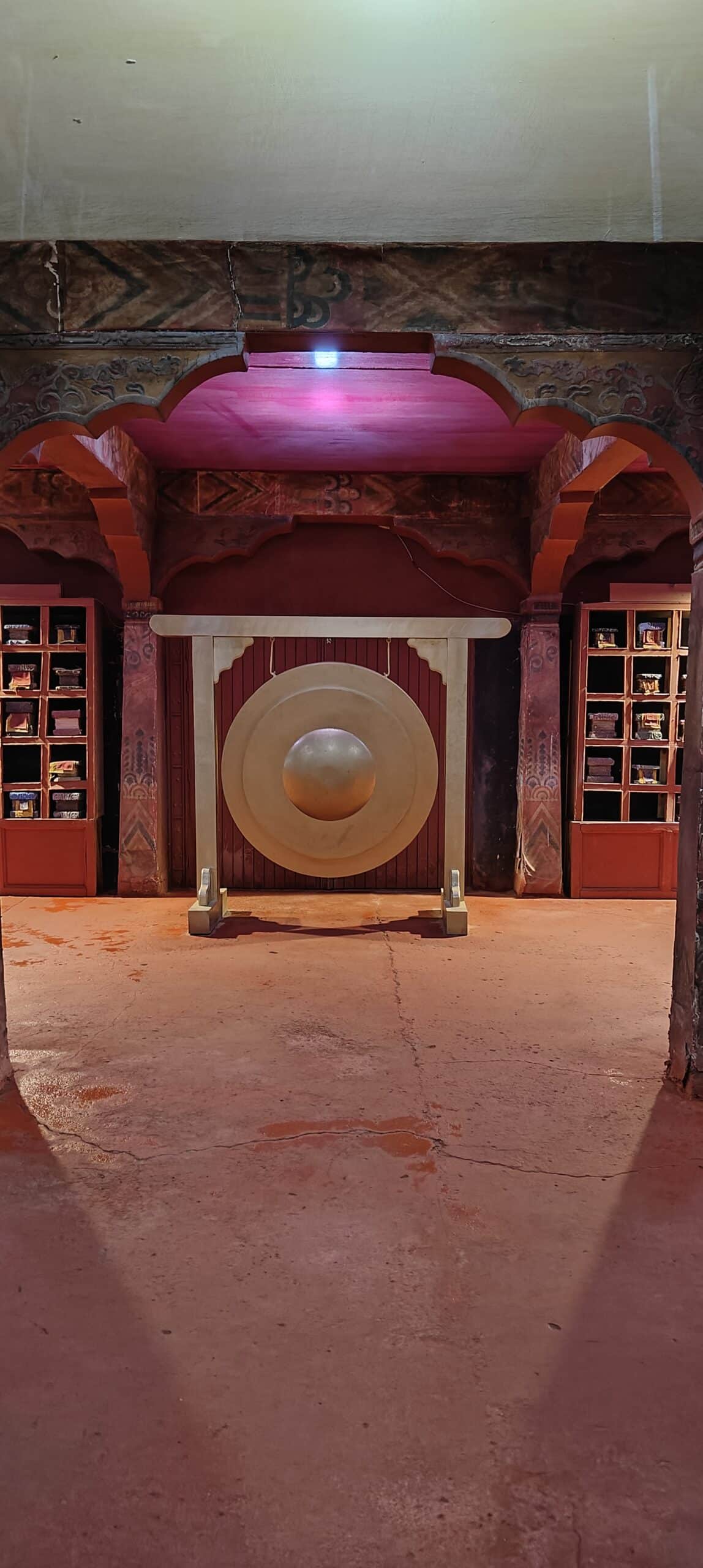
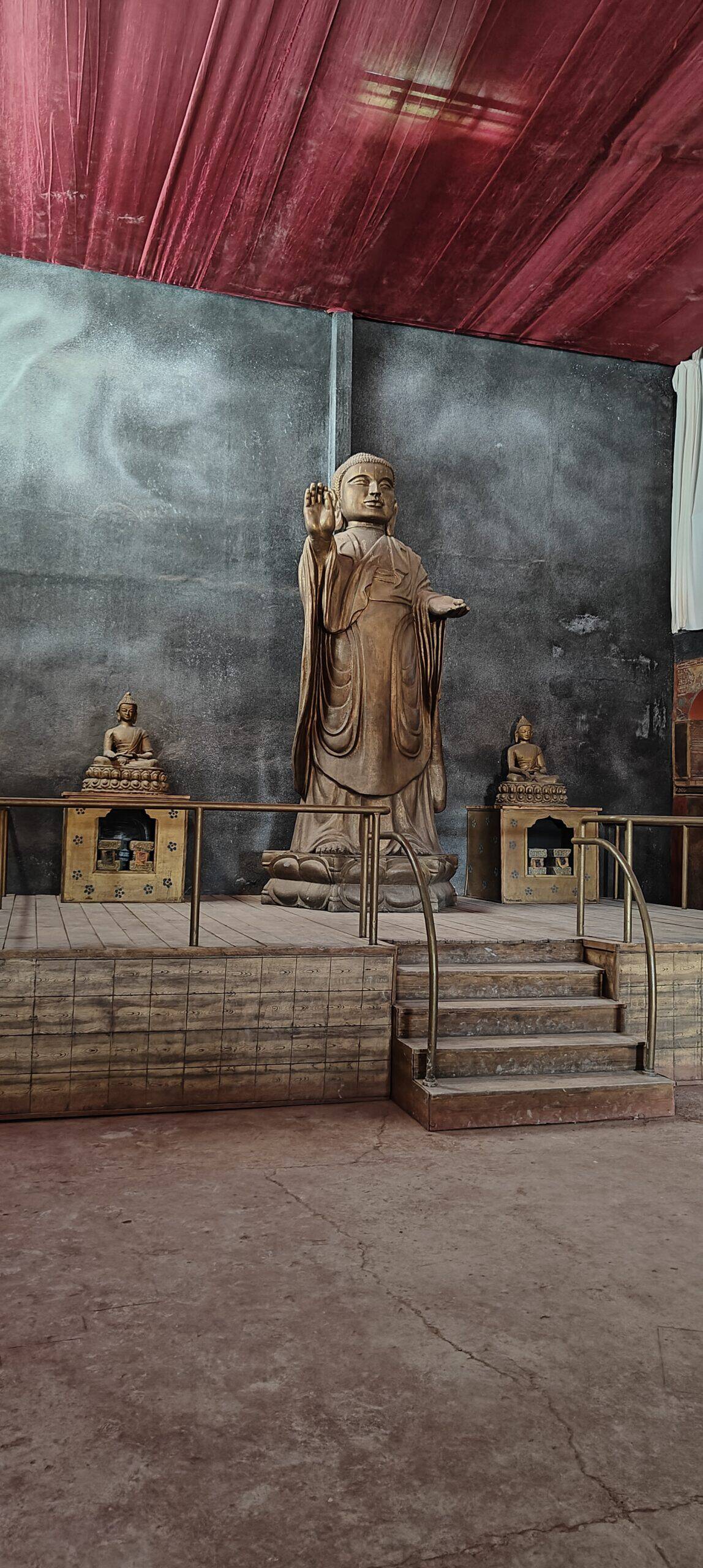
Our guide welcomes us at Atlas Studios. He tells us that, “thanks” to AI, the studios have essentially turned into a museum, and leads us past papier-mâché Ferraris designed to be rammed, through an Egyptian cardboard temple, and on to a Game of Thrones palace that we can only admire from a distance. It seems there’s nothing you can’t build out of cardboard. One minute of film costs about $3,000 here, whether shooting takes one day or one month. A strange business model, but a major economic driver in the region.
Inexpensive compared to other film studios.
Exorbitant compared to AI.
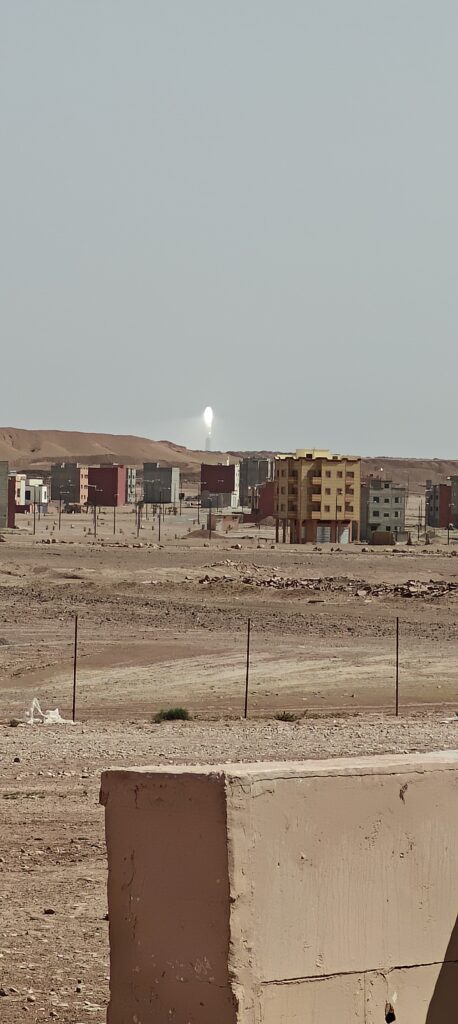
In the distance, I see that tower again. As bright as Saruman’s eye, a hundred times brighter than the tip of a lighthouse, it soars high in the middle of nowhere. I had already spotted it from the bus and, in my pagan ignorance, mistaken it for a giant monument to God. After all, minarets do rise up everywhere here. Of course, it never even crossed my mind that this might be one of the largest solar projects in the world and could theoretically supply up to 1 million Moroccans with clean energy. Parabolic mirrors on the ground reflect the sun’s rays onto the tower, charging massive portable batteries inside. Our guide tells us that these are shipped to Spain, where they feed green energy into the UK via undersea cables. Three cheers for globalization.
Back at the hotel, I pass the time until my “Energetic Massage” by tuning into HSV NetRadio to listen to my favorite soccer club lose the second-most important game of the year against Werder Bremen. In the past, my weekend would have been ruined. Just how much it affects me now is shown by the fact that, just to be safe, I set an alarm that then rouses me from sleep right on time for the final whistle. Time for my massage. In my opinion, you can recognize a good massage by two things: 1. A healthy amount of pain and 2. the fact that time flies by too quickly. This is exactly the kind of massage I needed, and I’m ready for my day trip before I have to board the bus back to Marrakech.
It’s 9 a.m. on Sunday, and Mouha is already waiting for me at the hotel. We hit it off right away, as much as Google Translate allows. He teaches me a little Arabic, like “I slept well” or “Welcome to Ouarzazate”—you never know when you might need it. He asks me if I’m married and tells me he got married at 15. He also has a 16-year-old daughter. I’m already getting a bad feeling about this. Unlike my Moroccan barber buddy Abdu, though, he doesn’t want to marry me off, as it turns out later. We’re on our way to Aït-Ben-Haddou, the next UNESCO World Heritage Site. This mud-brick city has existed for millennia and was the center of a trade route between Timbuktu and Marrakesh. Perched atop the hill is a fortress that once guarded the most important thing they possessed: grain. For someone like me who loves old stones, it’s a paradise. Although I have to admit, the focus on tourists gives me that ultimate unpleasant medina vibe. It’s really not about the history of the place anymore, but much more about herding us tourists in to sell us pointless stuff.
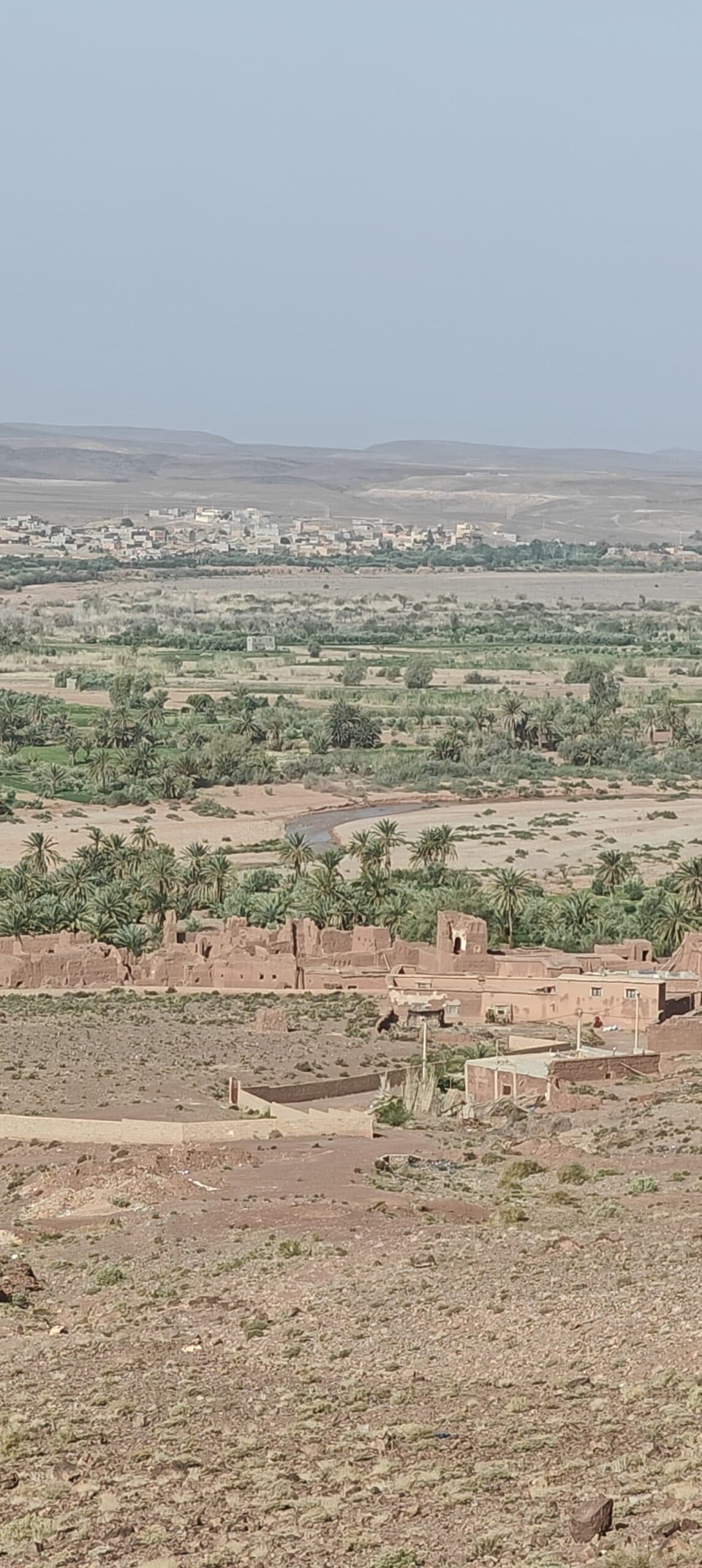
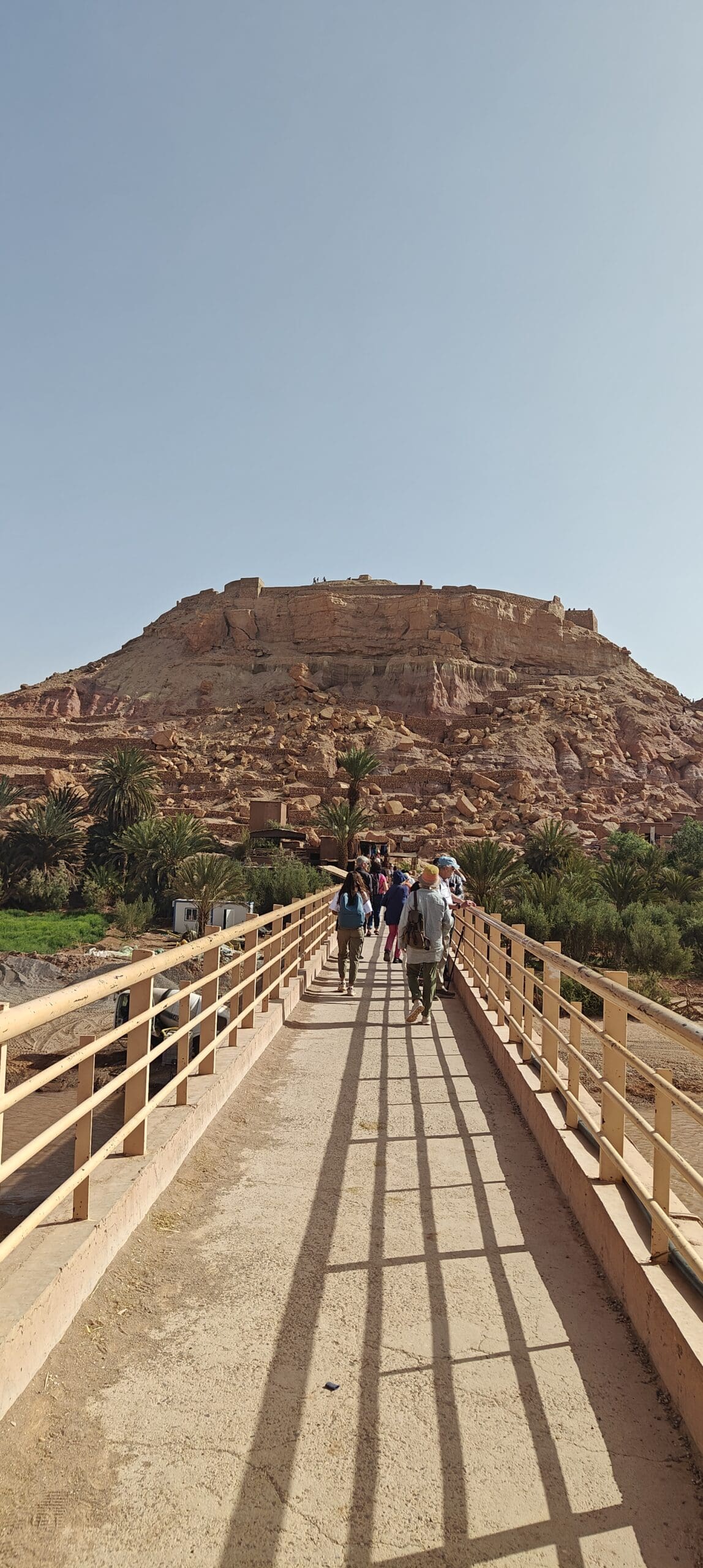
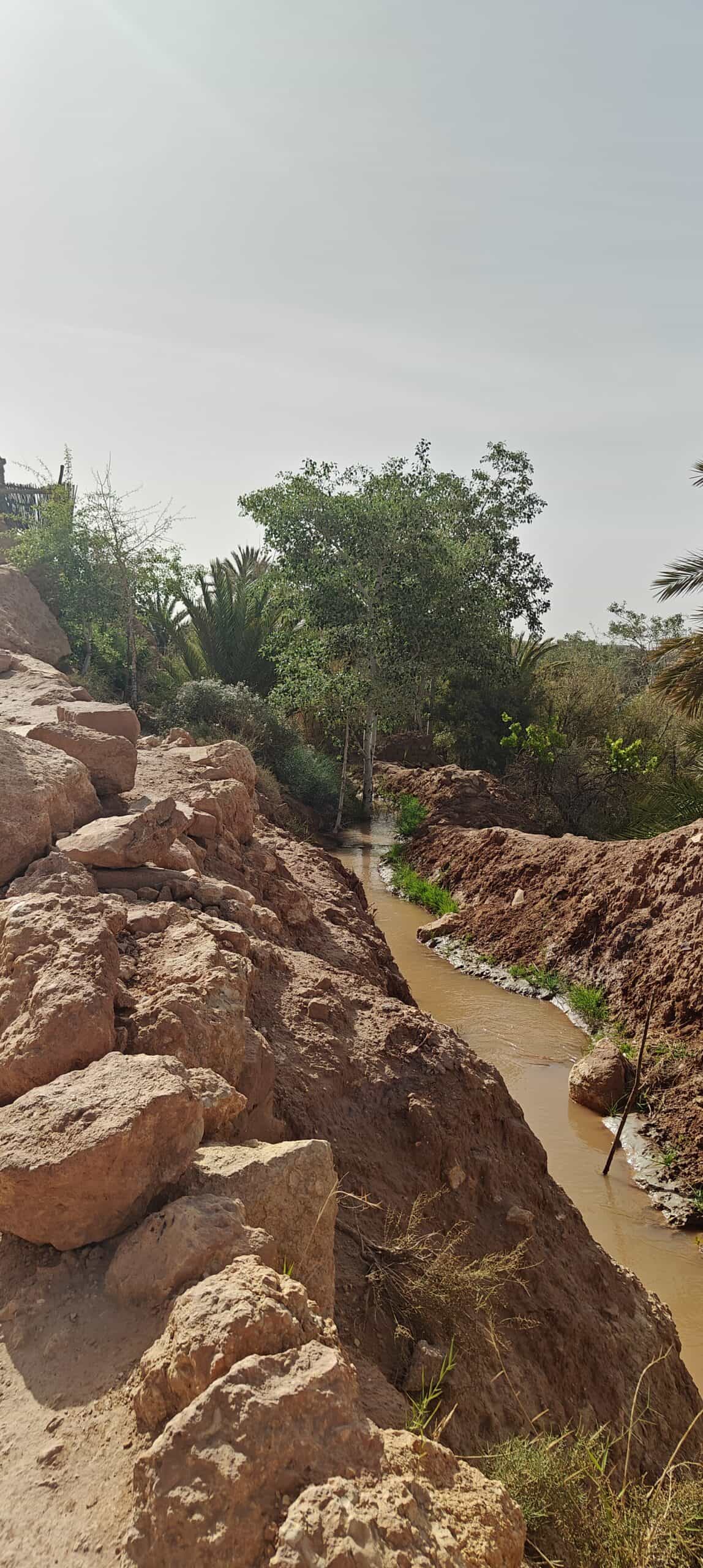
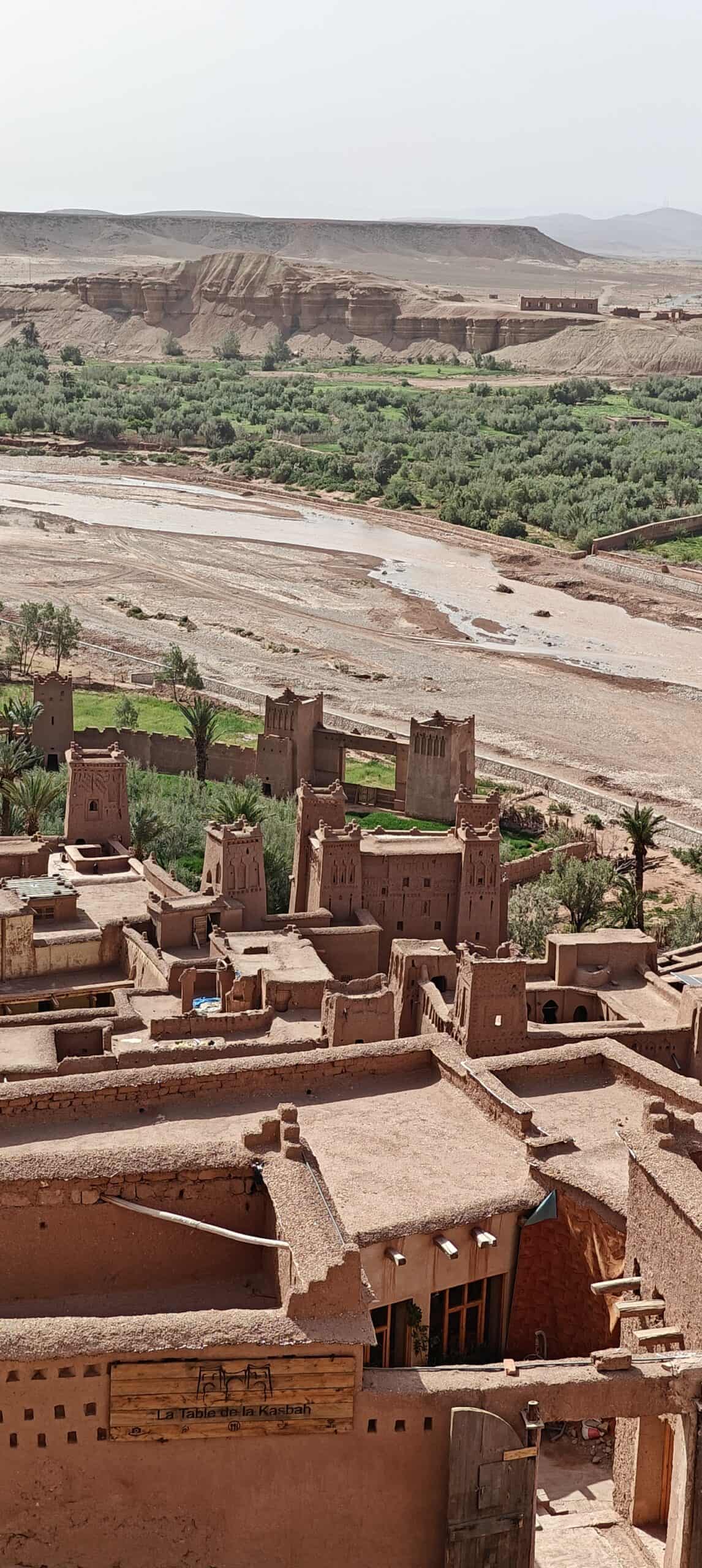
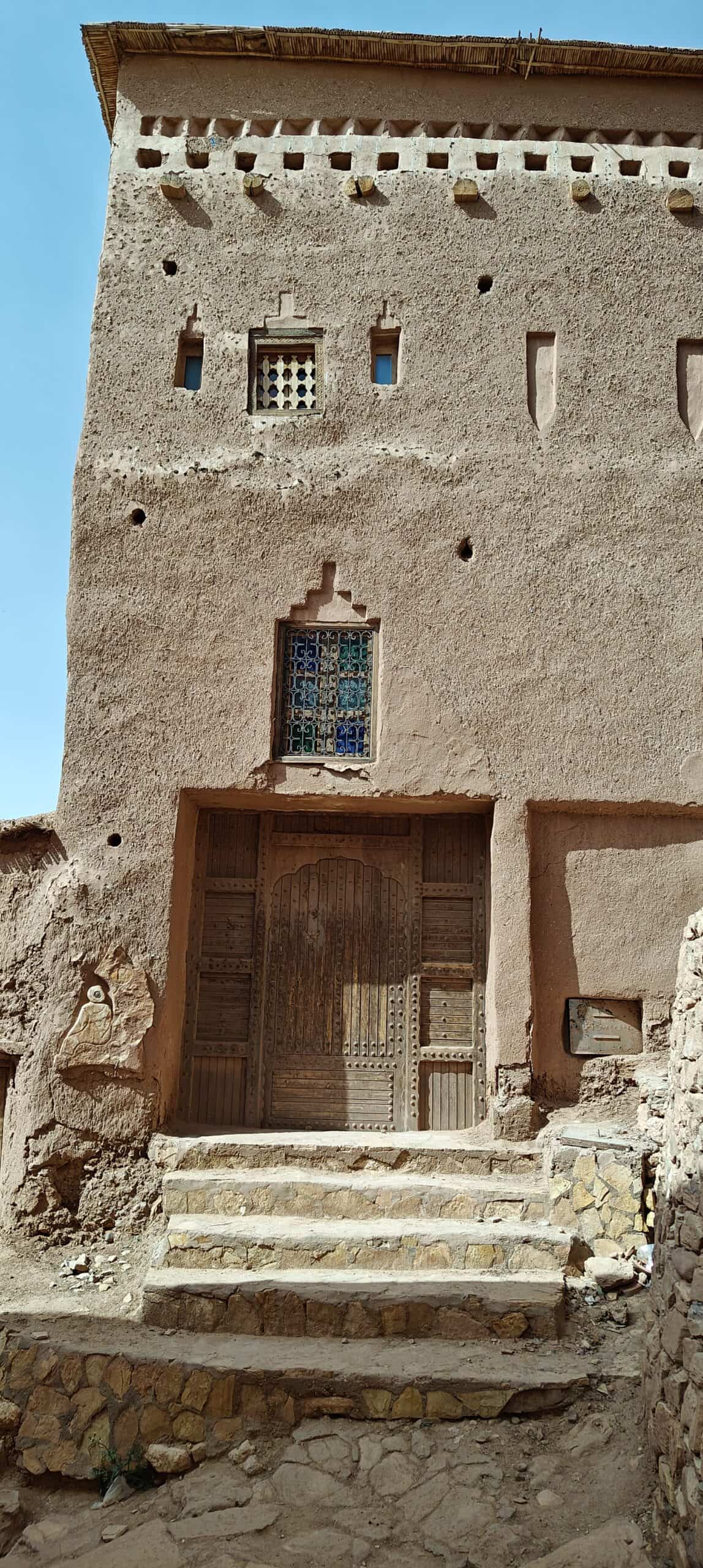
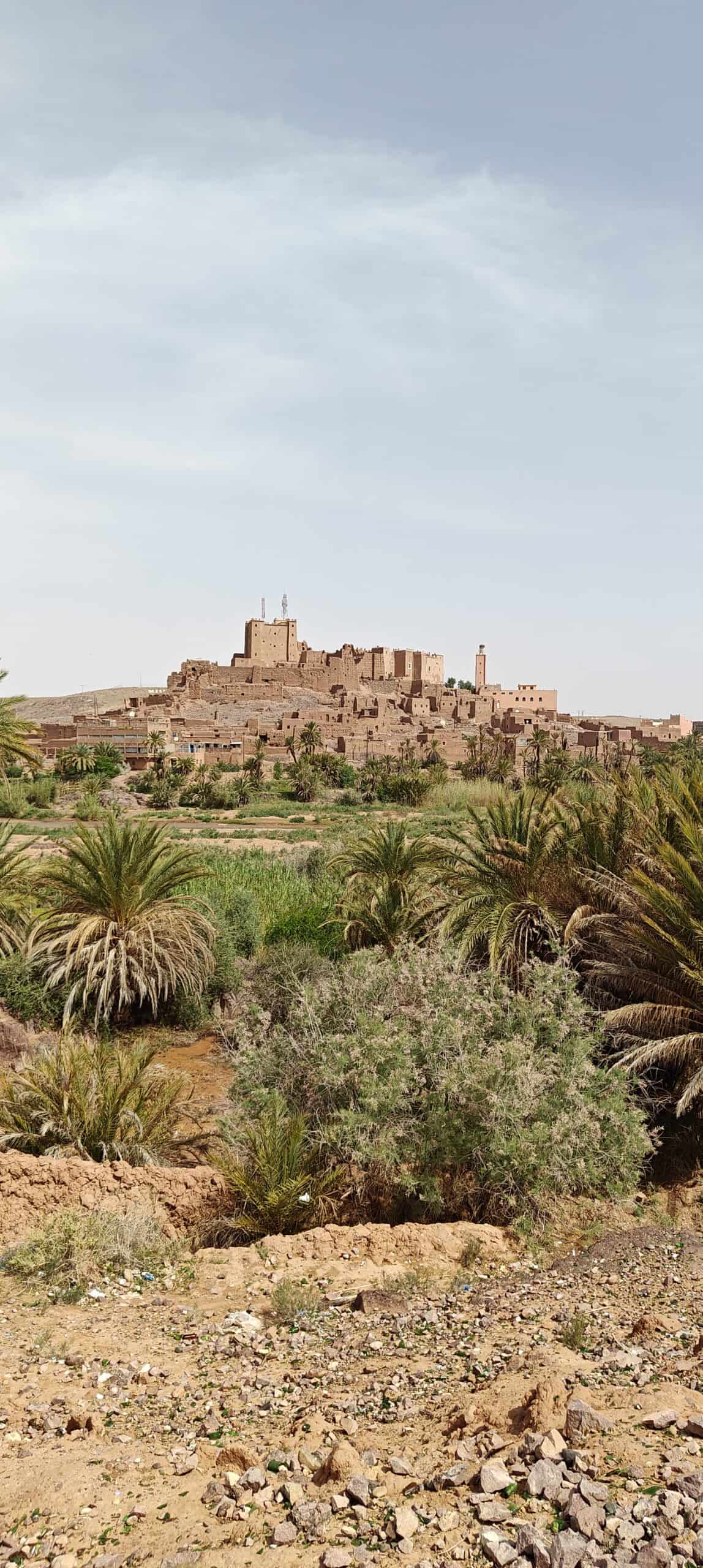
We continue driving through the rocky desert. To our left and right, the ATVs are zipping through the wilderness. We’re supposed to meet up with them again later. We stop at a photo spot. Mouha asks me if we can give someone a ride. There’s not a bus or anything else in sight for miles around. Of course we can, I think, and tell him we’ll help anyone who needs it. When we drive on, there are 10 of us. Eight teenage girls have squeezed into the back two rows; they’ve been walking for an hour on their way to a picnic. I learn they’re Mouha’s neighbors and am glad we could help. We drive through a new development where all the houses look half-finished. Just like the rest of the city. I ask Mouha why so many houses aren’t being finished. “It’s Sunday,” he replies. That makes sense, but it wasn’t actually the reason behind my question. I accept the answer as it is. We turn off the road.
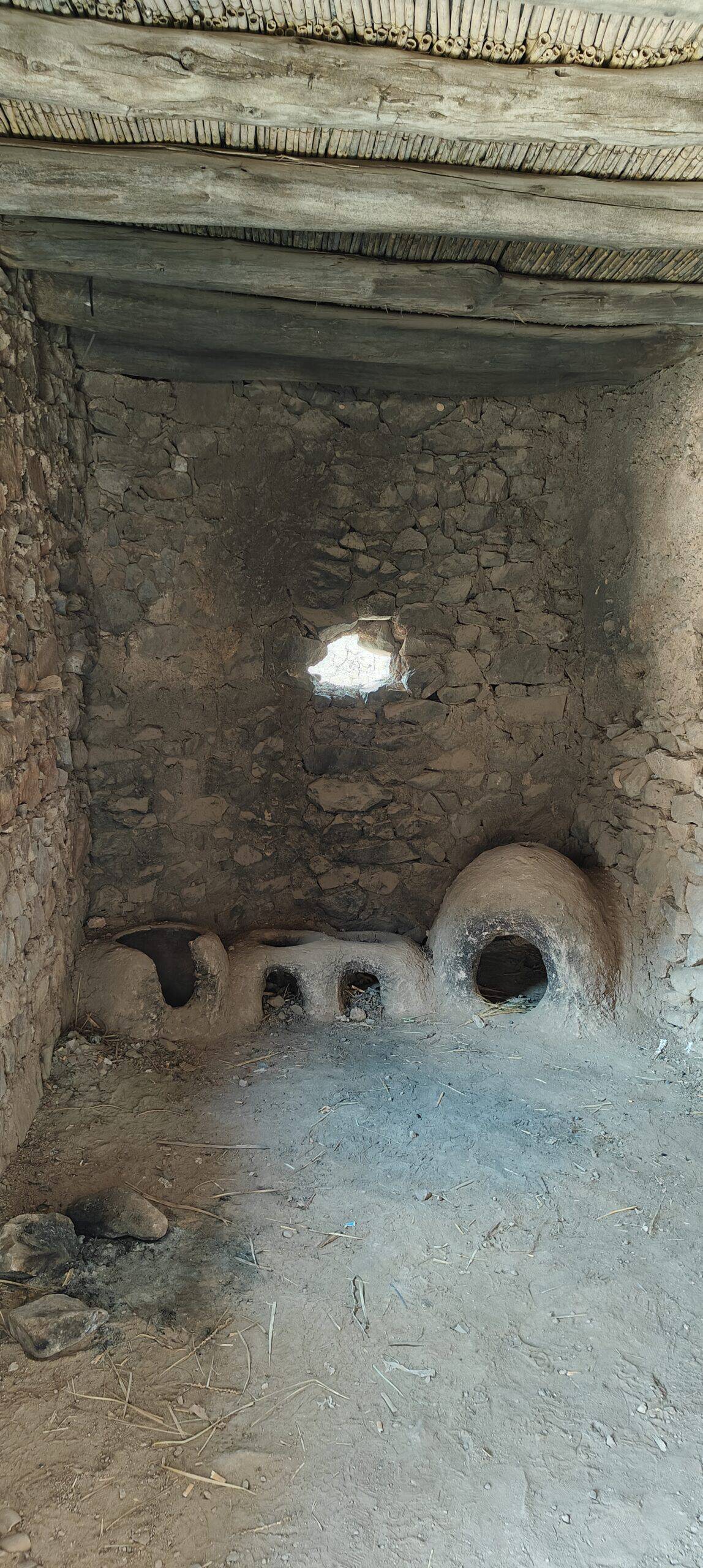
We reach our final destination for today: the Fint Oasis. An oasis consisting of a palm grove with a river running through it. We walk past numerous Moroccan families spending their Sunday here with picnics and music. Mouha leads me through the palm trees into an abandoned former Berber village. In South Africa, I would probably have already handed him my valuables and run for the hills at this point. Here in Morocco, I have a subconscious sense of basic trust. We climb into an old mud-brick house; I have to watch my step. Mouha asks me to record a promotional video for him. I start improvising—I wasn’t prepared for this. He’s satisfied and leads me further through the ghost village. Only movies are filmed here now. Movies that the studios can’t afford.
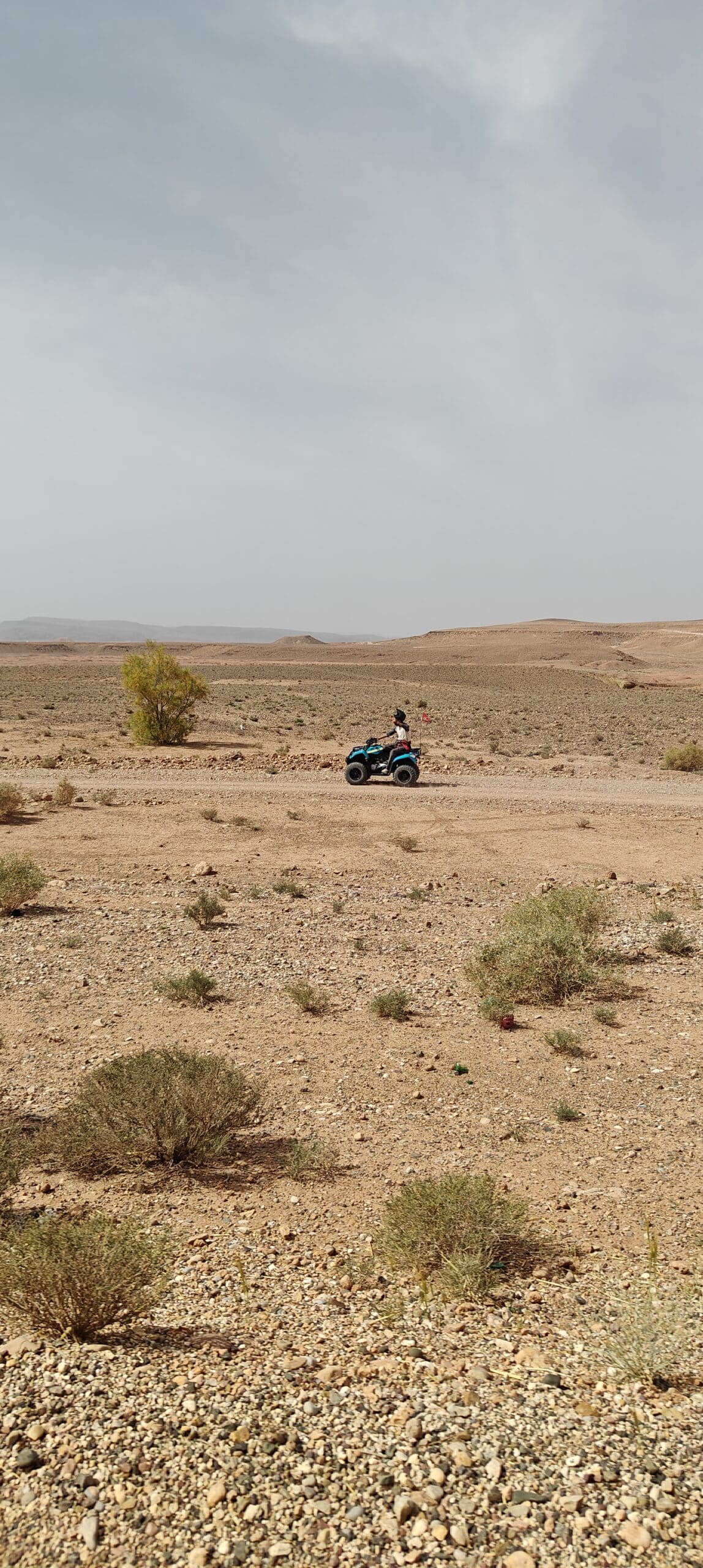
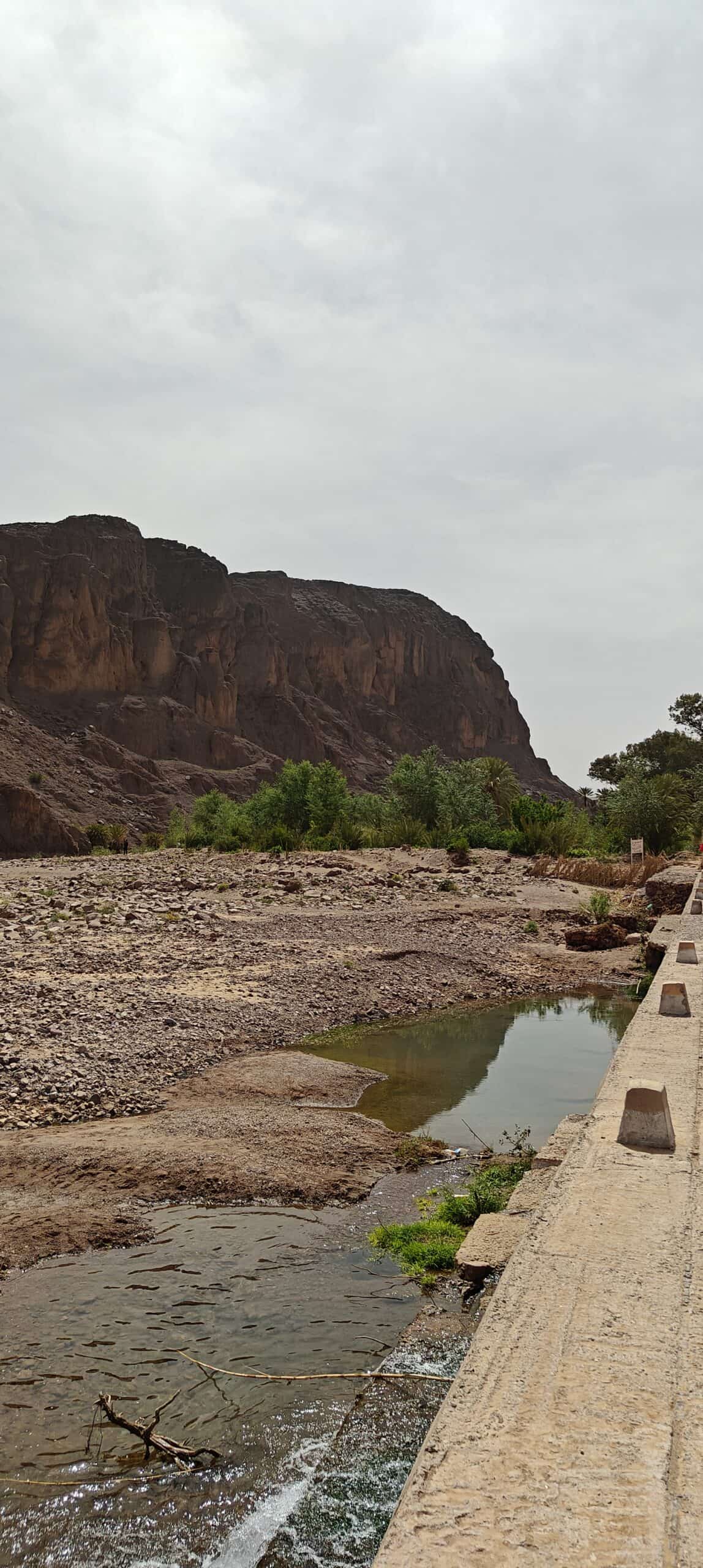
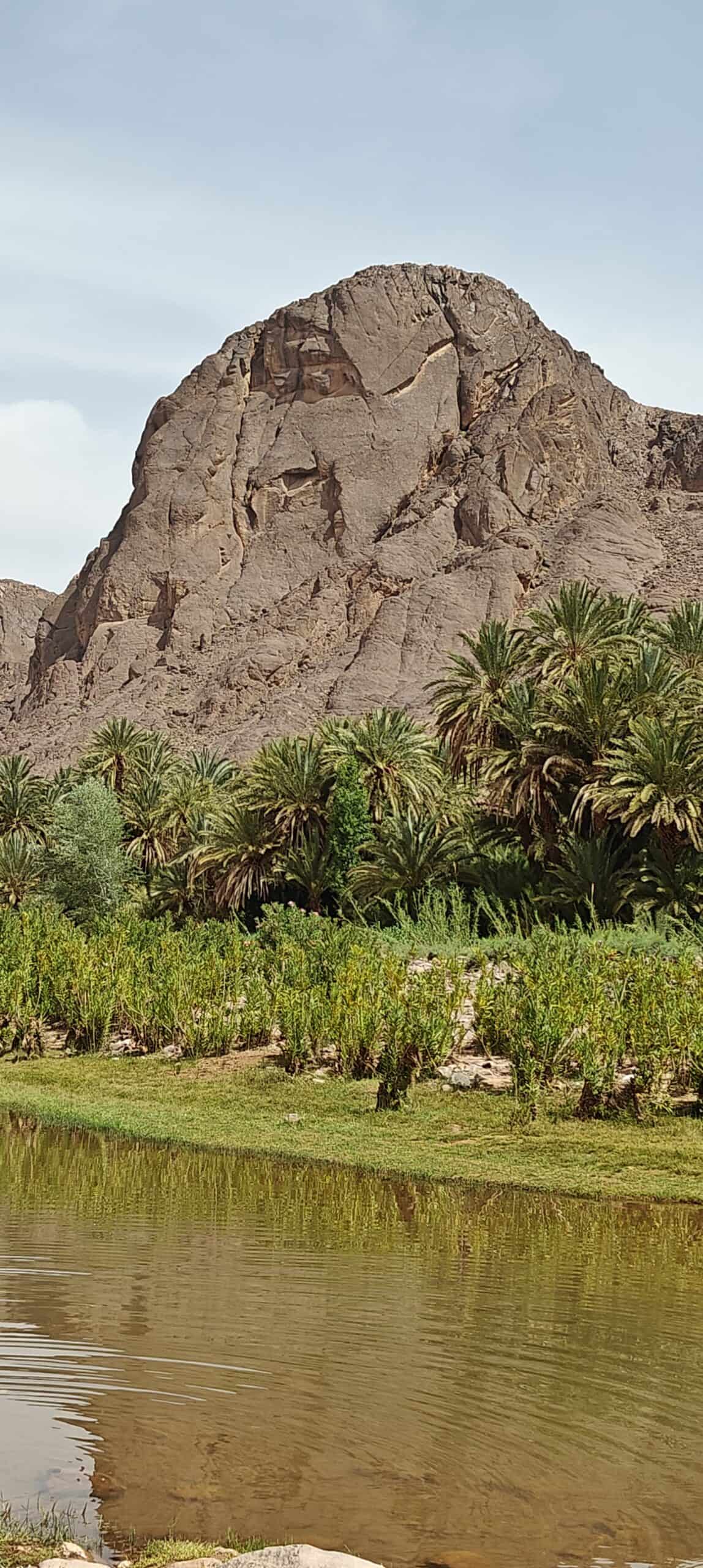
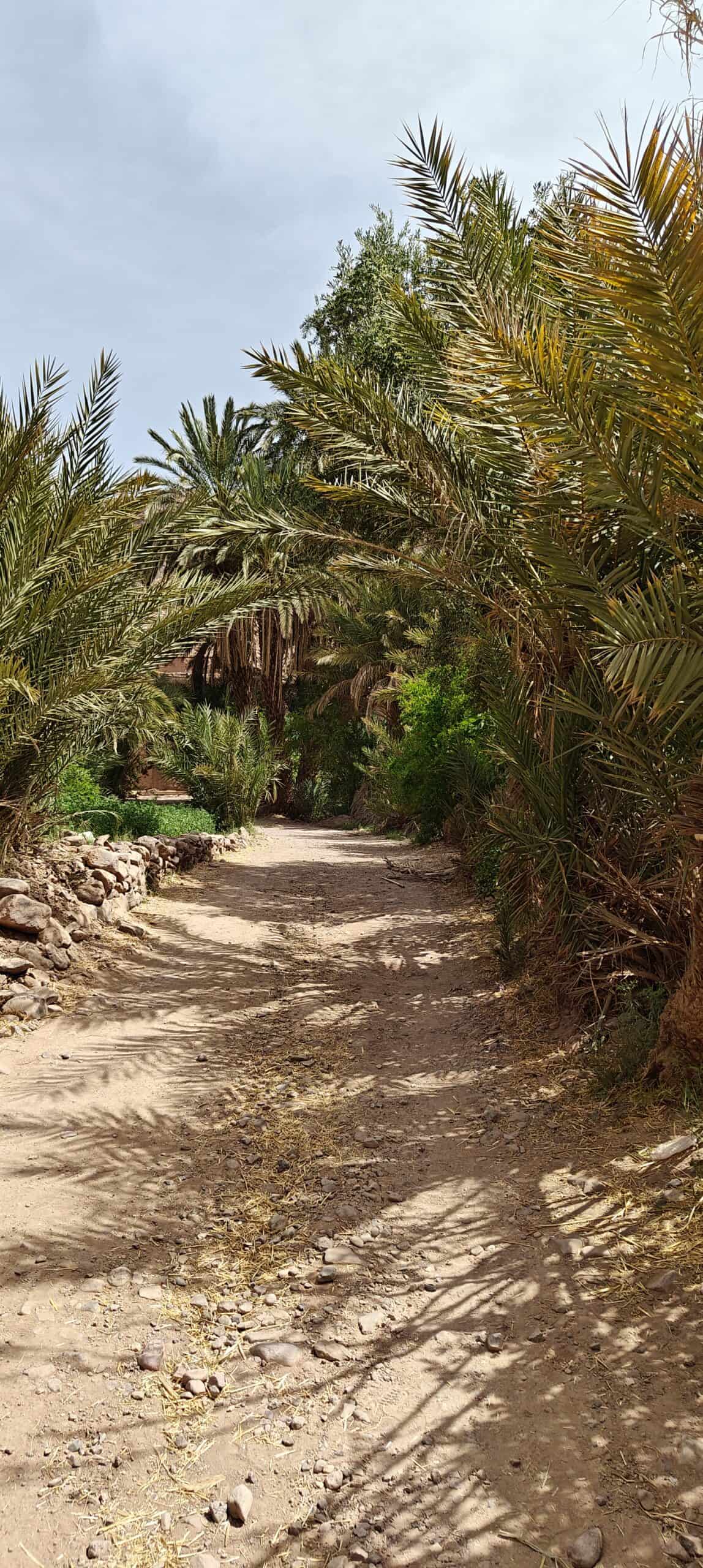
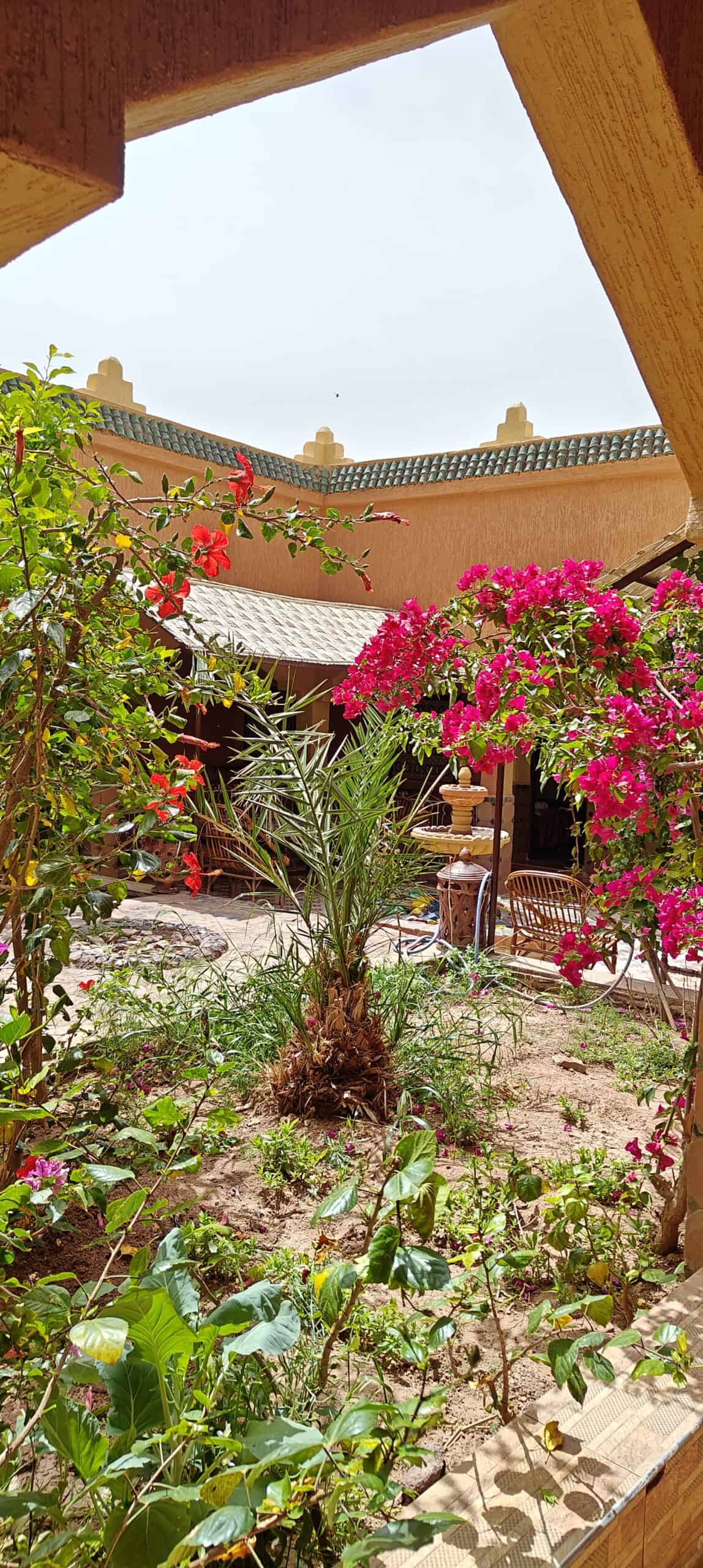
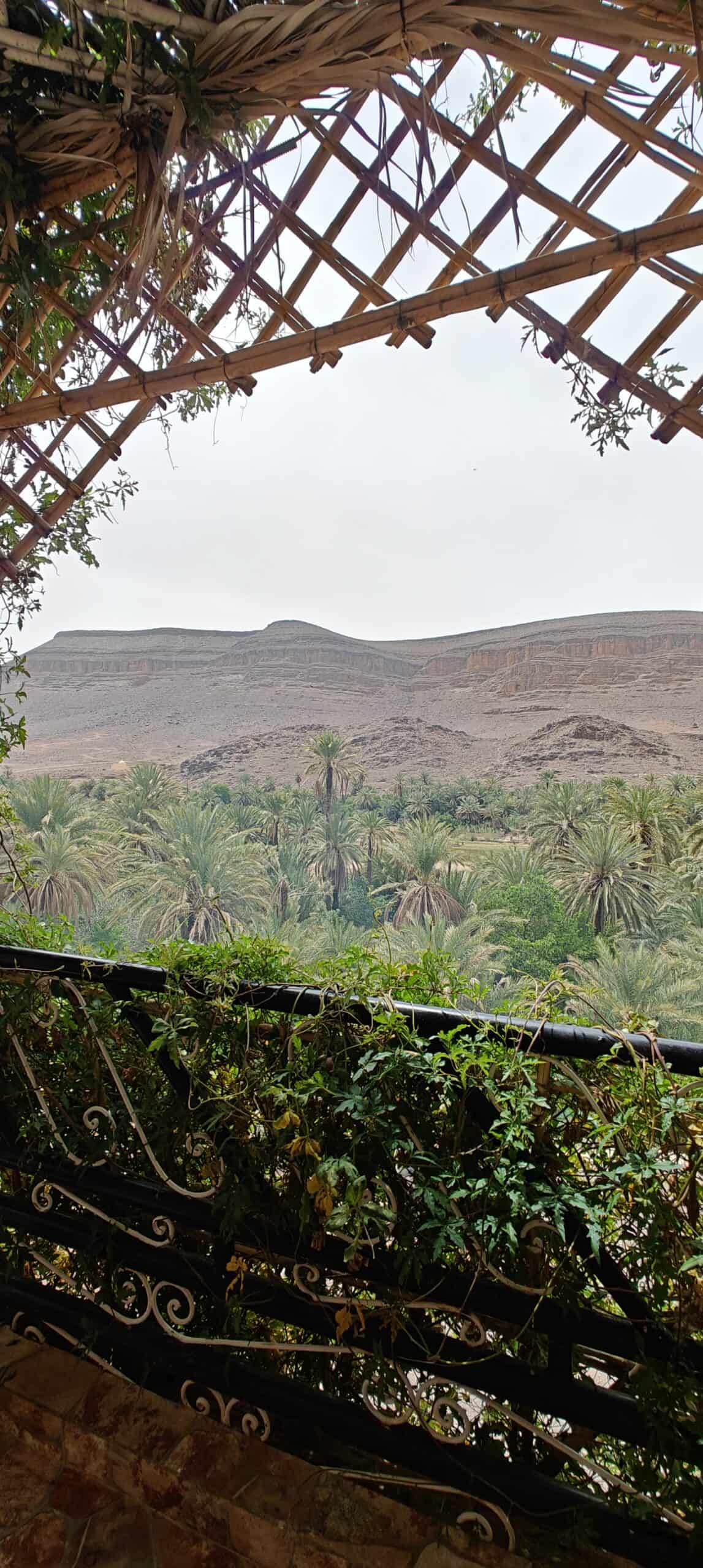
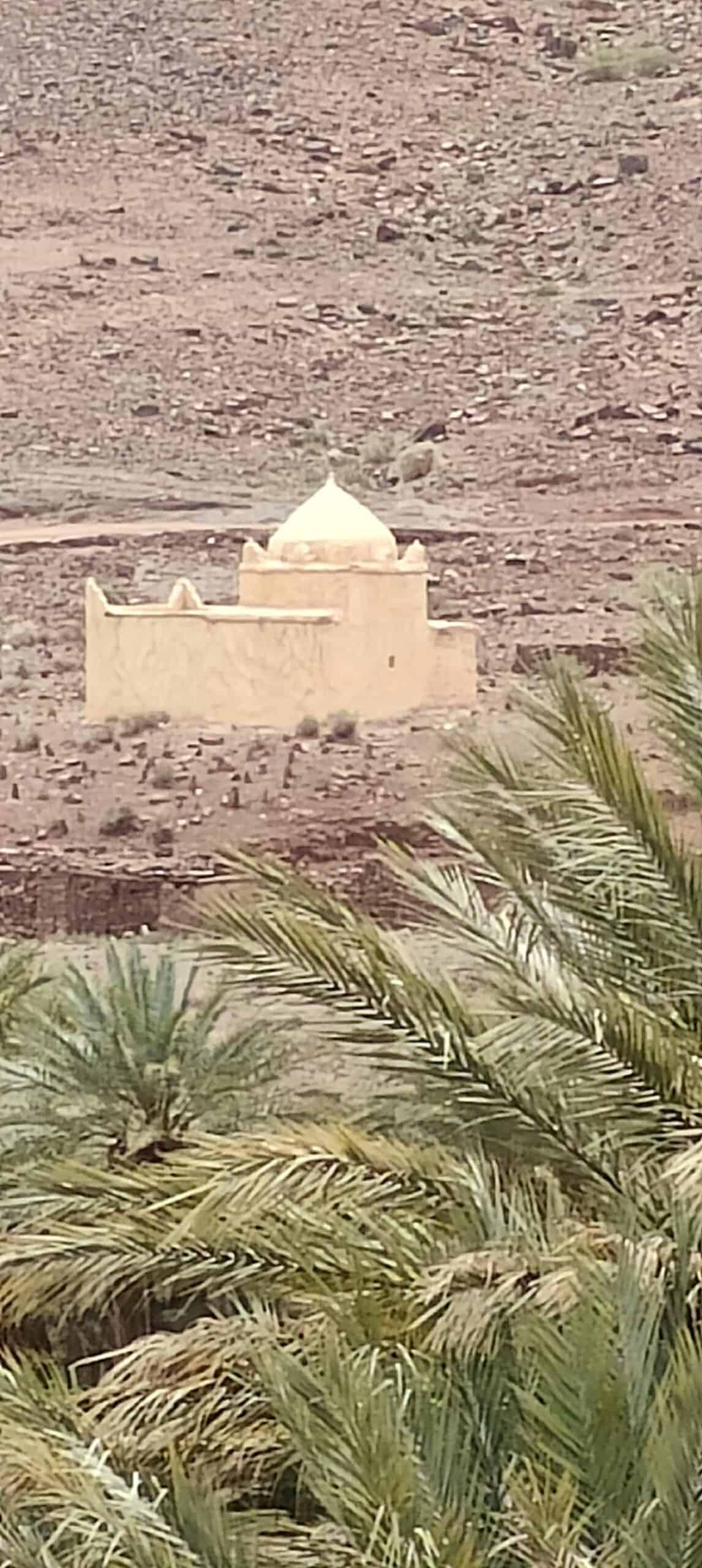
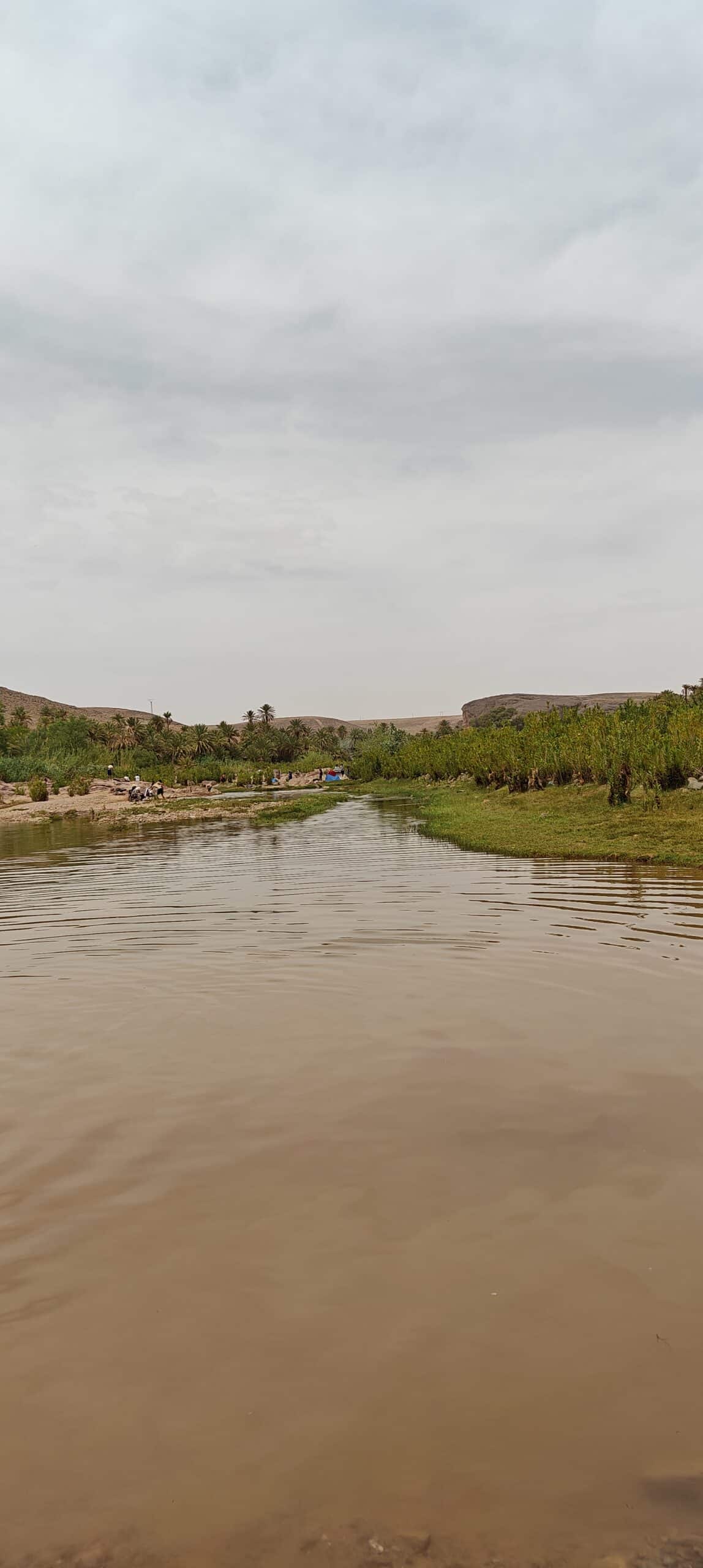
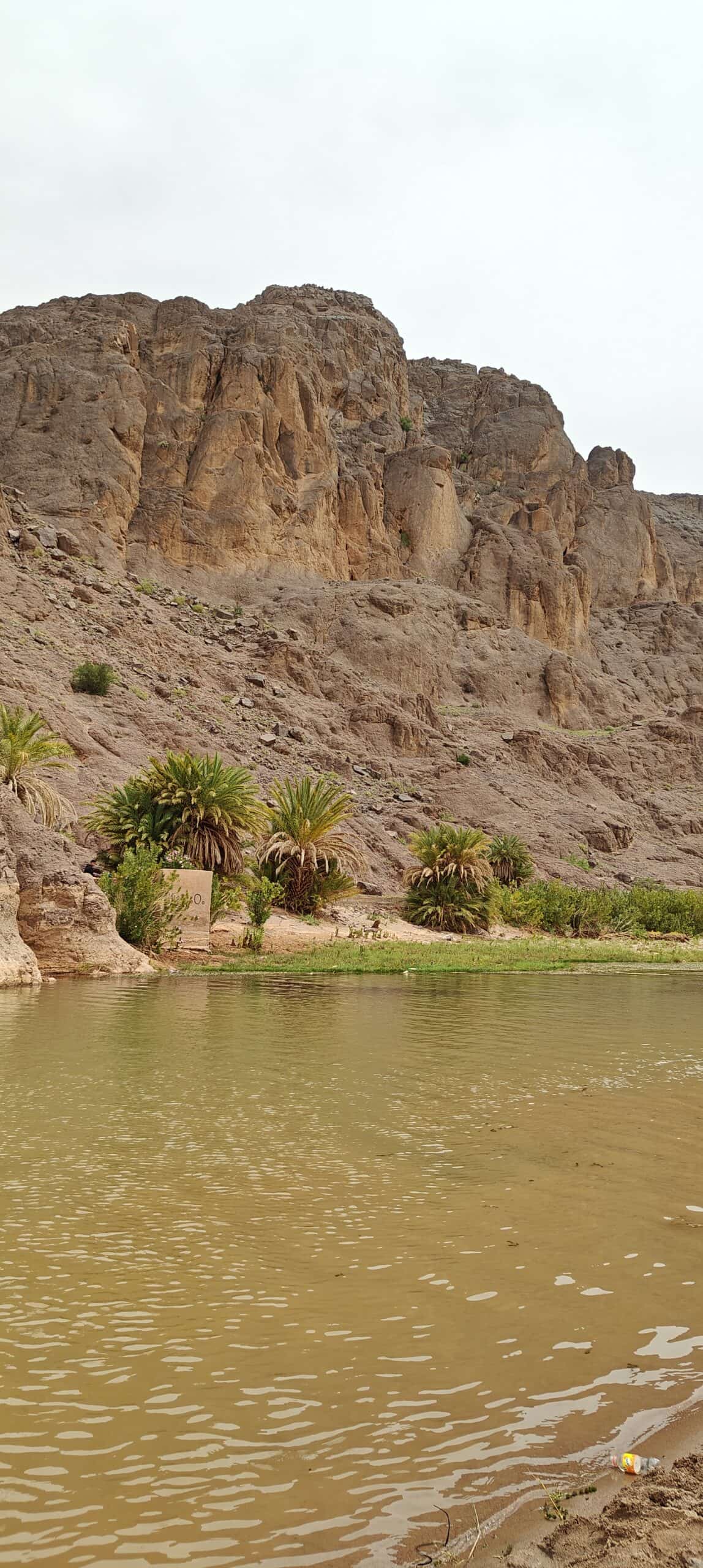
After filming the trailer, there’s catering—just as you’d expect for a rising advertising star. The only place still bustling here in this ghost town is the restaurant with an attached riad for overnight stays. Among other things, it’s a meeting point for the ATV tours we’d seen. Mouha tells me he doesn’t want to disturb me while I’m eating and disappears. I order my meal and ask the waiter to ask him if he’s hungry and that I’d pay for him. A short time later, we eat together, and Mouha shows me his TikTok channel. He’s very proud of the small business he’s built up. I’ll give him 100 dirhams more than agreed later because I feel like I want to support him. After the meal, we head back through the palm forest. We pass people having picnics, teenagers playing music, and lots of children playing and swimming. We reach Mouha’s family. He introduces me to his children and wife. His cousin is there too, and she speaks German surprisingly well. Like many Moroccans, she dreams of a life in Germany. Whether they would truly be happy in Germany, I cannot say. Financially, perhaps. But the cultural differences and the way of life are vastly different. I wish her every success nonetheless, without knowing what her chances of success might be.
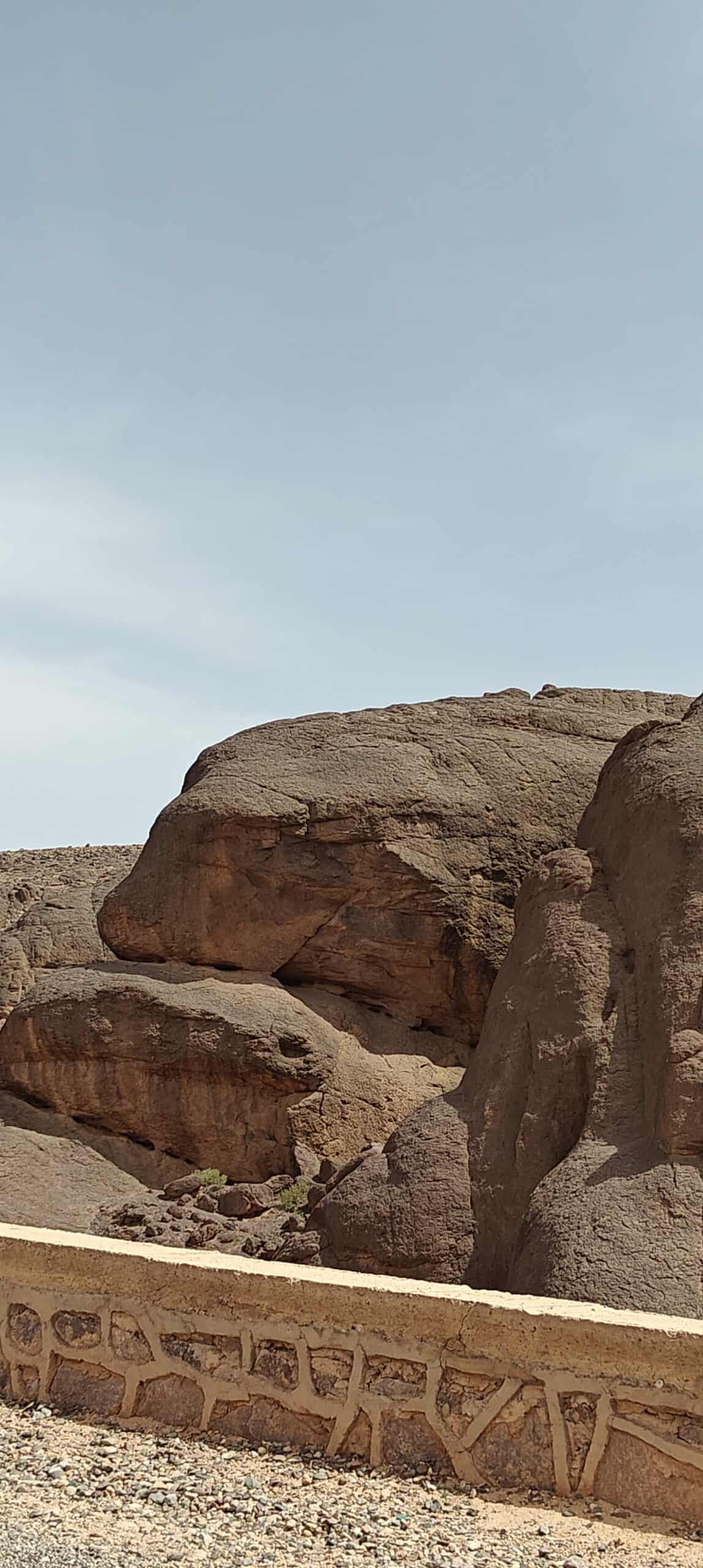
We’re heading back to Ouzarzate. I’m glad I took this trip. We’ve got two young backpackers in tow who got stranded here in the oasis. On the way, Mouha tries to show me the face of a cobra in a mountain. I don’t see a cobra there, but after he insists several times, I tell him I’ve seen it. Mouha’s and my one-day journey ends here. Even though I didn’t see any desert sand, the drive through the Atlas Mountains and the trip with Mouha alone made this journey worthwhile. I’m grateful to have met him, as he represents all the friendly, warm-hearted people of Morocco I’ve met over the past month. I’m waiting for the bus back to Marrakesh; it’s half an hour late. I had just praised you so highly, Supratours. We reach Marrakech at the scheduled arrival time anyway. It now dawns on me that the planned travel time is given with a buffer—clever.
That was my last trip in Morocco; my month here is coming to an end before I head to Tenerife. I look back on Morocco with mixed feelings and can hardly describe how excited I am to move on. Somehow, it feels like coming home…